
Columbus Brake Rotor Replacement Solutions Explained: Complete Guide to Signs, Process, and Costs
Brake rotors are the metal discs that work with brake pads and calipers to convert your vehicle’s kinetic energy into heat, stopping the car safely. This guide explains what brake rotors are, how to recognize symptoms of rotor failure, when resurfacing makes sense, and how replacement is performed locally in Columbus. You will learn clear diagnostic cues—like pulsation, noise, and visible scoring—paired with practical steps to get an accurate inspection and cost estimate. The article maps the full process from identification to repair, compares rotor types used on common Columbus vehicles, and outlines typical cost ranges and influencing factors. Readers who want local service will find transparent guidance on working with a Columbus provider and how Blackstone Complete Auto Care LLC approaches inspections, part selection, and service booking. By the end you’ll know which symptoms require immediate attention, how replacement improves safety, and what to expect when scheduling a rotor service.
What Are Brake Rotors and How Do They Work in Your Vehicle?
Brake rotors are the rotating discs attached to the wheel hub that provide the friction surface for brake pads, allowing your vehicle to slow or stop safely. As the brake pads clamp onto the rotor surface, kinetic energy is converted into heat through friction; the rotor’s design manages that heat to prevent fade and maintain stopping performance. Proper rotor function directly affects stopping distance, pedal feel, and ABS performance, making rotor condition a core safety consideration. Understanding rotor types and construction helps owners choose the right repair path for their driving needs and vehicle class.
What Is a Brake Rotor and Its Role in the Braking System?
A brake rotor is a circular metal disc mounted to the wheel assembly, and its role is to provide a smooth, heat-resistant surface for the brake pads to press against during braking. When the driver applies the brake pedal, hydraulic pressure pushes caliper pistons that compress pads onto the rotor, creating friction that slows wheel rotation. Rotors must dissipate heat efficiently to avoid glazing, warping, or thermal cracking; poor heat management contributes to reduced braking performance. Recognizing this mechanical role clarifies why rotor wear or damage often manifests as pedal vibration, noise, or diminished braking effectiveness.
What Materials and Types of Brake Rotors Are Common in Columbus Vehicles?
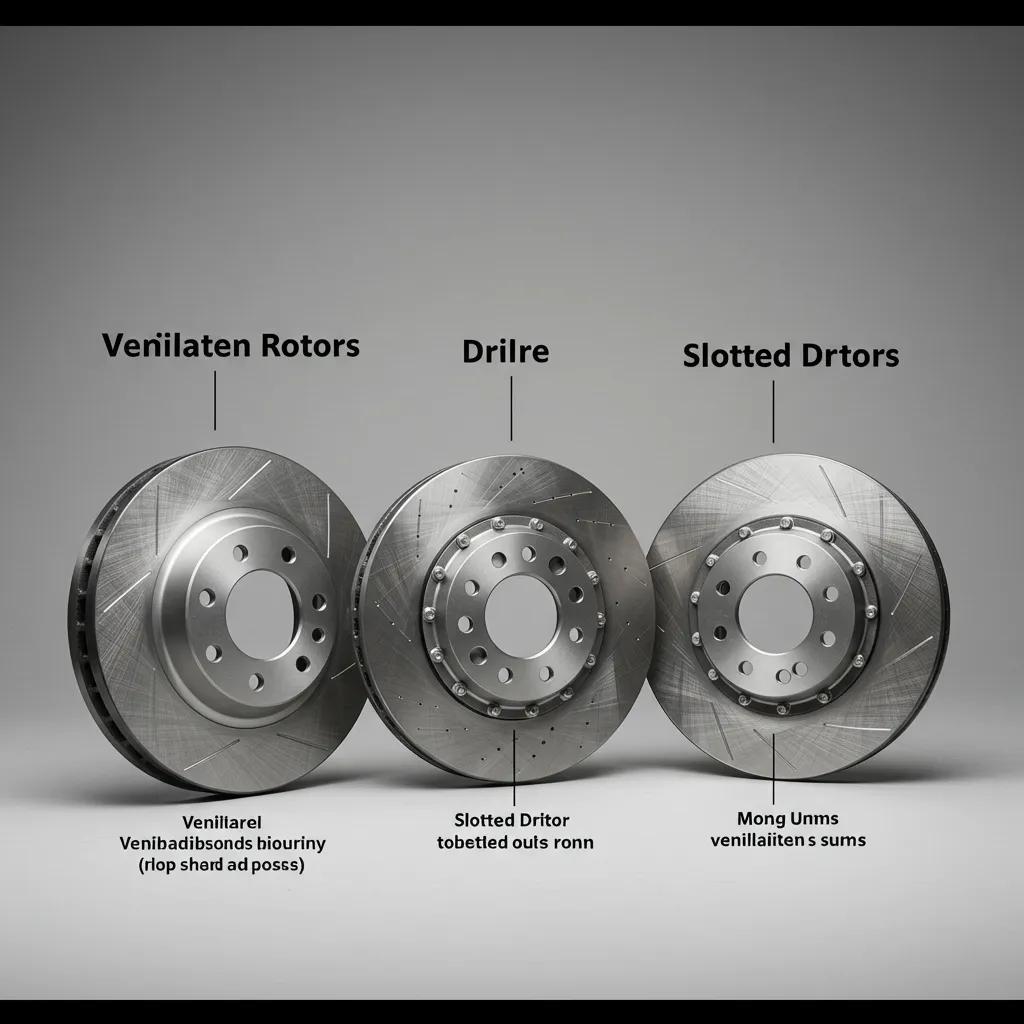
Rotors are typically made from cast iron for cost-effectiveness and thermal stability, while some performance or coated options use higher-grade alloys or protective finishes to resist corrosion. Common rotor types found on vehicles in Columbus include ventilated rotors for improved cooling, drilled rotors for channeling gases and water, and slotted rotors that provide consistent pad bite under heavy use. Each type has tradeoffs: ventilated rotors balance cooling and cost, drilled rotors can help in wet conditions but may crack under extreme stress, and slotted rotors assist in debris removal at the expense of increased pad wear. Choosing the right rotor depends on vehicle use, climate exposure, and performance expectations.
Different rotor types and their typical attributes:
| Rotor Type | Material / Construction | Best Use Case |
|---|---|---|
| Ventilated | Cast iron with internal vanes | Everyday driving, improved cooling for heavier vehicles |
| Slotted | Cast iron with machined slots | Performance driving, towing, consistent pad bite |
| Drilled | Cast iron or alloy with drilled holes | Wet-weather performance, lighter-duty performance vehicles |
This comparison highlights how design and material choices affect heat management and longevity. Selecting the appropriate rotor type helps balance cost, performance, and expected lifespan.
How Do Brake Rotors Interact with Brake Pads and Calipers?
Brake rotors, pads, and calipers form an integrated braking assembly where each component affects the others’ wear and performance; pads press against the rotor to generate friction while calipers apply and release that pressure. Uneven pad wear, contaminated pads, or sticking caliper pistons can cause localized rotor wear, grooves, or thickness variation that lead to vibration and reduced stopping power. Proper installation and matched replacement of pads and rotors maintain uniform contact and thermal transfer, which prolongs component life and preserves ABS and electronic brake system behavior. Recognizing these interactions clarifies why a full inspection—pads, calipers, fluid, and rotors—is essential when diagnosing braking problems.
What Are the Common Signs You Need Brake Rotor Replacement in Columbus?
Identifying rotor problems early prevents safety risks and more costly repairs; common signs include pedal pulsation, unusual noises, visible scoring, or a progressive loss of braking performance. Local driving conditions—frequent short trips, stop-and-go traffic, or road salt exposure—can accelerate rotor wear on Columbus vehicles, making symptom awareness important for timely intervention. This section outlines practical cues and simple checks owners can perform before a professional inspection. Early detection often leads to safer outcomes and more options (resurfacing versus replacement) when a technician evaluates the vehicle.
Common signs that warrant a brake inspection in Columbus:
- Pulsating Brake Pedal: A vibrating or pulsing pedal under braking often indicates rotor thickness variation or warping.
- Grinding or Scraping Noises: Metal-on-metal grinding usually means severe pad wear and rotor damage requiring immediate attention.
- Visual Scoring or Heat Spots: Deep grooves, blueing, or uneven rust patterns on the rotor surface signal performance loss.
These signs point to different root causes that a professional inspection can pinpoint; scheduling a diagnostic early can reduce repair complexity and cost. Understanding symptom severity helps drivers decide whether immediate towing or a scheduled visit is needed.
How Does a Pulsating Brake Pedal Indicate Rotor Issues?
A pulsating brake pedal typically results from variations in rotor thickness or localized warping that cause uneven contact as the rotor turns, producing a rhythmic vibration felt through the pedal. Thermal stress from repeated heavy braking, improper bedding, or prolonged riding of the brakes can create high and low spots across the rotor surface that translate into pedal pulsation. While minor pulsation might be tolerable briefly, it often worsens and can indicate that machining or replacement is required to restore uniform contact. An inspection that measures rotor runout and thickness variation will determine whether resurfacing is possible or full replacement is the safer choice.
Detecting Brake Rotor Issues: Thickness Variation and Corrosion
Brake rotors are essential parts of the disc brake systems. Brake rotor thickness variation (RTV) and corrosion are among top failure modes for brake rotors, which may lead to brake judder and pulsation, steering wheel oscillations and chassis vibration. To improve customer satisfaction, vehicle serviceability and availability, it is necessary to develop an onboard fault detection and isolation solution. This study presents a methodology to monitor the state-of-health of brake rotor system to reduce costs associated with scheduled inspection for autonomous fleet or corrective maintenance. We converted the vehicle signals from time-domain to angle-domain and determined health indicators to estimate the RTV level of the rotors. Variance, envelope and order analysis of the brake circuit pressure, longitudinal acceleration and wheel speed sensor signals in angle-domain were promising health indicators to differentiate healthy and faulty rotors.
A classification model was developed to fuse
A method to detect and isolate brake rotor thickness variation and corrosion, H Kazemi, 2023
Research indicates that brake rotor thickness variation and corrosion are primary failure modes that can lead to noticeable pulsation and vibration.
What Noises Signal Worn or Damaged Brake Rotors?
Different noises provide clues: a high-pitched squeal can stem from glazing or wear indicators, a low metallic grinding typically means pad backing contacting the rotor, and intermittent scraping may indicate debris or surface flaking. Squeals may be an early warning that pads are worn or contaminated, while grinding denotes more advanced damage that frequently necessitates rotor replacement to avoid wheel hub or caliper harm. Promptly diagnosing the type and source of noise reduces the risk of secondary damage and helps prioritize repairs. If you hear persistent grinding or loud metallic scraping, seek a professional inspection without delay.
How Can Visible Damage or Warping on Rotors Be Identified?
A visual inspection with the wheel removed can reveal grooves, scoring, blue heat spots, or uneven corrosion patterns that suggest thermal stress or mechanical abrasion of the friction surface. Thickness measurements at multiple points detect tapering or minimum-spec violations that mean the rotor should be replaced rather than resurfaced. While owners can look for obvious damage visually, measuring tools and wheel-off inspection are needed for accurate assessment, so do not rely solely on sight when symptoms are present. When in doubt, document what you see and present those observations to a technician for a precise diagnosis.
Can Driving with Bad Rotors Affect Vehicle Safety?
Yes — degraded rotors increase stopping distance, reduce pedal responsiveness, and can interfere with ABS modulation, all of which compromise vehicle control, especially in emergency braking. Warped or severely thinned rotors can also lead to uneven pad wear, overheating, and potential brake system failure if left unaddressed. Driving cautiously after noticing mild symptoms may be acceptable for short trips, but any worsening of vibration, noise, or braking performance warrants an immediate professional check to avoid hazardous outcomes. Prioritizing an inspection helps preserve safety systems and prevents escalation into more expensive repairs.
How Is the Brake Rotor Replacement Process Performed at Blackstone Complete Auto Care LLC?
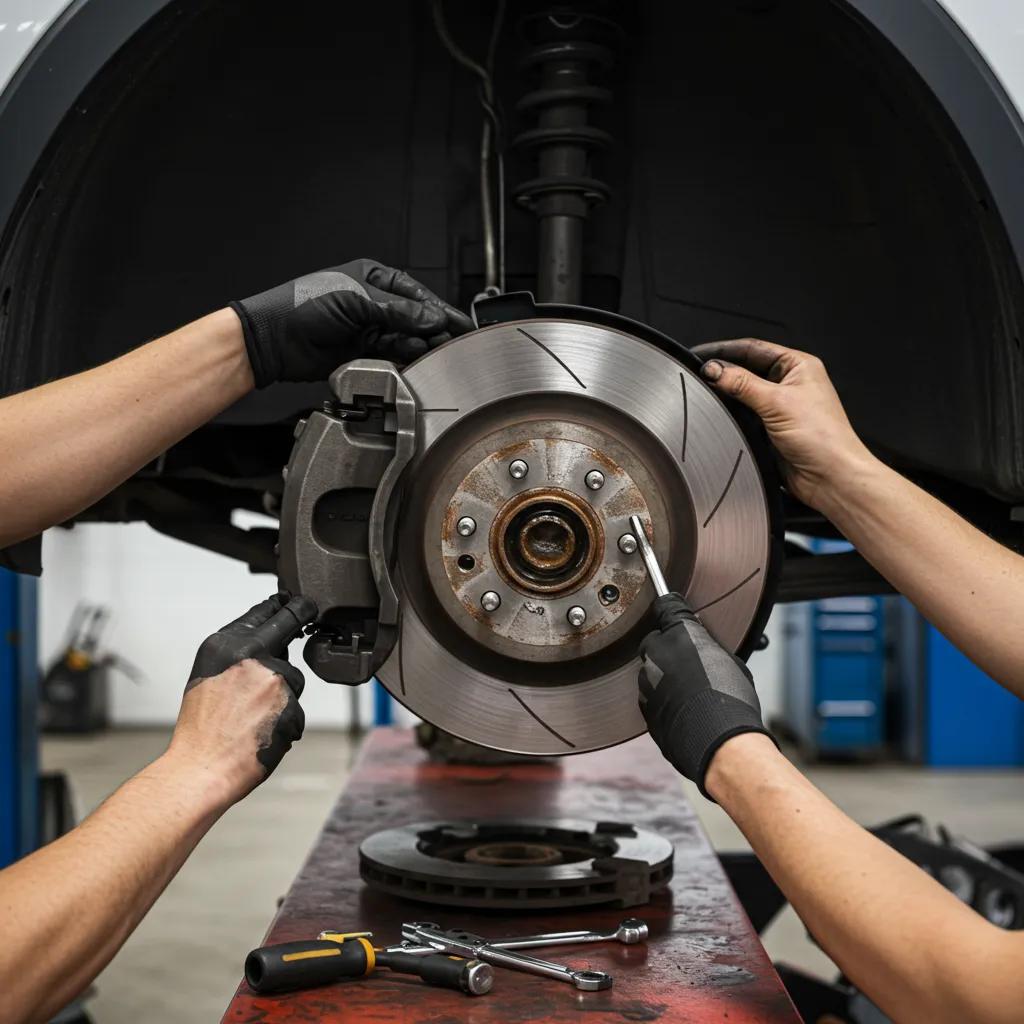
A professional rotor replacement follows a structured workflow: detailed inspection, measurement, part selection, removal and installation, and final quality checks that include torque, fluid checks, and a road test for verification. At Blackstone Complete Auto Care LLC, technicians begin with a documented inspection and measurements to determine whether resurfacing is safe or if full replacement is necessary, and they communicate findings clearly before any work begins. Quality parts are selected to match vehicle requirements, and post-installation testing ensures correct operation and customer transparency. This consistent process reduces uncertainty and helps drivers understand the repair steps and expected outcomes.
Step-by-step rotor replacement workflow and customer-facing deliverables:
| Procedure Step | What Customer Sees / Receives |
|---|---|
| Inspection & Measurement | Written findings and recommendation (resurface vs replace) |
| Parts Selection & Approval | Clear estimate outlining parts vs labor |
| Removal & Installation | Visual before/after photos and documented torque specs |
| Final QA & Road Test | Post-service report confirming performance checks |
This table clarifies the shop’s checkpoints and the information customers receive, ensuring transparency from diagnosis through verification. Knowing these steps helps drivers feel confident in the service and the safety of their repaired vehicle.
What Are the Step-by-Step Procedures for Rotor Replacement?
Technicians start by lifting the vehicle and removing the wheel to inspect pads, calipers, and rotor condition, measuring thickness and runout to decide between resurfacing and replacement. If replacement is chosen, the caliper and bracket are removed, the old rotor is taken off, and the hub surface is cleaned to ensure a proper seat for the new rotor. New rotors are installed with specified torque on mounting hardware, calipers reassembled with proper piston operation, and new or inspected pads fitted to ensure matched friction surfaces. A controlled road test and final torque checks complete the process, with documented communication to the customer about what was done and why.
Why Is Professional Replacement Recommended Over DIY?
Professional replacement ensures correct measurements, calibrated machining decisions, proper torqueing of fasteners, and system-level checks such as caliper function and ABS readiness that DIY attempts may miss. Shops have specialized tools for measuring runout and thickness, cleaning hub mating surfaces, and performing controlled break-in procedures to avoid early heat spots or uneven wear. Warranty coverage, documented inspection reports, and post-service testing are additional safeguards that professionals provide to protect safety and long-term performance. Attempting complex brake work without the right tools or experience can increase risk and potentially void component warranties.
What Quality Parts and Technologies Does Blackstone Use?
Blackstone emphasizes fit-for-purpose part selection and materials that meet vehicle requirements rather than generic, one-size-fits-all replacements, and they document why a chosen rotor type suits the vehicle’s use. The focus is on matching rotor construction and quality to the owner’s driving patterns—prioritizing heat management and corrosion resistance where appropriate—while avoiding unnecessary upgrades that don’t provide value. Part warranties and expected performance are discussed during the estimate review so customers understand tradeoffs between economy and longevity. Clear communication about parts and expected outcomes helps owners make informed decisions aligned with safety and budget.
How Does Blackstone Ensure Reliable and Transparent Service?
Transparency comes through documented inspections, written estimates, and post-repair reports that include measurements and test results, so customers can see what was found and why a specific action was recommended. Pre- and post-repair photos and clear explanations of warranty and maintenance follow-up build trust while giving owners tangible records of work performed. Technicians explain inspection findings in plain language and highlight maintenance items to watch for later, encouraging proactive care. This approach to service communication reduces surprises and supports safer vehicles on the road.
What Is the Cost to Replace Brake Rotors in Columbus, Ohio?
Brake rotor replacement costs vary by vehicle class, rotor type, and the extent of additional work such as caliper service or pad replacement; typical local ranges account for parts and labor per axle and for all four wheels. Factors like ventilated versus solid rotors, coated corrosion-resistant finishes, and the need to replace hub hardware influence the final price. Comparing resurfacing versus replacement requires considering modern rotor thickness limits and long-term value; many modern rotors are thinner and less suitable for resurfacing, making replacement the safer long-term choice. An inspection provides an accurate, vehicle-specific estimate.
Typical cost breakdowns and common ranges:
| Service | Typical Range |
|---|---|
| Rotor replacement (per axle, parts + labor) | $200 – $500 |
| Rotor replacement (all four wheels) | $450 – $1,000 |
| Rotor resurfacing (per axle) | $60 – $150 |
These ranges reflect typical parts and labor combinations for common compact and mid-size vehicles; costs may be higher for performance rotors or luxury makes. Use these figures as a baseline and schedule an inspection to receive a precise estimate for your vehicle.
What Factors Influence Brake Rotor Replacement Pricing?
Pricing depends on rotor construction (ventilated, slotted, or performance-grade), material quality, vehicle-specific labor time due to wheel and hub access, and whether pads, calipers, or wheel bearings require replacement or service. Additional factors include whether the hub needs cleaning or hardware replacement and whether specialized rotors (coated or high-performance) are chosen. Local labor rates and the shop’s processes for inspection and documentation also affect total cost. Recognizing these drivers helps owners interpret estimates and choose value-focused options.
Typical cost-influencing elements:
- Rotor type and material: performance or coated rotors cost more.
- Labor complexity: rear vs front axle, parking brake removal needs.
- Additional parts: pads, caliper rebuilds, or hub hardware replacement.
This list helps owners know what to ask about when reviewing an estimate and comparing service options.
How Much Does Replacement Typically Cost Per Axle and for All Four Wheels?
Per-axle replacement for a standard compact or sedan generally falls in a moderate range for parts and labor, while SUVs or heavier vehicles trend toward the higher end due to larger rotors and longer labor times. All-four-wheel replacements often provide per-axle economies of scale but increase upfront cost; owners should compare long-term value and remaining rotor life when deciding whether to replace only a single axle or both. Getting a written estimate based on a vehicle inspection is the best way to know where a specific vehicle falls within the ranges presented above.
Are There Financing or Special Offers Available at Blackstone?
Specific financing or promotional details are not listed here, but owners are encouraged to ask Blackstone Complete Auto Care LLC about current offers, available payment options, or seasonal specials during the estimate process. Requesting a clear, itemized estimate during your visit allows comparison of financing or payment choices that the shop may provide. This conversation helps align the repair approach with your budget while ensuring safety is not compromised. Scheduling an inspection is the reliable way to get the most accurate cost and discuss any qualifying offers.
How Does Replacement Cost Compare to Rotor Resurfacing?
Resurfacing can be cost-effective when rotors have minor surface irregularities and sufficient thickness to meet minimum specifications after machining, but modern rotors are often manufactured thinner and may not be suitable for multiple resurfacings. Resurfacing reduces upfront cost but may shorten rotor life if it approaches minimum thickness; full replacement provides a longer-term solution and consistent performance. Decision guidance: choose resurfacing only when measurements confirm adequate thickness and the rotor has no heat cracks or structural issues; otherwise, replacement is the safer long-term investment.
Why Choose Blackstone Complete Auto Care LLC for Your Brake Rotor Replacement in Columbus?
Choosing a local Columbus provider means balancing technical competence with transparent communication and documented results; Blackstone Complete Auto Care LLC positions itself as an information hub and lead-generation resource for vehicle maintenance, emphasizing clear estimates and procedural transparency. The shop offers structured inspection workflows and a focus on explaining findings so owners can make informed decisions about resurfacing versus replacement. While specific warranty and certification details should be confirmed at booking, the shop’s stated approach centers on documented inspections and communication to support safe, reliable outcomes. For Columbus drivers seeking clarity, this orientation reduces uncertainty around brake repairs.
What Certifications and Experience Do Blackstone Technicians Have?
No specific certifications are listed here, so owners should inquire directly about technician training and credentials at the time of booking; asking about ASE or equivalent training is a recommended best practice. Understanding a shop’s technician qualifications helps owners assess diagnostic capabilities and the shop’s approach to complex brake system issues. Requesting details about experience with your vehicle type or brake system during the estimate can give assurance about technical competence. Transparent shops welcome these questions and provide clear answers to support customer confidence.
How Does Blackstone's Warranty and Customer Service Stand Out?
While explicit warranty terms are not provided in this content, a best-practice approach includes offering documented parts and labor coverage and clear explanations of what is included in any warranty—owners should confirm these details before approving work. Customer-service strengths include written estimates, pre- and post-service documentation, and clear communication about ongoing maintenance needs. Asking for warranty specifics and written confirmation during the estimate process ensures expectations are aligned and helps protect vehicle owners after the repair.
What Do Local Customers Say About Their Brake Rotor Services?
No direct testimonials are presented here, but owners can review public ratings and reviews on local business profiles to get an overall sense of customer experiences and safety outcomes. Local case studies and before/after visuals are useful ways shops demonstrate repair quality and safety improvements, and buyers should request such documentation when available. Checking independent review sources and asking the shop for references or examples of similar work can clarify expected service quality and results.
How Does Blackstone Support Ongoing Brake Maintenance and Safety?
Blackstone recommends regular inspections as a core maintenance practice, pairing brake rotor checks with pad inspection, brake fluid assessment, and caliper function checks to maintain overall system health. Suggested intervals depend on driving habits, but routine inspections during seasonal service visits help catch wear early and preserve safety. Documented follow-up recommendations and reminders can help owners return for necessary checks before problems escalate. Ongoing maintenance support focused on inspection and communication helps extend component life and reduce unexpected failures.
Frequently Asked Questions
What is the average lifespan of brake rotors?
The lifespan of brake rotors can vary significantly based on driving habits, vehicle type, and environmental conditions. Generally, rotors can last anywhere from 30,000 to 70,000 miles. Factors such as frequent stop-and-go traffic, towing, and driving in hilly areas can lead to faster wear. Regular inspections and monitoring for symptoms like pulsation or noise are essential to determine when replacement is necessary, rather than relying solely on mileage.
How can I tell if my brake rotors need resurfacing instead of replacement?
To determine if rotors can be resurfaced rather than replaced, a technician will measure their thickness and inspect for any significant damage, such as deep grooves or cracks. If the rotors meet the minimum thickness specifications after machining and show only minor surface irregularities, resurfacing may be a viable option. However, if they are too thin or have extensive damage, replacement is the safer choice to ensure optimal braking performance.
What should I do if I hear grinding noises when braking?
If you hear grinding noises when braking, it typically indicates that the brake pads are worn down to the metal, which can damage the rotors. It’s crucial to address this issue immediately by scheduling a professional inspection. Continuing to drive with grinding brakes can lead to more extensive and costly repairs, including rotor replacement. Prompt action ensures your safety and helps maintain the integrity of the braking system.
Are there any specific maintenance tips for extending rotor life?
To extend the life of your brake rotors, consider adopting a few maintenance practices. Regularly inspect your brake system, including pads and fluid, and replace worn components promptly. Avoid aggressive driving habits, such as hard braking and rapid acceleration, which can generate excessive heat and wear. Additionally, ensure that your vehicle’s brake system is properly calibrated and that the rotors are cleaned during routine maintenance to prevent corrosion and buildup.
What are the potential consequences of ignoring rotor issues?
Ignoring rotor issues can lead to severe consequences, including increased stopping distances, reduced braking efficiency, and compromised vehicle control. Warped or damaged rotors can cause vibrations, noise, and uneven pad wear, which may escalate into more significant brake system failures. In extreme cases, neglecting rotor maintenance can result in complete brake failure, posing serious safety risks to you and others on the road. Regular inspections and timely repairs are essential for safe driving.
Can I use aftermarket rotors, and are they reliable?
Aftermarket rotors can be a reliable option if they meet or exceed OEM specifications. Many aftermarket brands offer high-quality rotors designed for specific driving conditions, such as performance or heavy-duty use. However, it’s essential to research and choose reputable brands to ensure quality and compatibility with your vehicle. Consulting with a professional technician can help you select the right rotors that balance performance, durability, and cost-effectiveness for your needs.
What should I expect during a brake rotor inspection?
During a brake rotor inspection, a technician will assess the overall condition of the brake system, including the rotors, pads, and calipers. They will measure rotor thickness, check for warping or scoring, and inspect for any signs of wear or damage. The technician will also evaluate the brake fluid and caliper function. After the inspection, you will receive a detailed report outlining the findings and recommendations for any necessary repairs or replacements, ensuring transparency and informed decision-making.
How Often Should Brake Rotors Be Replaced?
Brake rotor replacement intervals vary widely based on driving style, vehicle weight, and environment, but a typical range is 30,000 to 70,000 miles for many drivers, with frequent stop-and-go driving or towing shortening that lifespan. Visual signs, thickness measurements, and symptoms such as vibration or noise are more reliable indicators than mileage alone. Regular inspections at service intervals help determine remaining rotor life and whether resurfacing is feasible. Treat mileage ranges as a guideline and prioritize condition-based assessment.
Should Brake Pads and Rotors Be Replaced Together?
Replacing pads and rotors together is best practice when rotors show wear patterns or machining would significantly reduce thickness, because new pads mated to worn rotors can lead to uneven contact and accelerated wear. Matching new pads with new or properly prepared rotors ensures consistent bedding-in and optimal friction characteristics. In cases where pads are relatively new and rotors remain within specification without heavy scoring, it may be reasonable to replace rotors alone, but that decision should come from a documented inspection and measurement. Prioritizing matched replacement reduces callbacks and improves long-term braking performance.
Can You Drive Safely with Worn or Warped Rotors?
Low-level symptoms such as occasional light pulsation can sometimes be driven on for short trips with added caution, but substantial vibration, grinding noises, or significant performance loss indicate unsafe conditions that require prompt professional attention. Driving with severely compromised rotors increases stopping distance and can lead to further brake system damage, creating higher repair costs and safety hazards. When in doubt, schedule an inspection and follow the technician’s recommendation; severe symptoms should prompt immediate service.
How Long Does a Brake Rotor Replacement Service Take?
Typical rotor replacement services, including inspection, parts replacement, and a final test drive, generally fall within a 1–3 hour window for a single axle on many common vehicles, though complexity, additional repairs, or parts availability can extend that timeline. Shops that provide documented estimates and clear timelines at check-in reduce uncertainty for owners planning their day. Asking about expected turnaround and whether a technician will call if additional issues are found helps manage expectations. Planning for a half-day ensures coverage for most routine rotor services.
What Are the Signs of Rotor Warping vs. Rotor Wear?
Warping typically presents as pedal pulsation or steering wheel vibration during braking and results from uneven thermal expansion or runout, while wear shows as grooves, thinning, or scoring visible on the rotor surface and measured with calipers. Warping affects contact uniformity and is detected by runout measurements, whereas wear reduces thickness and can be quantified against manufacturer minimums. Accurate diagnosis requires wheel-off inspection and measurement tools; document observed symptoms and have a technician measure both runout and thickness to determine the proper remedy.
How Can You Schedule Your Brake Rotor Replacement Service in Columbus Today?
Scheduling begins with deciding whether the condition requires urgent attention or a planned inspection; for safety-related symptoms like grinding or severe vibration, prioritize immediate service. Blackstone Complete Auto Care LLC encourages customers to request a documented inspection and written estimate to understand the repair scope and options. Owners should prepare vehicle history and symptom descriptions before arrival to accelerate diagnosis. Clear expectations around appointment channels and visit procedures make the scheduling process smoother and help ensure prompt, effective service.
What Are the Available Appointment Options at Blackstone?
Specific booking channels are not enumerated in this content, but owners are encouraged to check Blackstone Complete Auto Care LLC’s public business profile for current appointment options and to request a documented inspection appointment for rotor diagnosis. When scheduling, indicate whether symptoms are urgent and provide symptom descriptions to help the shop prioritize your visit. Confirm whether the estimate will include photos and documented measurements so you can make an informed decision. Clear communication during booking reduces surprises at check-in.
How to Prepare Your Vehicle for Brake Service?
Prepare by removing loose items, noting recent driving conditions or symptoms, and compiling any service history or receipts that relate to brakes, pads, or recent wheel work. Arrive with a clear description of when symptoms occur, such as during cold starts, heavy braking, or at specific speeds, since this information guides the diagnostic process. Allow the technician to perform a wheel-off inspection by ensuring the vehicle has no wheel accessories that impede removal. Presenting symptoms and history upfront makes the inspection more efficient and the estimate more accurate.
Where Is Blackstone Complete Auto Care Located in Columbus?
For precise directions and operating details, refer to Blackstone Complete Auto Care LLC’s public business profile online to confirm location and hours before visiting; do not rely on third-party memory for exact location. Checking the business profile ensures you have current information about hours, reviews, and directions from local neighborhoods. If you’re unsure, calling ahead to confirm appointment availability and request a documented inspection is recommended. Confirming location details before travel reduces delays on the day of service.
What Should You Expect During Your Visit?
Expect an initial intake where symptoms and vehicle history are recorded, followed by a wheel-off inspection and documented measurements to determine resurfacing versus replacement options, with a written estimate provided before work begins. If you approve the estimate, technicians proceed with the agreed work, provide post-repair checks, and present a final report that includes photos or measurements used during diagnosis and verification. Ask for specific warranty details and recommended follow-up intervals before leaving, and schedule any recommended maintenance checks. Clear communication throughout the visit ensures you understand the repair steps and outcomes.
Conclusion
Understanding the importance of brake rotors and their role in vehicle safety is crucial for every driver. By recognizing the signs of wear and knowing when to seek professional help, you can ensure optimal braking performance and safety on the road. Don’t wait for symptoms to worsen; schedule an inspection with Blackstone Complete Auto Care LLC today to keep your vehicle in top condition. Your safety is our priority, and we are here to provide the expert service you need.