
Brake Pad Replacement Services in Columbus OH: Expert Auto Brake Repair and Maintenance
Brake pad replacement restores the friction surface that stops your vehicle by replacing worn pads so rotors, calipers, and brake systems can function safely and predictably. This article explains what brake pad replacement entails, why timely replacement matters for safety and performance, and how local conditions in Columbus OH can influence wear rates. You will learn to recognize the common signs of pad wear, understand the step-by-step replacement workflow, compare pad materials and costs, and see which complementary services often improve braking performance. The guide also outlines practical cost guidance, compares pad types with an easy-to-read table, and answers frequently asked questions to help you decide when to schedule service. Throughout the article we use clear, actionable language and semantic relationships—like pad type → performance and rotor condition → vibration—to help you quickly find the information you need about brake pad replacement Columbus OH and brake repair near me.
Why Choose Blackstone Complete Auto Care for Brake Pad Replacement in Columbus OH?
A focused local provider combines technician skill, quality parts, transparent pricing, and efficient service to deliver consistent braking performance and peace of mind. Blackstone Complete Auto Care LLC positions its service around ASE-certified technician expertise, careful inspection protocols, and honest recommendations that prioritize safety over upsells. Emphasizing clear estimates and education, the approach reduces surprises and helps customers budget for necessary work while protecting stopping power. For Columbus drivers, convenient scheduling and efficient turnarounds minimize downtime and make brake maintenance easier to prioritize. The next section explains the technician qualifications and inspection checks that make a difference during a brake service.
What Makes Our ASE-Certified Technicians the Best Choice?
ASE certification signals that technicians have met standardized training and testing benchmarks in automotive repair and maintenance, which directly impacts brake service quality and safety. Technicians perform a systematic inspection that reviews pad thickness, caliper operation, rotor condition, brake fluid level, and ABS sensors to identify root causes rather than treating symptoms. This diagnostic-first method reduces the likelihood of unnecessary parts replacement and lowers the chance of follow-up repairs, which benefits vehicle longevity and owner budget. Expert technicians also document findings clearly, explain tradeoffs, and prioritize repairs based on safety and performance, forming a natural transition into the parts and materials discussion that follows.
Which High-Quality Brake Pads and Components Do We Use?
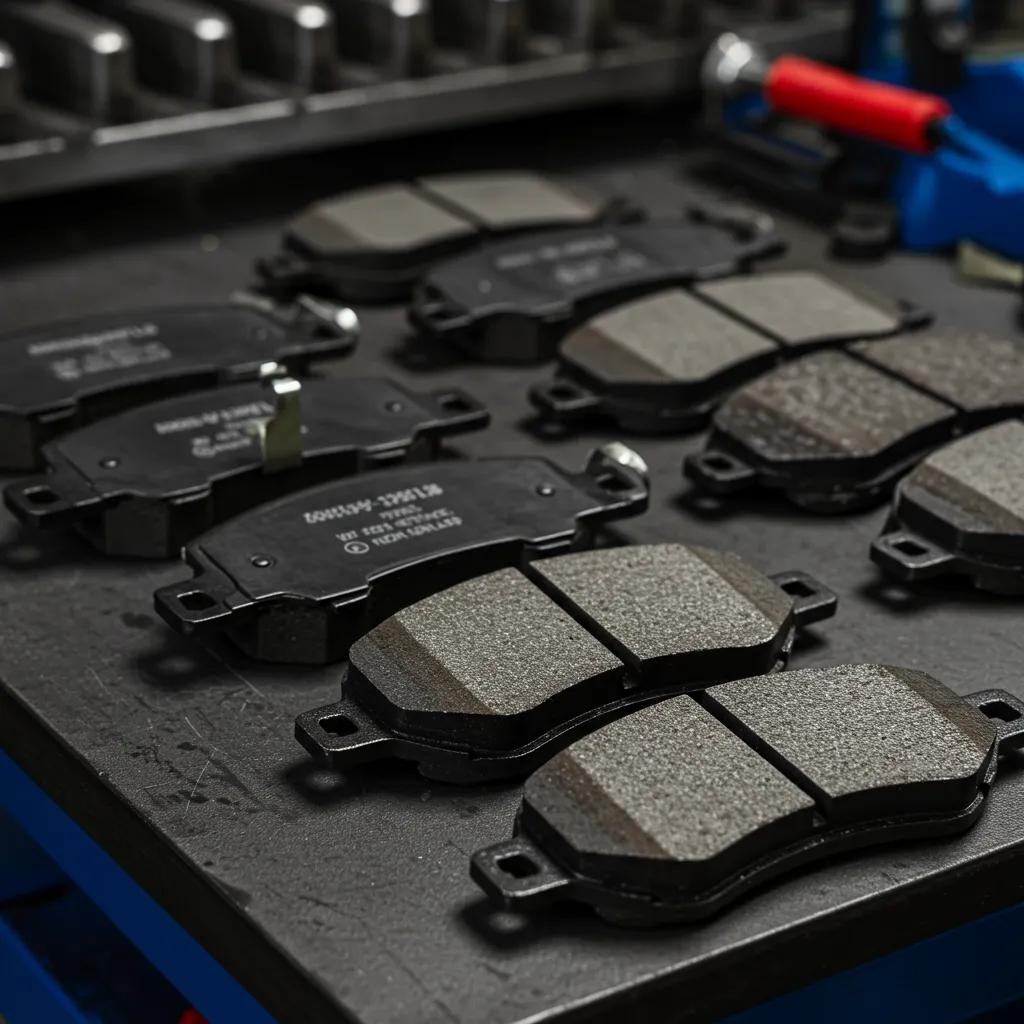
Choosing the right pad material balances noise, longevity, and braking performance for a given vehicle and driving style; technicians match pad selection to use case and budget. Ceramic pads offer quieter operation and low dust for everyday driving, semi-metallic pads provide higher friction and heat tolerance for heavier loads or spirited driving, and organic pads prioritize smooth modulation at a lower price point. Quality components include OE-grade hardware, shims, and brake lubricant to prevent noise and ensure secure installation, while pads are selected based on vehicle weight, daily routes, and driver expectations. This materials discussion leads naturally into how transparent pricing and estimates make tradeoffs understandable for customers.
Brake Pad Performance Characteristics: Methods and Innovations
Along with the developing technology, expectations for improved automobile brake pads are also rising. Research on higher performance brake pads is contin-uing at a rapid pace. It is also recognized that in this field, widespread efforts are being made towards the production of brake pads which are economical, envi-ronmentally friendly and do not pose risks to human health. In recent years, non-industrial waste products have also been used as additives in brake pads, thus contributing to local economy. Performance tests have to be carried out so that the brake pads produced with the new compositions can be used. For this reason, the performance tests of the brake pads are important. This study brings a new overview via an investigation of the methods applied in determining their per-formance characteristics.
Brake pad performance characteristic assessment methods, G Akıncıoğlu, 2021
How Does Our Transparent Pricing and Free Estimates Benefit You?
Transparent pricing and a clear free estimate process let owners compare options—pad types, rotor work, and labor—so cost decisions are informed rather than surprising. A free estimate typically lists recommended parts, labor hours, whether rotors need machining or replacement, and any safety-related recommendations so customers can prioritize repairs. By itemizing cost drivers—pad material, rotor condition, and vehicle complexity—the estimate supports budgeting and prevents last-minute decisions under stress. That clarity also shortens appointment turnaround because customers can approve work with confidence, which ties into the service convenience options described next.
What Convenient and Efficient Service Options Are Available?
Efficient service options reduce time off the road by offering scheduled appointments with streamlined check-in and status updates that keep customers informed throughout the repair. Typical turn-around times depend on whether the work is single-axle or both axles, and whether rotors require resurfacing or replacement; efficient shops maintain parts inventory and clear communication to speed up service. Clear pre-appointment instructions and honest time estimates help customers plan drop-off or alternative transportation without surprises. These convenience practices are designed to make necessary brake maintenance easier to fit into a busy schedule and prepare you for recognizing when service is needed.
What Are the Common Signs You Need Brake Pad Replacement in Columbus OH?
Brake pad wear shows through auditory, tactile, and performance cues that indicate reduced friction or component damage and should trigger inspection. Early signs include high-pitched squeal from wear indicators, progressing to grinding when pads wear to metal, which requires immediate attention to prevent rotor damage. Vibration in the pedal or steering during braking often traces to rotor runout or uneven pad deposits and can escalate if left unchecked. Dashboard brake lights or ABS warnings may indicate pad-related issues or fluid/sensor problems; prompt diagnosis identifies the correct repair path. These indicators lead into detailed explanations about specific symptoms and causes below.
Why Do My Brakes Squeal or Grind?
Squealing often comes from wear indicators or glazed pad surfaces that vibrate under braking and signal that pads are thinning; it can also result from hard pads on certain rotors creating tonal noise. Grinding generally means the friction material is worn down to metal backing and metal-to-metal contact is occurring, which risks severe rotor damage and must be addressed immediately. Technicians inspect pad thickness, rotor surface condition, and hardware to determine whether pads, rotors, or both need replacement or resurfacing. Early action on squeal complaints can prevent grinding scenarios and reduce overall repair costs, which connects to how vibrations are diagnosed.
What Causes a Vibrating Brake Pedal or Steering Wheel?
A vibrating pedal or steering wheel during braking usually points to rotor runout, uneven pad deposit, or caliper sticking that creates inconsistent contact between pad and rotor. The diagnostic process measures rotor thickness variation and runout, inspects calipers for seized pistons, and checks for uneven pad wear patterns to find the root cause. Rotor resurfacing corrects minor runout and surface irregularities, while replacement is recommended if thickness limits are exceeded or runout cannot be corrected. Proper diagnosis ensures the correct cure—resurface, replace, or repair calipers—so vibration is resolved rather than masked temporarily.
How Do Longer Stopping Distances Indicate Brake Pad Wear?
Longer stopping distances occur because worn pads reduce the available friction material, lowering braking force and lengthening the time and distance needed to slow a vehicle safely. Measuring pedal travel and conducting controlled low-speed stopping tests in a safe environment can help drivers detect degraded performance before it becomes critical. Technicians correlate pad thickness measurements with stopping performance to determine whether replacement is needed and whether rotors or additional services will improve results. Proactive replacement based on measured wear helps restore designed stopping distances and reduces risk on wet or high-traffic Columbus roads.
What Does the Brake Warning Light Mean on My Dashboard?
A brake system warning light can indicate low brake fluid, significant pad wear detected by sensors, a parking brake issue, or other pressure-related faults; the ABS light specifically points to anti-lock braking system sensors or related faults. Immediate action depends on the exact light and symptoms: low fluid or an illuminated brake light warrants an in-shop diagnosis to confirm there is no leak or critical failure, while an ABS fault may require sensor testing or wiring inspection. Technicians use code readers and physical inspection to separate pad-wear alerts from hydraulic or electronic faults, ensuring repairs address the true cause rather than only symptoms. Understanding light meanings helps prioritize safe next steps.
What Is the Step-by-Step Brake Pad Replacement Process at Blackstone?
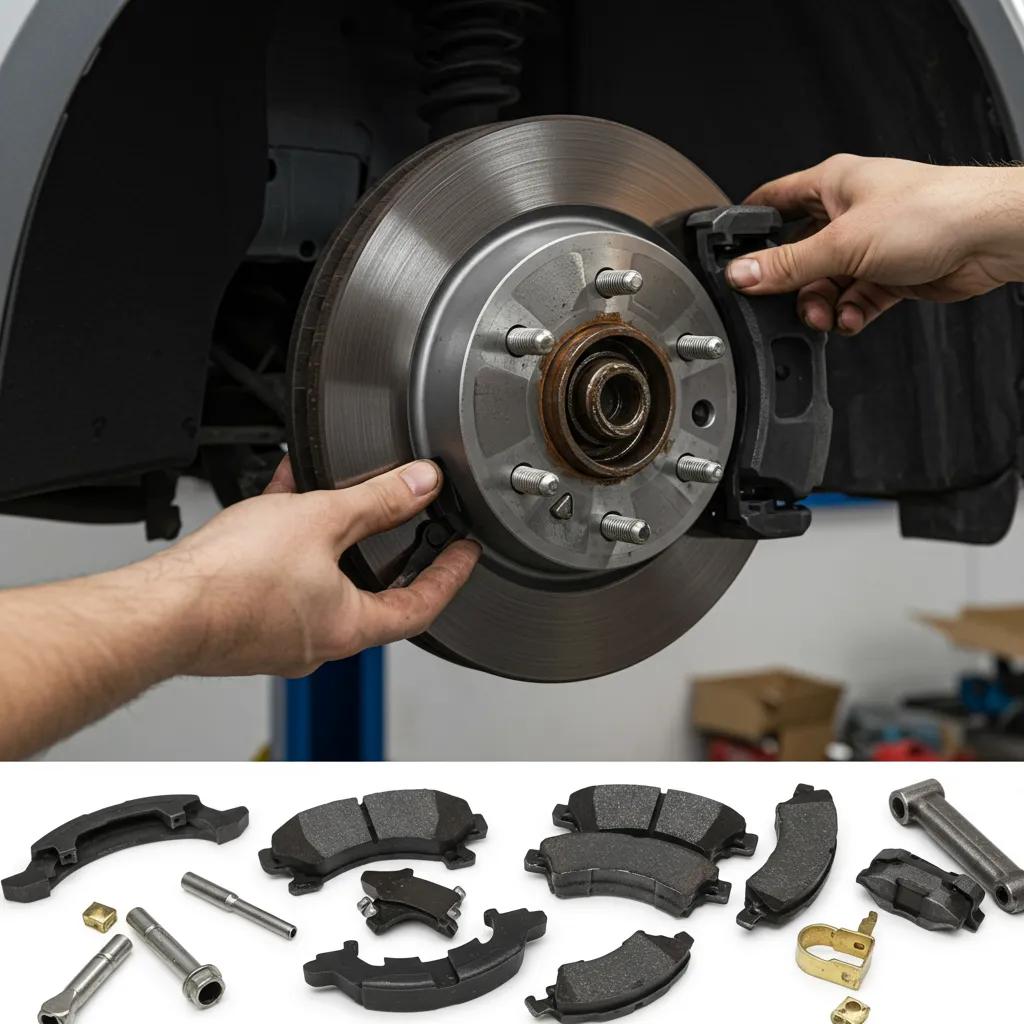
A reliable replacement workflow begins with a thorough inspection, proceeds through careful removal and correct installation of pads and related hardware, evaluates rotor condition for resurfacing or replacement, checks brake fluid, and finishes with a controlled road test to verify performance. Each stage acts as a quality checkpoint to prevent avoidable failures and to document the rationale for recommended work. Clear communication of findings and estimates ensures customers understand what was done and why, which builds trust and reduces the chance of post-service surprises. Below are detailed subsections describing each major step with typical time estimates and quality checks.
How Is a Comprehensive Brake Inspection Performed?
A comprehensive inspection examines pad thickness, rotor surface and thickness, caliper function, brake fluid level and condition, brake lines, and ABS sensors to identify all factors that affect braking performance. Technicians measure pad thickness with calipers, inspect rotor faces for scoring or glazing, and test caliper slider mobility to spot sticking or uneven wear. Fluid condition is checked for contamination and moisture content that can degrade pedal feel and ABS performance, leading to a recommendation for a fluid service if needed. The inspection’s findings shape a prioritized repair estimate and provide the factual basis for any parts or labor recommended.
| Inspection Item | What We Check | Typical Finding |
|---|---|---|
| Pad Thickness | Measure remaining friction material | Replace if below safe threshold |
| Rotor Condition | Surface scoring, runout, thickness | Resurface or replace as needed |
| Caliper Function | Piston movement and slider health | Repair or replace seized components |
What Happens During Professional Brake Pad Removal and Installation?
Removal begins with safely lifting the vehicle and removing the wheel to expose the brake assembly, followed by careful disassembly of retaining hardware and extraction of old pads to avoid damaging calipers or rotors. Technicians inspect and replace any worn hardware—such as clips, pins, or shims—clean contact surfaces, apply appropriate high-temperature lubricant to sliding parts, and install new pads to manufacturer or OE-equivalent standards. Proper torqueing of fasteners and verification of piston retraction ensure correct pad seating, and a controlled bedding-in process may be recommended to optimize pad/rotor mating. Attention to these details reduces noise, ensures even wear, and protects rotor life.
| Process Step | Time Estimate | Quality Check |
|---|---|---|
| Lift and wheel removal | 10–15 minutes | Safe lift points used |
| Pad removal and hardware inspection | 15–25 minutes | Hardware replaced if worn |
| Installation and torque | 15–25 minutes | Torque and alignment verified |
| Initial test and paperwork | 10–15 minutes | Road test scheduling confirmed |
When Are Brake Rotors Resurfaced or Replaced?
Rotors are resurfaced when surface irregularities or light scoring can be corrected without dropping below the rotor’s minimum thickness limit; replacement is required if scoring is deep, thickness is below safe limits, or runout exceeds safe values. Technicians measure thickness and runout and compare results to manufacturer limits to decide whether machining or replacement provides the safest outcome. Resurfacing can be cost-effective for moderate wear but may shorten rotor life if repeated; replacement restores full spec thickness and performance when damage is significant. Understanding these tradeoffs helps customers weigh immediate cost versus long-term safety and performance.
OEM Brake Pad Comparison: Tribological Testing for Cost-Effectiveness
The construction of the decision matrix ( b i j ) , elements of b i j is j th performance of the brake pads reduces the frequent changing of brake pads and the maintenance cost will reduce, The construction of the decision matrix ( b i j ) , elements of b i j is j th performance of the brake pads reduces the frequent changing of brake pads and the maintenance cost will reduce.
A comparative study of original equipment manufacturer brake pads using tribological testing and hybrid ranking for enhanced decision making and cost effectiveness, P Balaji, 2024
Why Is Brake Fluid Checked and Topped Off?
Brake fluid transmits hydraulic force and must remain clean and moisture-free to maintain consistent pedal feel and to avoid corrosion within the system; contamination reduces boiling point and can impair ABS operation. Checking fluid during pad replacement is efficient because the system is already being inspected and brake pedal feel is being evaluated after work is completed. If fluid shows moisture or contamination, technicians recommend a full flush to restore hydraulic integrity and prevent future failures. Proper fluid maintenance protects ABS function and pedal response, which ties into the importance of the final road test.
How Does the Final Road Test Ensure Safety and Quality?
A controlled road test verifies pedal feel, stopping distance, absence of unusual noises or vibration, parking brake function, and the consistency of ABS performance under typical driving conditions. Technicians observe braking behavior across multiple speeds and document any anomalies for immediate correction before vehicle release. This final verification closes the service loop by confirming that inspection findings and repairs successfully restored braking performance. Clear communication of test results to the vehicle owner ensures transparency and supports confidence in the completed service.
How Much Does Brake Pad Replacement Cost in Columbus OH?
Brake pad replacement cost depends on pad material, labor rates, rotor work, and vehicle complexity; providing transparent ranges and a comparison table helps drivers plan and avoid surprises. Typical per-axle cost ranges vary by pad type and whether rotors require machining or replacement, so understanding these drivers clarifies why estimates differ between vehicles and driving styles. A simple EAV table below compares pad types by typical cost per axle, expected lifespan, noise level, and best use cases to guide selection. Free estimates are offered so customers can get an accurate quote based on inspection findings rather than a vague online number.
Introductory paragraph: The following comparison outlines common pad choices and how they affect cost and performance.
| Pad Type | Typical Cost per Axle | Expected Lifespan (miles) | Noise Level | Best Use Case |
|---|---|---|---|---|
| Ceramic | $120–$200 | 30,000–60,000 | Low | Daily driving, low dust |
| Semi-metallic | $100–$180 | 25,000–50,000 | Medium | Towing, heavier vehicles |
| Organic (NAO) | $80–$140 | 20,000–40,000 | Low-Medium | Budget-friendly, light use |
What Factors Affect the Price of Brake Pad Replacement?
Multiple factors drive the final price: pad material and brand, whether rotors need machining or replacement, labor time for vehicle-specific complexity, and any additional hardware or caliper work required. Luxury or performance vehicles typically require more labor and specialized parts, which increases cost, while economy cars often have lower parts and labor requirements. Rotor resurfacing adds machining costs but can be less expensive than full rotor replacement when within safe limits, while caliper replacement or brake line work increases overall repair scope. These considerations highlight why free, in-person estimates based on inspection deliver the most accurate pricing.
Do We Offer Free Brake Repair Estimates?
A free estimate policy allows customers to understand required repairs and costs before authorizing work, and typically includes an inspection summary, recommended parts and labor, and options with pricing to help prioritize safety needs. To request a free estimate, customers provide vehicle make/model and describe symptoms so the shop can schedule an inspection and prepare an itemized quote. In-person inspections are recommended for accuracy because they reveal rotor condition and other issues that online calculators cannot capture. Clear, written estimates reduce surprises and support comparison shopping based on value rather than lowest sticker price.
How Does Our Pricing Compare to Other Brake Shops in Columbus OH?
Value-based pricing emphasizes technician skill, parts quality, warranty support, and transparent documentation rather than simply low upfront cost, which can hide poor parts or incomplete repairs. Comparing estimates should include parts brand, included services (hardware, lubricant, test drive), and any warranty or follow-up inspection policy so you evaluate total ownership cost and safety. Lower-cost providers may omit necessary rotor work or hardware, increasing long-term expense and risk, while higher-value shops justify price with thorough inspection and completed quality checkpoints. Assessing estimates based on documented scope yields better safety and long-term value than comparing only the bottom-line price.
What Other Brake Services Complement Brake Pad Replacement in Columbus OH?
Complementary services improve braking performance and longevity by addressing adjacent components that affect stopping power and system reliability. Rotor resurfacing or replacement restores smooth contact surfaces, brake fluid flushing preserves hydraulic function, ABS diagnostics ensure electronic stability during emergency braking, and emergency brake service handles mechanical parking brake issues. Each service has distinct indications and recommended intervals, and a comparison table below helps identify when each is appropriate. Understanding these related services helps drivers schedule the right combination of maintenance for safe braking.
Introductory paragraph: The table below compares common complementary brake services by indication, typical cost range, and recommended frequency.
| Service | Indication | Typical Cost Range | Recommended Frequency |
|---|---|---|---|
| Rotor Resurfacing | Light scoring or minor runout | $30–$80 per rotor | As needed when above minimum thickness |
| Rotor Replacement | Deep scoring or below thickness limit | $80–$250 per rotor | Replace when machining is unsafe |
| Brake Fluid Flush | Contaminated or aged fluid | $80–$150 | Every 2 years or per inspection |
| ABS Diagnostics | ABS warning light or fault codes | $80–$150 diagnostics | As needed when light appears |
When Is Brake Rotor Replacement or Resurfacing Needed?
Rotor replacement or resurfacing depends on measurable criteria: excessive scoring, runout, or thickness below manufacturer limits mandates replacement; light surface defects can often be corrected with machining. Technicians base decisions on safety thresholds rather than cosmetic factors, considering vehicle use and cost-performance tradeoffs. Resurfacing may be economical when rotors have sufficient thickness, but repeated machining can jeopardize long-term rotor life. Clear measurement-based decisions ensure rotor choices restore safe braking geometry and performance.
Why Is Brake Fluid Flush Important for Brake Performance?
Brake fluid absorbs moisture over time, lowering boiling point and increasing corrosion risk inside the hydraulic system, which affects pedal firmness and ABS reliability. A flush restores clean fluid with the correct boiling characteristics and removes accumulated contaminants that can cause internal corrosion of master cylinders and ABS modulators. Recommended intervals vary, but testing fluid condition during services like pad replacement ensures hydraulic integrity is assessed when brakes are already being inspected. Proper fluid maintenance preserves pedal feel and prevents unexpected hydraulic failures.
How Do Brake System Inspections and ABS Diagnostics Improve Safety?
Comprehensive inspections and ABS diagnostics detect worn sensors, wiring faults, and hydraulic anomalies before they escalate into failures that compromise stopping ability or vehicle stability during emergency braking. Diagnostics read stored fault codes, test wheel speed sensors, and verify ABS module operation, while inspections evaluate lines, hoses, and component health. Early detection allows targeted repairs that maintain ABS function and braking predictability, which is essential for modern vehicles and wet or traffic-heavy driving conditions. Scheduling diagnostics when warning lights appear prevents cascading issues.
When Should You Consider Emergency Brake Service?
Emergency brake service is warranted for critical symptoms including sudden loss of braking, severe grinding, visible fluid leaks, or complete brake pedal collapse, and requires immediate action to protect occupant and public safety. If you experience any of these symptoms, the safety priority is to stop driving and arrange for a tow or in-shop diagnosis rather than continuing to operate the vehicle. Emergency services prioritize diagnosis and repair to restore basic stopping capability quickly and safely. Understanding these urgent signs and safe next steps prevents catastrophic outcomes on the road.
Frequently Asked Questions
What Should I Do If My Brake Warning Light Comes On?
If your brake warning light illuminates, it’s crucial to address it immediately. This light can indicate various issues, such as low brake fluid, worn brake pads, or problems with the anti-lock braking system (ABS). First, check your brake fluid level; if it’s low, top it off and see if the light goes off. If the light remains on, schedule an inspection with a qualified technician to diagnose the underlying issue. Ignoring this warning can lead to compromised braking performance and safety risks.
How Can I Extend the Life of My Brake Pads?
To extend the life of your brake pads, practice smooth and gradual braking rather than sudden stops, which can cause excessive wear. Regularly inspect your brakes and have them serviced according to your vehicle’s maintenance schedule. Avoid overloading your vehicle, as added weight increases brake strain. Additionally, consider using high-quality brake pads suited for your driving style and conditions. Keeping your brake system well-maintained, including regular fluid checks and rotor inspections, will also help prolong pad life.
What Are the Risks of Delaying Brake Pad Replacement?
Delaying brake pad replacement can lead to severe consequences, including reduced braking efficiency and increased stopping distances. Worn pads can cause damage to rotors, leading to costly repairs. Additionally, if pads wear down to the metal, it can result in grinding noises and potential brake failure, posing a significant safety risk. Regular inspections and timely replacements are essential to ensure your vehicle’s braking system functions effectively and safely, protecting both you and other road users.
Can I Replace Brake Pads Myself?
While it is possible to replace brake pads yourself, it requires a good understanding of automotive mechanics and the right tools. If you choose to do it, ensure you follow a detailed guide and have all necessary equipment, including a jack, lug wrench, and torque wrench. However, if you’re not confident in your skills, it’s advisable to seek professional help. A qualified technician can ensure the job is done correctly, safely, and in compliance with manufacturer specifications, which is crucial for your vehicle’s performance.
What Are the Benefits of Upgrading to High-Performance Brake Pads?
Upgrading to high-performance brake pads can significantly enhance your vehicle’s braking capabilities. These pads typically offer better heat resistance, improved stopping power, and reduced brake fade during aggressive driving or towing. They can also provide a more consistent pedal feel and shorter stopping distances, which is especially beneficial in high-performance or heavy-duty applications. While they may come at a higher initial cost, the long-term benefits in safety and performance can make them a worthwhile investment for many drivers.
How Do Weather Conditions Affect Brake Pad Wear?
Weather conditions can significantly impact brake pad wear. In wet or snowy conditions, drivers may use brakes more frequently to maintain control, leading to faster wear. Additionally, road salt and debris can cause corrosion and damage to brake components. Hot weather can also lead to brake fade, especially if the pads are not designed for high temperatures. Regular inspections and maintenance are essential to ensure your brake system remains effective, regardless of the weather, helping to prolong the life of your brake pads.
What Should I Look for When Choosing Brake Pads?
When choosing brake pads, consider factors such as material type, intended use, and noise levels. Ceramic pads are quieter and produce less dust, making them ideal for daily driving. Semi-metallic pads offer better performance under heavy loads but may be noisier. Evaluate your driving style, vehicle type, and budget to find the best match. Additionally, look for pads with good reviews and those that meet or exceed OEM specifications for safety and performance. Consulting with a professional can also help you make an informed decision.
How Long Does Brake Pad Replacement Take?
Typical brake pad replacement for one axle takes about one to two hours under normal conditions, including inspection, pad change, and a brief test; both axles are commonly completed in two to three hours. Time increases when rotors require machining or replacement, when additional hardware or caliper repairs are needed, or when vehicle-specific procedures add complexity. Shops that streamline check-in, parts availability, and communication can sometimes offer same-day service for straightforward replacements. Planning for a half-day allows for diagnostics and a thorough final road test to ensure safe operation.
How Often Should Brake Pads Be Replaced?
Brake pad replacement intervals vary widely based on driving style, vehicle weight, and local conditions, with a common range of 30,000 to 70,000 miles as a general guide. Frequent stop-and-go city driving, towing, or spirited driving accelerates wear toward the lower end of that range, while mostly highway driving often extends pad life. Regular inspections—annually or at recommended service intervals—help detect wear trends so replacements are done proactively rather than reactively. Monitoring auditory and performance signs complements mileage-based schedules for the best safety outcome.
Wear Rate Models for Composite Brake Pads: Cost and Lifespan Analysis
Wear rate appraisals are currently indispensable on agro-waste filled composites for brake pads as they predict the expected lifespan of the materials. However, existing wear rate models are inaccurate as predictions omit the inflationary cost of the materials. In this paper, the idea is to account for the inflationary cost of the materials and adjust that into a pseudo wear rate model. The wear rate of agro-waste fillers in an organic matrix to create brake pads under dry sliding wear experiments was considered. Five composite specimens were fabricated in cylindrical specimen height of 14.5 mm and varying diameters of 8, 10, 12 and 15.5 mm and the material wear loss was measured. The 8, 10 and 12 mm diameter specimens revealed that the composite with the best and worst wear resistance were the wear rates of 0.6, 1.4, 1.73 mm3/Nm, and 3.07, 3.54, 4.19 mm3/Nm, respectively. The 15.5 mm diameter specimen showed lower wear rates of 2.13 and 2.14 and 1.56 mm3/Nm than commercial brake pad’s 2.58 mm3/Nm. The pseudo wear rate model predicts the impact of the independent variable i.e. inflationary cost, opportunity cost, time, and sample size. The utility of this effort is to assist the composite manufacturers to take cost-effective decisions and design optimisation can be accomplished to lower the cost of composite products.
A wear rate model incorporating inflationary cost of agro-waste filled composites for brake pad applications to lower composite cost, OA Ajibade, 2021
Do I Need to Replace Rotors When Changing Brake Pads?
Replacing rotors is conditional: if rotors show deep scoring, warping, or are below minimum thickness, replacement is necessary; otherwise resurfacing may restore a flat surface for new pads. Technicians measure thickness and runout to determine whether machining will yield a safe surface, and they recommend replacement when machining would reduce rotor life excessively. Replacing rotors with pads can provide the best long-term performance but increases cost; resurfacing balances cost and function when within safe limits. A data-driven inspection helps owners choose the safest and most cost-effective option.
What Types of Brake Pads Are Best for My Vehicle?
Best pad choice depends on driving needs: ceramic pads suit daily commuting with low noise and dust, semi-metallic pads suit heavier loads or performance needs with higher heat tolerance, and organic pads can be a budget-friendly option for light use. Consider vehicle weight, trailer towing, climate, and personal priorities like noise or dust levels when selecting pad material. Professional recommendation based on inspection and driving profile ensures pads match performance expectations and budget constraints. Always weigh immediate cost versus long-term performance and safety.
How Can You Schedule Your Brake Pad Replacement Service in Columbus OH?
Scheduling a brake inspection and estimate is straightforward: provide vehicle details and describe symptoms, then choose an appointment time that fits your schedule for inspection and any recommended repairs. Blackstone Complete Auto Care LLC accepts appointment requests and prepares transparent estimates based on in-shop inspections so customers can approve work with full information. Customers are encouraged to have basic vehicle details ready—make, model, year, and a brief description of symptoms—to expedite the estimate process. The final paragraph below explains practical scheduling options and how to confirm shop location using local business profiles.
What Are Our Appointment Scheduling Options?
You can schedule an appointment by contacting the shop with vehicle make/model and symptom details so they can reserve an inspection slot and prepare parts if needed, which reduces turnaround time. Walk-in options may be available for urgent issues, but scheduled appointments guarantee a focused diagnostic window and written estimate. When booking, provide information about whether braking is affected on the front, rear, or both axles to help technicians allocate the appropriate time. Asking for a free estimate during scheduling clarifies expectations and streamlines the repair authorization process.
Where Is Blackstone Complete Auto Care Located in Columbus OH?
Blackstone Complete Auto Care LLC serves Columbus and surrounding areas and maintains a public business profile on mapping platforms where customers can view location details and directions. Searching for the shop by name on major map services will provide the most current directions and user-submitted information to plan your visit. If you prefer an estimate before visiting, describe symptoms and vehicle details when requesting an appointment so the shop can prepare a focused inspection. This approach ensures accurate quotes and reduces time in-shop.
What Are Our Hours of Operation for Brake Services?
Hours of operation can vary and are best confirmed via the shop’s public business profile or by requesting appointment availability when you call or message to schedule, ensuring you get current hours and any emergency service options. Because hours may change for holidays or special circumstances, confirming availability at the time of booking helps secure a convenient appointment. Scheduling ahead also increases the chance of same-day service for straightforward replacements and minimizes wait times. Confirming hours before heading to the shop ensures a smooth service experience.
Conclusion
Timely brake pad replacement is essential for maintaining vehicle safety and performance, ensuring optimal stopping power and reducing the risk of costly repairs. By choosing Blackstone Complete Auto Care, you benefit from expert ASE-certified technicians, transparent pricing, and high-quality components tailored to your driving needs. Don’t wait for warning signs; schedule your brake inspection today to keep your vehicle in top condition. Explore our services and request a free estimate to take the first step towards safer driving.