
Affordable Brake Pad Replacement in Columbus Ohio: Cost, Service, and Scheduling Guide
Brake pad replacement is the process of removing worn friction material and installing new pads to restore safe braking performance, and it’s essential for preventing longer-term damage to rotors and calipers. This guide explains cost ranges, diagnostic signs, maintenance routines, and scheduling steps tailored for Columbus drivers who need affordable brake service without sacrificing safety. Many drivers want transparent pricing and clear decision criteria—this article breaks down typical Columbus costs by axle and service type, explains how local driving conditions affect wear, and shows when to replace rotors alongside pads. You’ll also find practical maintenance schedules, a decision matrix for pads versus rotors, and step-by-step booking instructions so you can get an accurate inspection and estimate before committing to repairs. Throughout, the focus is on educating drivers first, with brief, helpful information about Blackstone Complete Auto Care LLC’s local approach to affordable, transparent brake service where relevant.
How Much Does Brake Pad Replacement Cost in Columbus Ohio?
Brake pad replacement cost depends on parts, labor, pad material, and whether rotors are resurfaced or replaced; understanding these components helps drivers anticipate a realistic invoice. In Columbus, typical price drivers include pad type (ceramic, semi-metallic, organic), rotor condition, and vehicle complexity; labor rates and regional supply costs also influence final estimates. Below is a concise table that breaks down common cost components so you can scan what typically contributes most to a brake job. After the table, we’ll cover average price ranges and how specific factors change those numbers.
Different repair components contribute predictably to a total brake service estimate:
| Component | Typical Role | Typical Price Range (Per Axle) |
|---|---|---|
| Brake pads | Friction material replacement | $100–$300 |
| Rotors (replacement) | New rotating surface when worn | $150–$450 |
| Rotor resurfacing | Machining to restore smooth surface | $40–$100 |
| Labor | Technician time for inspection & install | $80–$200 |
| Hardware & brake fluid | Clips, shims, fluid changes | $20–$120 |
This table shows that pads and rotors are the largest parts costs while labor and small hardware vary; next we look at average scenarios to map these ranges to typical vehicles.
What Are the Average Prices for Brake Pad Replacement in Columbus?
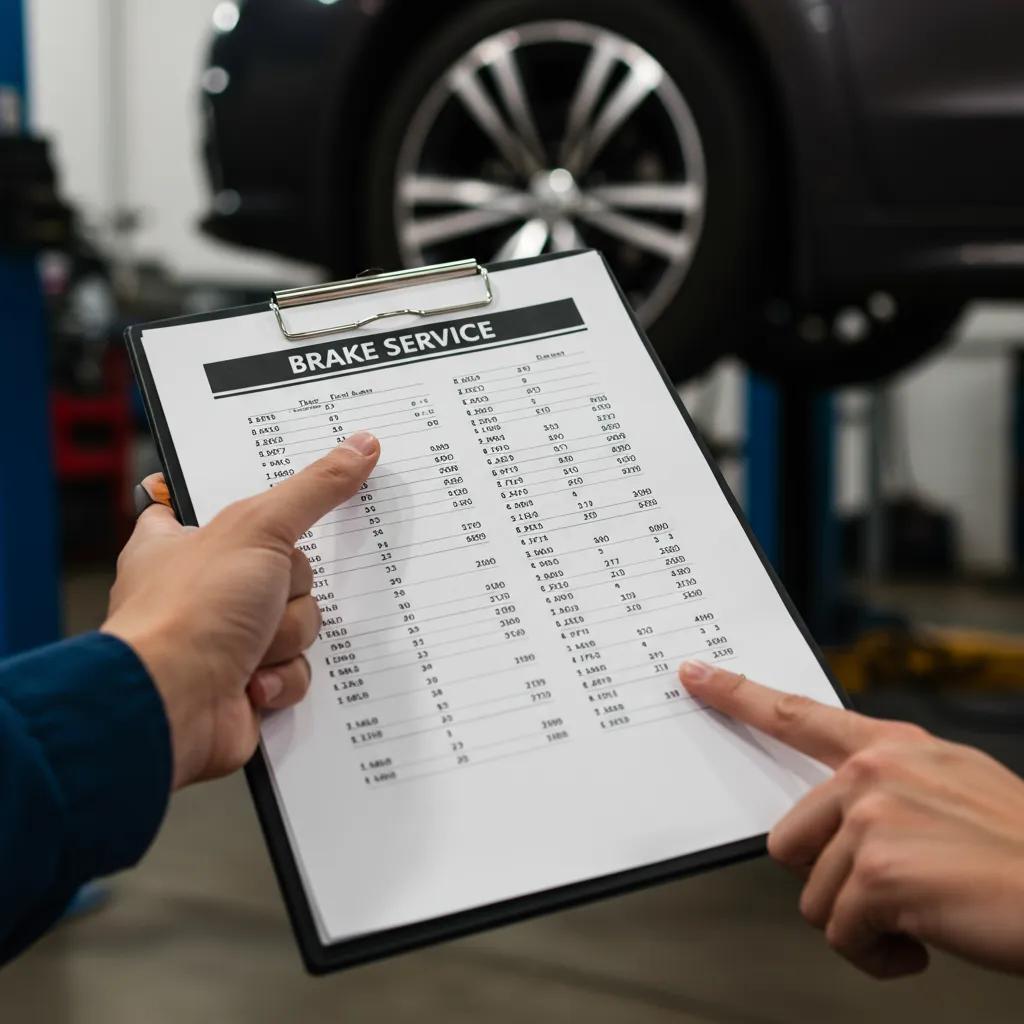
For many compact and economy cars, pads-only jobs on one axle commonly fall in the lower end of the range, while larger vehicles trend higher due to heavier components and longer labor times. Expect economy cars to average near the $100–$200 per axle range for pads only, mid-size sedans in the $150–$275 range, and trucks or SUVs toward the $200–$350 range depending on pad material and access. When rotors are replaced as well, per-axle totals commonly rise into the $300–$800 band depending on rotor quality and whether machining is used, which impacts the next topic: cost drivers.
These examples illustrate typical costs but vehicle-specific factors can push estimates above or below these ranges; to get an accurate price, an inspection is required and described later in the scheduling section.
Which Factors Influence Your Brake Replacement Cost?
Material choice is a primary cost influencer: ceramic pads generally cost more than organic pads but produce less dust and are quieter, while semi-metallic pads are a middle ground in performance and price. Rotor condition is another major variable—warped or deeply scored rotors often need replacement rather than resurfacing, which increases parts and labor costs. Labor rates vary by shop and vehicle complexity; luxury or performance cars often require more time or specialized tools, increasing shop labor line items. These factors combine multiplicatively, so small changes in material or rotor needs can meaningfully affect the final estimate.
Understanding these drivers helps prioritize decisions: if budget is the main constraint, choosing quality pads without replacing rotors may be acceptable in many cases, whereas safety-critical rotor damage should not be deferred.
How Do Labor and Parts Affect the Total Brake Service Price?
Labor typically covers inspection, wheel removal, caliper service, pad installation, and road testing; on average, shops allocate one to two hours per axle depending on complexity, which explains why labor often represents 25–40% of the invoice. Parts quality affects durability and warranty expectations—aftermarket economy pads lower upfront cost but may wear faster, while premium materials raise initial cost but can reduce long-term expenses. Shops may also charge for ancillary items like brake hardware kits or brake fluid if service scope requires them, which appears as separate line items on an itemized estimate. Being aware of common labor times and parts categories helps drivers interpret estimates and compare value rather than price alone.
Knowing how labor and parts break down gives you leverage to ask targeted questions during an inspection, which is the next area we cover when discussing local deals and discounts.
Are There Affordable Brake Replacement Deals and Discounts in Columbus?
Columbus drivers can often find seasonal promotions, online coupons, or value packages that bundle inspection with pad service to reduce out-of-pocket cost, but it’s important to verify what’s included before scheduling. Typical verified discount types include online booking discounts, service package pricing, and promotions for first-time customers; always confirm whether rotors, hardware, or taxes are excluded from advertised offers. When evaluating deals, prioritize shops that provide itemized estimates and explain exclusions so a low headline price doesn’t exclude essential repairs or diagnostics. The next section explains how local providers deliver affordable, reliable service and how to interpret those transparent estimates in practice.
When considering a local shop, transparency about inclusions and exclusions prevents surprises on the final invoice and helps you choose the best value for safety and longevity.
Why Choose Blackstone Complete Auto Care for Affordable Brake Service in Columbus?
Blackstone Complete Auto Care LLC positions itself as an information-driven, lead-generation oriented auto care provider focused on affordability, reliability, and clear customer communication for Columbus drivers. The company emphasizes transparent pricing and approachable inspections so drivers can make informed decisions without pressure, which aligns with common concerns about unexpected shop upsells. Blackstone’s local approach centers on giving visible, itemized estimates and explaining options—pads only versus pads with rotors—so customers understand trade-offs before authorizing work. Below we outline what drivers can expect from their service process and how that supports confidence in repair choices.
Blackstone’s value proposition rests on three core attributes that resonate with budget-conscious drivers:
- Affordability: Clear estimate options that prioritize cost-effective repairs when safe and appropriate.
- Reliability: Consistent inspection-driven recommendations focused on safety and long-term value.
- Local convenience: Accessible scheduling and follow-up information tailored to Columbus driving needs.
These attributes set expectations; next we explain operational practices Blackstone uses to build trust during the repair process.
What Makes Blackstone’s Brake Services Reliable and Affordable?
Blackstone aims to balance cost and safety by offering value-tier pad options alongside higher-performing alternatives and explaining each option’s trade-offs in noise, dust, and longevity. Their estimates separate parts and labor clearly, so drivers can see where savings are achieved and where investment yields longer-term benefits. Reliability also comes through a standardized inspection-to-repair workflow: inspection, documented findings, recommended options, and an itemized quote before work proceeds. This transparent approach helps drivers prioritize necessary safety work while considering budget-friendly choices when appropriate.
How Does Blackstone Ensure Customer Trust and Satisfaction?
To build trust, Blackstone emphasizes clear communication during the inspection and repair process, including explaining diagnostic findings and required actions in plain language. The shop provides itemized estimates so customers can see parts, labor, and any recommended additional services instead of a single lump-sum price. Customers are encouraged to ask questions and compare options, which helps align repairs with their priorities—whether lowest initial cost or longer-lasting components. This transparent, consultative approach reduces friction and supports repeat business built on clarity rather than persuasion.
What Convenient Scheduling Options Does Blackstone Offer?
Blackstone accepts appointment requests through its website and Google Business Profile channels, and it encourages drivers to supply vehicle make, model, year, and symptoms to speed the estimate process; walk-ins may be accommodated depending on availability. When scheduling, provide basic vehicle details and describe noises or performance issues so staff can plan the appropriate inspection time and parts availability. Typical appointments begin with a free inspection and an itemized estimate; understanding estimated turnaround time helps drivers plan transportation during the repair. Clear scheduling and preparation reduce delays and help ensure an accurate, affordable repair outcome.
Preparing the right vehicle information before booking makes the inspection more efficient and leads to faster, more accurate quotes.
What Are the Common Signs of Worn Brake Pads and When Should You Replace Them?
Worn brake pads show distinct auditory, tactile, and visual signs that indicate decreased braking effectiveness and the need for inspection; recognizing these signs early prevents rotor damage and more costly repairs. Common indicators include persistent squeal, grinding metal-on-metal noise, vibration through the steering wheel, and visibly thin pad material when viewed through the wheel. This section provides a checklist drivers can use for quick self-assessment, an explanation of when symptoms become emergencies, and a local perspective on how Columbus conditions can accelerate pad wear.
Use the checklist below to quickly evaluate potential brake pad issues before scheduling a professional inspection.
- Squealing or high-pitched noise: A wear indicator or glazed pad surface producing a persistent squeal.
- Grinding sounds: Metal-on-metal contact indicating pads are worn to backing plates—seek immediate service.
- Vibration during braking: Warped rotors or uneven pad wear that reduces braking stability.
- Soft or spongy pedal: Possible brake fluid or caliper issues that require inspection.
- Visual thinning: Less than 3–4 mm of pad material visible through the wheel suggests replacement soon.
How Can You Identify Warning Signs of Brake Pad Wear?
A practical self-inspection includes listening for consistent noises during braking, feeling for pedal response changes, and visually checking pad thickness through wheel spokes; any grinding noise or a soft pedal requires immediate attention. Squealing that appears only when braking at low speeds often indicates the wear indicator contacting the rotor and suggests pads are approaching the end of serviceable life. Visual inspection showing less than about 3–4 millimeters of friction material is a clear prompt to schedule replacement before rotor damage occurs. This symptom-based approach helps drivers prioritize professional inspection and avoid more expensive rotor work.
Recognizing these diagnostics enables timely action and guides whether immediate scheduling is needed, which we cover next.
When Is It Unsafe to Delay Brake Pad Replacement?
Delaying service becomes unsafe when drivers hear continuous grinding, experience significantly reduced stopping power, or notice brake warning lights—these are red-flag conditions that require immediate professional attention. Grinding usually means the pads are fully worn and the metal backing is scoring the rotor, which can lead to catastrophic loss of braking performance if not corrected. Similarly, a spongy pedal or inconsistent braking force could indicate fluid or caliper problems that elevate crash risk and should not be postponed. Understanding these red flags helps drivers decide between scheduling routine service and seeking urgent repair.
Immediate action on severe symptoms prevents escalation to more expensive repairs and maintains on-road safety.
How Do Columbus Driving Conditions Affect Brake Pad Wear?
Columbus’s stop-and-go city traffic, frequent short trips, and winter road salt contribute to more frequent brake usage and can accelerate pad and rotor wear compared with mostly highway driving. Short, repeated stops increase friction cycles and heat, which can thin pads faster and promote glazing; winter salt and grit combine with water to increase abrasive wear on pads and rotors. Drivers who regularly commute in dense traffic or perform many short errands should inspect brakes more often—typically during routine service intervals—to catch accelerated wear. Awareness of local driving patterns helps tailor inspection frequency and maintenance strategies to prolong component life.
Adapting inspection cadence to local conditions ties directly into maintenance practices that extend pad life, discussed in the next section.
How Can You Extend the Life of Your Brake Pads with Proper Maintenance?
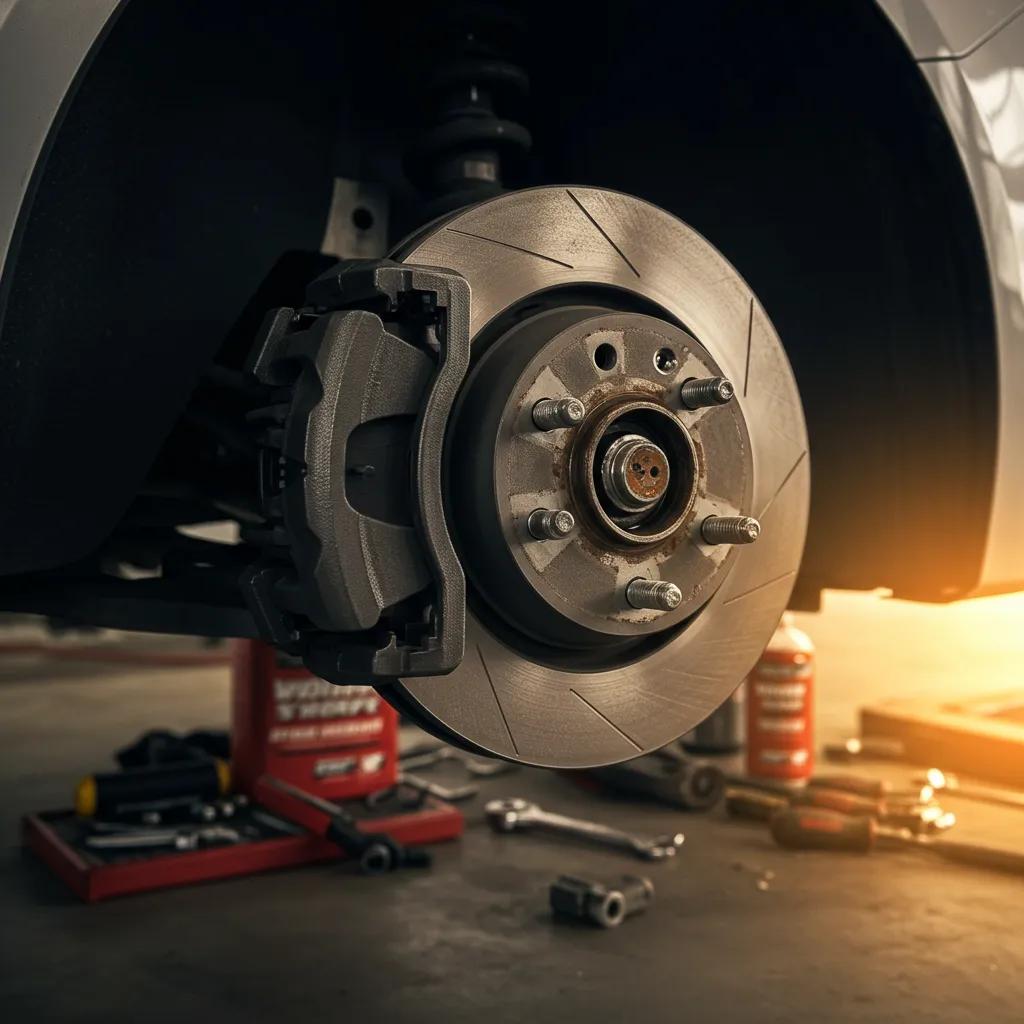
Extending brake pad life combines routine inspections, timely brake fluid maintenance, and driving habits that reduce unnecessary friction; together these measures lower long-term costs and improve safety. Regular visual checks, scheduled mechanical inspections, and replacing brake fluid at recommended intervals preserve braking responsiveness and protect calipers and rotors. Below is a maintenance table showing common tasks, suggested frequency, and the benefit each provides so you can implement a simple preventive schedule tailored to typical Columbus driving patterns.
Preventive maintenance tasks with frequency and benefits:
| Maintenance Task | Frequency | Benefit / Effect on Pad Life |
|---|---|---|
| Visual pad check | Every oil change / 5,000 miles | Early detection of thinning pads |
| Professional brake inspection | Every 10,000–15,000 miles | Identifies rotor wear and caliper issues |
| Brake fluid replacement | Every 2 years or per manufacturer | Prevents moisture-related performance loss |
| Hardware & caliper service | As needed during inspection | Ensures even pad wear and full retraction |
What Routine Brake Maintenance Should Columbus Drivers Follow?
Drivers should visually inspect pads and rotors during wheel cleaning or oil changes, watch for abnormal noises, and schedule a professional inspection at recommended intervals or when symptoms arise. A practical cadence is a quick visual check every oil change and a more thorough professional inspection every 10,000–15,000 miles or sooner for city drivers with heavy stop-and-go habits. During professional inspections, technicians can measure pad thickness, rotor runout, and check caliper operation so small issues are corrected before they become major repairs. Consistent maintenance reduces the probability of emergency service and spreads repair costs over time.
Routine preventive checks also make it easier to plan repairs during convenient times rather than in response to sudden failures.
How Does Timely Brake Fluid Replacement Improve Brake Performance?
Brake fluid absorbs moisture over time, which lowers its boiling point and can cause a spongy pedal and reduced performance under heavy braking; replacing fluid on schedule restores hydraulic responsiveness. Fresh fluid maintains a higher boiling point and reduces corrosion inside lines and components, protecting calipers and master cylinders that influence pad wear patterns. Many shops recommend fluid replacement at intervals tied to time or mileage to preserve system health, and signs such as a soft pedal or dark, contaminated fluid indicate replacement is due. Maintaining fluid quality supports consistent braking behavior and promotes even pad wear.
Good hydraulic maintenance complements pad and rotor care and reduces the likelihood of uneven wear that shortens pad life.
What Driving Habits Help Preserve Brake Pad Longevity?
Adopting smooth, anticipatory driving—allowing more following distance, avoiding aggressive stops, and using engine braking where appropriate—reduces heat cycles and friction that accelerate pad wear. Avoiding heavy loads and minimizing rapid acceleration followed by sudden braking also decreases the stress on pads and rotors, helping pads last longer between services. In city traffic, selecting routes with fewer abrupt stops or consolidating errands reduces braking events and cumulative wear. Behavioral changes paired with regular maintenance can extend pad life by thousands of miles and improve overall vehicle safety.
Behavioral techniques are low-cost interventions that compound with mechanical maintenance to deliver longer service life and lower total ownership costs.
Should You Choose Brake Pads Only or Brake Pads with Rotor Replacement?
Deciding whether to replace only pads or both pads and rotors requires assessing rotor thickness, runout (warping), and surface condition; when rotors are below minimum thickness or severely scored, replacement is required. Combining pads and rotors can deliver longer-lasting, more consistent braking performance and may be more cost-effective over time, while pads-only jobs minimize immediate cost but risk shorter intervals to next service. The table below offers a decision matrix linking condition indicators to typical cost impact so you can weigh safety and budget simultaneously.
| Service Option | Typical Indication | Estimated Cost Impact |
|---|---|---|
| Pads only | Pads thin, rotors smooth, within spec | Lower immediate cost |
| Resurface rotors + pads | Minor scoring, thickness within limits | Moderate cost; extends rotor life |
| Replace rotors + pads | Deep scoring, warping, below thickness | Higher cost; improves long-term performance |
What Are the Differences Between Brake Pad Replacement and Rotor Replacement?
Brake pads provide the friction surface that slows the vehicle, while rotors are the metal discs the pads clamp onto; pads wear faster and are inexpensive relative to rotors, which are larger, heavier components. Pads-only replacement swaps friction material but leaves rotor condition unchanged, which is suitable when rotors are within thickness and surface specifications. Rotor replacement installs a new contact surface, restoring flatness and heat dissipation capacity, which improves pedal feel and reduces vibration. Understanding the mechanical roles of pads and rotors helps prioritize repairs based on symptoms and measurement outcomes.
A clear grasp of these differences helps you interpret an inspection report and choose the right level of service for safety and value.
When Is Rotor Replacement Necessary Alongside Brake Pads?
Rotor replacement is necessary when measurements show thickness below manufacturer minimums, when runout causes vibration, or when scoring is deep enough that resurfacing would leave insufficient thickness. Shops measure rotor thickness and compare it to the minimum spec; if resurfacing would reduce thickness below that limit, replacement is recommended for safety. Warped rotors producing vibration usually indicate replacement when the condition recurs after resurfacing or when the rotor exhibits heat-related structural damage. These criteria ensure that rotor replacement is performed when function and safety demand it rather than as a routine upsell.
Applying objective measurement thresholds reduces uncertainty and helps drivers make cost-effective, safety-focused decisions.
How Does Combining Services Affect Overall Repair Costs?
Combining pad and rotor replacement generally raises the immediate invoice but can reduce overall lifetime cost by preventing rapid pad wear on damaged rotors and avoiding repeat labor charges. Example scenarios often show that doing both services at once saves on labor hours compared with returning later for rotor work, and new rotor surfaces produce more even pad wear that prolongs pad life. The long-term value calculation should include parts longevity, potential fuel and safety benefits from improved braking, and the avoided inconvenience of a second shop visit. Evaluating immediate cost versus projected life-cycle savings supports a rational decision about combined service.
Considering lifetime cost and convenience helps prioritize combined repairs when safety and long-term value justify the additional upfront expense.
How Do You Schedule an Affordable Brake Pad Replacement Service in Columbus?
Scheduling a brake inspection and replacement is a straightforward process: prepare vehicle details, request an inspection, review an itemized estimate, and choose the option that balances safety and budget. Blackstone Complete Auto Care LLC offers inspection-first workflows so drivers receive transparent quotes before any repair authorization, helping avoid surprises. The numbered steps below outline what to expect when you prepare to book, what information to provide, and how the inspection-to-repair flow typically proceeds.
Follow these steps to schedule efficient brake service:
- Prepare vehicle details: Provide make, model, year, mileage, and a short description of symptoms.
- Request inspection: Book a free or low-cost inspection appointment so a technician can evaluate pads and rotors.
- Review the itemized estimate: Compare pads-only versus pads+rotors options and ask clarification questions.
- Authorize work: Choose the option that matches your safety needs and budget; confirm turnaround time.
These steps streamline the process and reduce estimate variability; next we explain what specifics to have ready before scheduling.
What Are the Steps to Book Your Brake Service Appointment?
Begin by gathering vehicle specifics and symptom descriptions, then use the provider’s booking channel to request an inspection; expect the inspection to include pad thickness measurement, rotor evaluation, and a written estimate. During booking, note any recent brake work and whether you need a shuttle or loaner car; this helps the shop set expectations for turnaround. Typical inspection slots are short, and pad replacement often can be completed the same day if parts are in stock; the itemized estimate will list parts, labor, and any recommended ancillary services. Clear communication at booking reduces delays and ensures an accurate, affordable repair experience.
Efficient booking and preparation minimize the chance of unexpected parts orders and expedite completion of your brake service.
What Information Should You Prepare Before Scheduling?
Provide concise vehicle information—make, model, year, mileage—and describe noises, vibration, or any pedal changes so the inspector can prioritize checks and estimate parts needs efficiently. If you know the pad material previously used or the date of last brake service, include that to help determine likely wear patterns and parts compatibility. Mention whether you routinely haul heavy loads or drive in severe winter conditions, as these details influence recommended services and possible rotor conditions. Having this information ready leads to a faster inspection and a clearer, more accurate quote.
Supplying detailed but concise information allows the shop to prepare parts and staffing, reducing wait time and improving price accuracy.
How Can You Get a Free Brake Inspection and Quote at Blackstone?
Blackstone emphasizes an inspection-first model where drivers can request a visual and measurement-based inspection that produces an itemized quote outlining pads, rotors, labor, and optional services. To request this inspection, provide the vehicle details and a brief description of symptoms through Blackstone’s listed online booking channel or Google Business Profile entry; the shop then schedules an inspection slot and reports findings with transparent options. After inspection, customers receive a written estimate that separates parts and labor so they can compare the value of pads-only versus pads+rotors choices. This inspection-first approach reduces surprises and helps drivers choose the most cost-effective, safety-minded repair path.
A clearly documented inspection and itemized quote are the most reliable way to evaluate affordability and make an informed repair decision.
Frequently Asked Questions
What are the signs that indicate I need to replace my brake pads?
Common signs that suggest brake pad replacement is necessary include persistent squeaking or grinding noises, a soft or spongy brake pedal, and vibrations during braking. Additionally, if you notice a significant decrease in braking performance or if the brake warning light illuminates on your dashboard, it’s crucial to have your brakes inspected immediately. Regularly checking the thickness of your brake pads can also help you determine when they need replacement, ideally before they wear down to 3-4 mm.
How can I tell if my rotors need to be replaced along with my brake pads?
Rotors should be replaced if they are below the manufacturer’s minimum thickness, exhibit deep scoring, or are warped, which can cause vibrations during braking. If your vehicle experiences a pulsating brake pedal or if the rotors are visibly damaged, it’s a sign that they may need replacement. A professional inspection can provide accurate measurements and assessments to determine if rotor replacement is necessary alongside brake pad service.
What should I expect during a brake inspection at Blackstone Complete Auto Care?
During a brake inspection at Blackstone Complete Auto Care, a technician will evaluate the condition of your brake pads, rotors, and calipers. They will measure pad thickness, check for any signs of wear or damage, and assess rotor condition. After the inspection, you will receive an itemized estimate detailing any necessary repairs or replacements, allowing you to make informed decisions about your brake service options without any pressure.
Are there any specific driving habits that can help extend the life of my brake pads?
Yes, adopting smooth driving habits can significantly extend the life of your brake pads. This includes maintaining a safe following distance, avoiding sudden stops, and using engine braking when possible. Additionally, minimizing heavy loads and reducing aggressive acceleration can decrease the stress on your braking system. Regularly scheduled maintenance and inspections also play a crucial role in prolonging brake pad life by identifying issues before they escalate.
How often should I have my brakes inspected in Columbus driving conditions?
In Columbus, where stop-and-go traffic and winter conditions can accelerate brake wear, it’s advisable to have your brakes inspected every 10,000 to 15,000 miles. If you frequently drive in heavy traffic or make short trips, more frequent inspections may be necessary. Regular checks can help catch wear early and prevent more costly repairs, ensuring your braking system remains safe and effective.
What are the benefits of choosing Blackstone Complete Auto Care for brake services?
Choosing Blackstone Complete Auto Care for brake services offers several benefits, including transparent pricing, reliable inspections, and a focus on customer education. Their itemized estimates allow you to understand the costs associated with your brake service, and their experienced technicians provide thorough inspections to ensure safety. Additionally, their commitment to clear communication helps you make informed decisions about your vehicle’s maintenance needs.
How Long Do Brake Pads Typically Last in Columbus?
Brake pad lifespan typically ranges from about 30,000 to 70,000 miles, with wide variance driven by driving style, vehicle weight, pad material, and local conditions like city traffic and winter salt exposure. Drivers who commute in heavy stop-and-go traffic or tow frequently can expect the lower end of the range, while primarily highway drivers often see pads last toward the higher end. Regular inspections and conservative driving habits can extend pad life, whereas aggressive braking and heavy loads significantly shorten it. Monitoring audible and tactile warning signs ensures pads are replaced before they damage rotors.
Understanding this range helps prioritize inspection cadence and avoid emergency repairs due to unexpected pad failure.
Is It Cheaper to Replace Brake Pads or Rotors?
In the short term, replacing pads is almost always cheaper than replacing rotors, but if rotors are damaged and left unchanged they can wear new pads prematurely, making combined replacement more cost-effective over multiple service cycles. Rotor resurfacing can be a middle ground when thickness allows, offering cost savings versus full rotor replacement while restoring a smooth braking surface. Long-term value depends on rotor condition and driving habits; investing in rotors when necessary avoids repeat labor charges and improves braking performance. This cost-versus-value perspective helps drivers choose the option that best fits their budget and safety needs.
Economic decisions should weigh immediate outlay versus projected lifespan and the potential need for sooner follow-up service.
Can I Perform Brake Pad Replacement Myself or Should I Hire a Professional?
While competent DIYers with proper tools and a safe workspace can replace pads, professionals provide precise measurements, rotor inspection, caliper servicing, and proper torque and testing that are critical for safety. DIY replacement may save labor cost but carries risks if torque specs, caliper bleed procedures, or pad bedding-in steps are missed, which can compromise braking performance. For drivers unfamiliar with brake diagnostics or without access to measurement tools, professional inspection and installation are recommended to ensure safe, reliable outcomes. When in doubt, choose a professional inspection-first approach to verify whether pads-only is appropriate.
Safety considerations and the need for calibrated measurements often make professional service the safer and ultimately more economical choice.
What Types of Brake Pads Are Available and Which Are Best for Columbus Drivers?
Three common pad types are ceramic, semi-metallic, and organic: ceramic pads offer low dust and quiet operation at a higher price; semi-metallic pads provide strong initial bite and heat tolerance at moderate cost; organic pads are quieter and cheaper but wear faster. For mixed Columbus driving—city commutes with occasional highway driving—semi-metallic pads balance durability and cost, while ceramic pads suit drivers prioritizing cleanliness and noise reduction despite higher upfront cost. Evaluate pad characteristics against your driving patterns and budget: choose a pad that aligns with expected mileage, typical load, and tolerance for noise or dust. Matching pad material to local conditions optimizes both safety and long-term value.
Selecting the right pad material reduces total ownership cost by aligning performance characteristics with real-world driving demands.
Brake Pad Wear Analysis: Understanding Material Performance and Replacement Needs
The wear analysis of brake pads leads to the decrease in performance of the brakes, which generates the need for replacement of brake pads. This study aims to analyze the wear rate of different materials of brake pads to estimate the wear rate of different materials of brake pads.
Study on wear analysis of substitute automotive brake pad materials, SH Gawande, 2023
Cost-Effective Brake Pad Replacement: Comparative Study and Maintenance Savings
The worn surface analysis of the OE3 brake pad showed a similar pattern to the OE1 brake pad, indicating that the worn surface of the brake pads reduces the frequent changing of brake pads and the maintenance cost will be reduced.
A comparative study of original equipment manufacturer brake pads using tribological testing and hybrid ranking for enhanced decision making and cost effectiveness, P Balaji, 2024
Conclusion
Understanding the costs and processes involved in brake pad replacement empowers Columbus drivers to make informed decisions that prioritize safety and budget. By choosing a reliable service like Blackstone Complete Auto Care, you can benefit from transparent pricing and expert guidance tailored to your vehicle’s needs. Regular maintenance and timely inspections can extend the life of your brake components, ensuring optimal performance on the road. Schedule your free inspection today to take the first step towards safer driving.