

Navigating Roadside Emergencies in the UK: Your Essential Guide to Swift and Secure Assistance
When your vehicle unexpectedly stops on UK roads, it’s a roadside emergency. This situation can leave you and your passengers vulnerable to traffic and the elements. Knowing the crucial safety steps, who to contact, and how to handle different breakdown scenarios is key to getting help fast and minimising risks. This guide will walk you through securing your vehicle safely, reaching the right emergency services, troubleshooting common issues, selecting the best breakdown cover, preparing for journeys, and understanding what to expect regarding response times and costs. We’ll cover how to effectively use hazard lights, warning triangles, handy mobile apps like what3words, and essential emergency kit items. You’ll learn about the operations of major providers such as RAC, AA, and Green Flag, why battery problems are so common in winter, and how to arrange immediate repairs or full vehicle recovery. Finally, we’ll highlight how blackstone71.com’s dedicated roadside assistance and vehicle recovery services can support you when you need auto repairs. Following these guidelines will equip you with the confidence and clarity needed during stressful moments, ensuring you have a solid plan for any eventuality on motorways, A-roads, or country lanes.
What Are the Immediate Safety Steps When Your Car Breaks Down?
When your car breaks down on a busy road, your absolute top priority is safety – protecting lives and preventing further accidents. Moving your vehicle to the hard shoulder or a safe verge significantly reduces the risk of impact. Activating your hazard lights and deploying a warning triangle alerts other drivers to your presence. For instance, positioning your car behind a crash barrier on an A-road provides a vital physical shield, potentially lessening the severity of any collision. These actions are crucial for minimising danger and ensuring you have time for emergency services to reach you.
Before you call for assistance, take these critical steps in order:
- Manoeuvre your vehicle at least one metre away from the main carriageway onto a flat, stable surface.
- Switch on your hazard warning lights immediately to signal you require help.
- Exit the vehicle through the passenger side door, keeping clear of the flow of traffic.
- Place a reflective warning triangle approximately 45 metres behind your vehicle, as required by law.
- Put on a high-visibility jacket before stepping onto the roadside verge.
- Ensure all passengers remain safely behind any protective barriers or well away from the road.
Completing these steps creates a secure zone and makes your situation clearly visible to approaching traffic. Next, we’ll cover how and when to use your hazard lights and what to do while you wait for professional help to arrive, ensuring your continued safety.
How Do I Safely Stop and Exit My Vehicle on a Motorway or A-Road?
Stopping safely means moving your vehicle at least one metre off the active lane onto the hard shoulder, a hard verge, or an emergency refuge area. Only exit your vehicle when it is completely stable, and always use the passenger door to stay clear of oncoming traffic. For example, if it’s safe to do so, you might leave the engine running for a short period to operate the heater while you stand behind the crash barrier. This helps you stay warm and visible until help arrives, protecting you from the cold and fast-moving traffic.
When and How Should I Use Hazard Lights and Warning Triangles?
Activating your hazard lights and deploying a warning triangle immediately after a breakdown is essential for alerting other drivers and significantly reducing the risk of a collision. Hazard lights provide a constant, flashing alert, while a warning triangle positioned 45 metres behind your car complies with UK road safety regulations. Using both together creates a layered warning system, maximising driver awareness and encouraging them to reduce their speed in busy conditions.
What Should I Do While Waiting for Help to Arrive?
While you wait for roadside assistance, it’s important to remain visible, keep your emergency contacts informed, and stay behind safety barriers whenever possible. Use a fully charged mobile phone to provide your breakdown provider with your precise location. Tools like what3words can be incredibly helpful for pinpointing your exact spot, which can speed up dispatch times. Staying calm and keeping an eye on passing traffic until professional help arrives will help you maintain situational awareness and ensure your personal safety.
Which Emergency Contact Numbers Should I Call for Roadside Assistance in the UK?
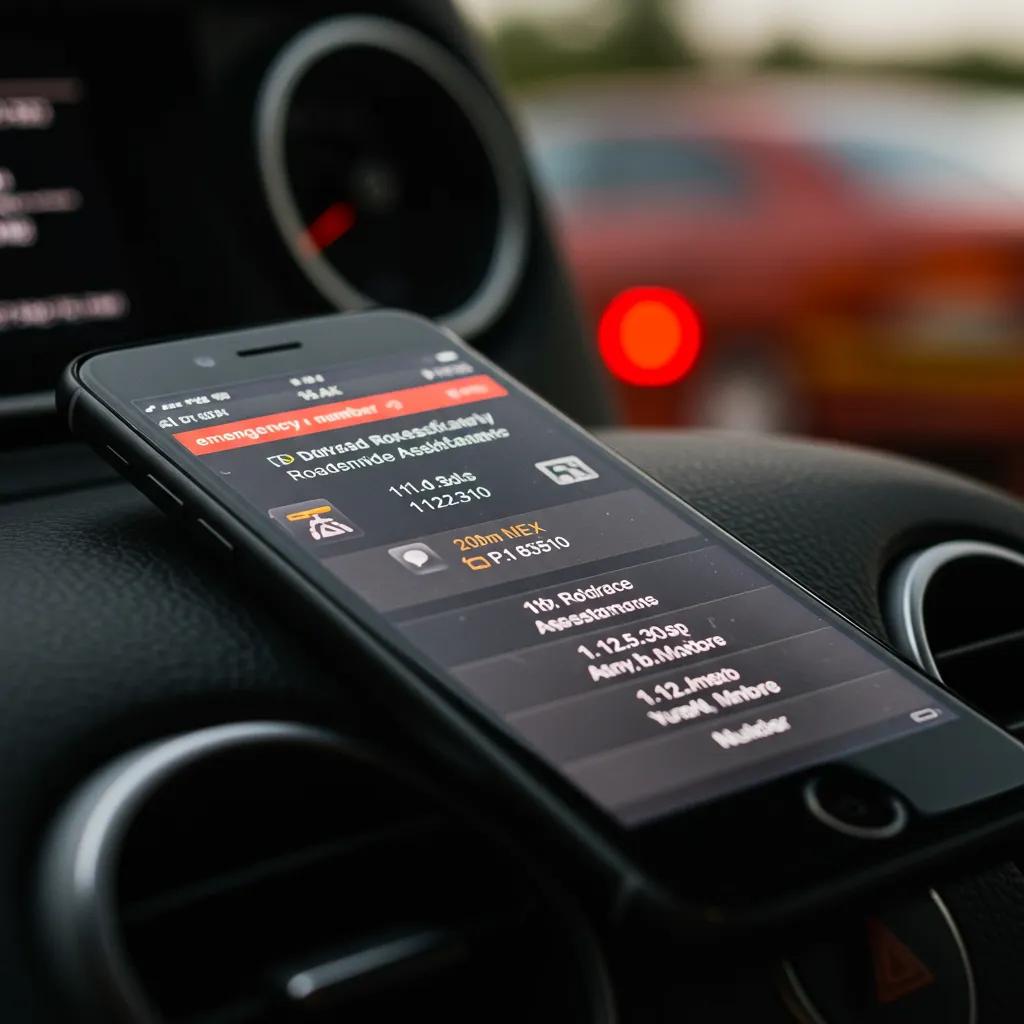
Knowing the correct numbers to dial during a breakdown can distinguish between a life-threatening emergency and a simple vehicle malfunction. In any situation where life is at risk—such as a fire, suspected carbon monoxide poisoning, or serious injury—call 999 or 112 immediately. For non-urgent breakdowns, contact your breakdown cover provider directly. They will dispatch a recovery technician and arrange for on-the-spot repairs or towing. Modern location apps like what3words can significantly improve accuracy when pinpointing your position, helping to reduce dispatch delays.
The what3words app is an invaluable tool for precisely sharing your location during a roadside emergency.
Utilising the What3words App for Precise Location Sharing and Navigation
The ‘what3words’ application is now available on Android and iOS devices, enabling users to locate and share their precise geographical position via a straightforward three-word address. This application proves particularly beneficial for pinpointing exact locations for deliveries, emergency services, or rendezvous points, especially in areas where conventional addresses lack sufficient specificity. By employing the application, users can confirm their correct location, facilitating ease of access for others.
| Service | Number | Usage Context |
|---|---|---|
| Police/Ambulance/Fire | 999 or 112 | Critical incidents posing immediate danger |
| RAC Breakdown | 0333 2000 999 | For members with active RAC cover |
| AA Roadside Assistance | 03330 046 046 | For AA policyholders requiring assistance |
| Green Flag Recovery | 0800 040 4088 | For users with Green Flag cover |
This table clearly outlines which service to contact based on the situation’s severity and your membership status. Next, you’ll learn how to contact each major provider directly and make the most of mobile location tools for a quicker response.
What Are the UK Emergency Numbers for Life-Threatening Situations?
For breakdowns involving immediate danger, such as a fire, a collision, or a medical emergency, you must contact 999 or 112 without delay. These universal emergency numbers connect you directly to the police, ambulance, or fire services, who are equipped to handle critical incidents and coordinate rescue operations on any road, from motorways to remote rural routes.
How Do I Contact Major Breakdown Providers Like RAC, AA, and Green Flag?
Dialing your breakdown provider’s dedicated helpline, using the numbers provided in the table, will initiate the dispatch of a recovery technician. Be prepared to share your membership details, vehicle registration number, and a precise location reference—this could be from road signs, GPS coordinates, or a what3words code—to minimise the time it takes for help to arrive.
Can Mobile Apps and Location Tools Like what3words Help in Emergencies?
Mobile applications significantly enhance communication and location accuracy by enabling you to share exact coordinates and unique three-word codes. For instance, using what3words can eliminate confusion during breakdowns in rural areas by providing a precise location that recovery services can navigate to, without relying solely on potentially ambiguous road names or mile markers.
The innovative what3words system offers a revolutionary way to identify locations, proving especially useful when traditional addresses are inadequate.
What3words: Revolutionising Location Identification with a Unique Three-Word Addressing System
What3words is an innovative global addressing system with the potential to revolutionise how we navigate and communicate location. By dividing the world into a grid of 3-metre squares, each assigned a unique three-word address, what3words provides a precise and simple method for identifying any location on Earth. This system is particularly beneficial in areas where traditional street addresses are inaccurate, incomplete, or non-existent, rendering it a valuable tool for logistics, emergency services, and everyday navigation.
What Are the Most Common Breakdown Scenarios and How Do I Call for Help?
Vehicle failures typically fall into predictable categories: a flat battery, a puncture, fuel issues, or being locked out. Each scenario requires specific actions before you call for assistance. Issues with hydraulic pumps or immobilisers can prevent the engine from starting, tyre damage can leave you stranded, and running out of fuel often happens on unfamiliar routes. Addressing these situations promptly keeps you safe and ensures the correct service is dispatched without delay.
- A flat battery or immobiliser fault preventing the engine from starting.
- A puncture or tyre damage requiring an emergency change or specialist repair.
- Running out of fuel or accidentally putting the wrong fuel in the car, necessitating roadside refuelling or draining.
- Being locked out due to lost keys or an electrical fault preventing vehicle entry.
Drivers should first try to identify the cause of the problem. If it’s safe to do so, attempt basic troubleshooting, then contact a qualified recovery service. blackstone71.com provides expert vehicle recovery and on-site repair services for motorists needing professional help after these common incidents. Understanding each scenario and your available options will streamline your request for assistance and speed up the resolution process.
What Should I Do If My Car Won’t Start Due to a Flat Battery or Immobiliser?
A flat battery can often be resolved by jump-starting it using jump leads and a booster pack, or by arranging for a battery replacement through your breakdown provider. If an immobiliser fault is preventing the engine from starting, it’s crucial to only allow a certified technician to reset the system. This prevents potential electronic damage and ensures your vehicle’s warranty remains valid.
How Do I Get Help for a Flat Tyre or Puncture on the Road?
If you have the necessary tools and are comfortable doing so, you can safely jack up the car and fit your spare tyre. If not, contact your breakdown cover provider. They can dispatch a technician with a puncture repair kit or a mobile mechanic who can fit a temporary tyre or a full replacement at your location.
What Are the Steps If I Run Out of Fuel or Put the Wrong Fuel in My Car?
If you’ve run out of fuel, request roadside refuelling from your breakdown provider. They can bring a small reserve of the correct fuel (petrol or diesel) to get you moving again. If you’ve accidentally put the wrong fuel in your car, do not attempt to start the engine. Contact a recovery service immediately to tow your vehicle to a garage for the tank to be drained and cleaned, which will prevent serious engine damage.
How Can I Get Help If I’m Locked Out or Have Lost My Car Keys?
Contact a professional automotive locksmith. You can often arrange this through your breakdown cover provider or a local recovery service. They can gain entry to your vehicle without causing damage to the locks or electronics. If your keys are irretrievable, you’ll need to arrange for replacement keys, which may involve towing your car to a garage equipped for key programming and duplication.
How Does Breakdown Cover Work and What Are My Vehicle Recovery Options?
Breakdown cover offers invaluable peace of mind by covering the costs of emergency assistance, roadside repairs, or towing when your vehicle fails. The specific level of cover you have will determine whether you receive immediate on-site fixes, transport back home, or vehicle recovery to a garage. These policies are designed to protect drivers from unexpected repair bills and ensure the swift deployment of trained technicians.
| Cover Option | Scope | Benefits |
|---|---|---|
| Roadside Assistance | On-site repair | Prompt fixes carried out at the breakdown location |
| National Recovery | From anywhere in the UK to your destination | Towing to a garage of your choice or directly home |
| At-Home Cover | Breakdowns occurring at your private residence | Technician dispatched directly to your address |
Selecting the right policy ensures you receive the appropriate support, whether that’s a simple jump-start, a tyre repair, or a full tow. blackstone71.com’s vehicle recovery services complement these standard cover types by offering additional repair and towing solutions at competitive prices.
What Types of Breakdown Cover Are Available in the UK?
Roadside assistance typically covers repairs performed at the scene of the breakdown. National recovery provides towing services from any location within the UK. At-home cover ensures technicians are dispatched to your driveway for issues that occur before you even start your journey, giving you confidence that you won’t set off without backup.
How Does Vehicle Recovery Work: Towing vs. On-the-Spot Repairs?
Towing is the process of transporting a vehicle to a repair facility when an immediate fix isn’t possible at the roadside. On-the-spot repairs involve mobile technicians addressing common faults, such as battery issues, tyre problems, or fuel delivery issues, to restore mobility without the need for transport.
Where Can I Find Reliable Mobile Mechanics or Garages for Emergency Repairs?
Look for accredited mobile mechanics and local garages that have partnerships with breakdown providers. Services rated by members and apps from breakdown providers often list approved technicians in your vicinity, ensuring prompt arrival and quality workmanship.
How Can I Prepare to Avoid Roadside Emergencies?
Preventing breakdowns largely depends on consistent routine maintenance, thorough pre-journey checks, and carrying a well-equipped emergency kit. Regular servicing helps identify wear and tear on critical components like batteries, tyres, belts, and fluids, thereby reducing the likelihood of failure. Pre-trip inspections of your lights, brakes, and fluid levels can catch potential faults before you even set off. A comprehensive emergency kit can help manage minor issues, while understanding the rules for smart motorways can aid in safe stopping during critical situations.
What Are the Essential Items for a Roadside Emergency Kit in the UK?
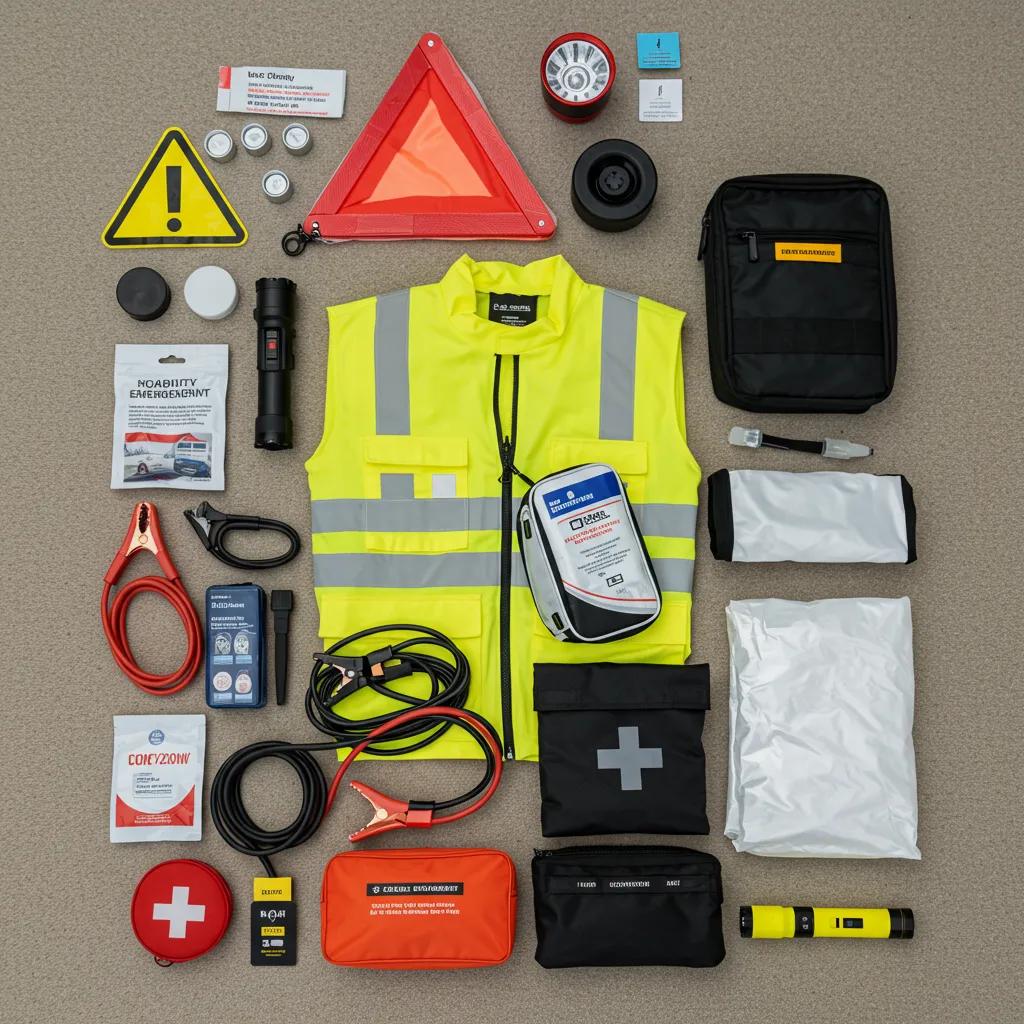
| Item | Function | Why Essential |
|---|---|---|
| Warning triangle | Alerts other drivers to your hazard | Legally required to ensure visibility |
| Hi-vis jacket | Increases your visibility to traffic | Crucial for your safety from oncoming vehicles |
| Jump leads | Provides a battery boost | Enables engine restart when the battery is flat |
| First-aid kit | Offers immediate medical care | Addresses minor injuries while awaiting professional help |
| Torch (with spare batteries) | Provides light in dark conditions | Ensures your safety during a breakdown at night |
Equipping your car with these items minimises risks and helps with basic repairs until professional assistance can arrive. Next, we’ll cover how to perform systematic pre-journey checks to identify emerging faults.
How Do I Perform Pre-Journey Checks to Prevent Breakdowns?
Before each trip, inspect your tyre tread depth and pressure, check and top up engine oil, verify coolant and brake fluid levels, test all lights and indicators, and ensure battery terminals are clean and secure. Following a pre-journey checklist significantly reduces the chances of experiencing a roadside failure and unexpected stops.
What Are the Best Practices for Staying Safe on Smart Motorways and Using Emergency Refuge Areas?
On smart motorways, it’s vital to use designated Emergency Refuge Areas (ERAs) instead of stopping in live traffic lanes. If you cannot reach an ERA, dial 999 and provide your location reference. Remain inside your vehicle with your seatbelt fastened until help arrives, which offers the best protection from fast-moving traffic.
What Should I Expect When Calling for Help: Response Times and Costs?
Understanding typical response times and the pricing structures for recovery services will help you manage your expectations and budget effectively. Major breakdown providers aim to reach UK breakdowns within approximately 45 minutes on open roads, though this can be longer in remote areas or during peak demand periods. Costs can vary based on the distance, the type of service required, and your membership level. Be aware that emergency call-outs outside of standard operating hours may incur additional charges.
How Fast Do Breakdown Services Usually Arrive in the UK?
Average arrival times typically range from 30 to 60 minutes, influenced by factors such as your location, traffic conditions, and the prevailing weather. Breakdown providers use GPS technology to track their technicians’ proximity, deploying the nearest available recovery vehicle to minimise your waiting time.
What Are the Typical Costs for Vehicle Recovery and Emergency Services?
Local towing services usually cost between £50 and £150. For longer distances, recovery can cost approximately £1.50–£2.50 per mile. Additional fees may apply for out-of-hours call-outs or specialised repairs, such as key programming. Always verify your cover terms before travelling to avoid unexpected expenses.
Where Can I Find More Help and Resources for Roadside Emergencies?
A wealth of resources is available online and through breakdown provider apps to enhance your knowledge of roadside safety. Official guidance from UK highway authorities, instructional videos demonstrating tasks like tyre changes or jump-starts, and downloadable checklists can all help you prepare. Combining reliable tutorials with trusted emergency contact information creates a robust safety net for any situation.
What Are the Most Common Questions About Roadside Assistance?
Motorists frequently ask: “What’s the procedure for a motorway breakdown?”, “Who covers the cost of a tow if I don’t have breakdown cover?”, and “How accurate is what3words for pinpointing a stranded vehicle?” Having clear, authoritative answers readily available can significantly reduce anxiety when emergencies occur.
How Can I Use Interactive Tools and Videos to Learn Roadside Safety Procedures?
Tutorial videos covering essential procedures like changing a tyre, correctly positioning a warning triangle, and using GPS location apps are excellent for visual learners and help build confidence. Interactive checklists or quizzes can reinforce your knowledge and ensure you’re well-prepared for unexpected breakdowns.
How Does blackstone71.com Support Customers in Roadside Emergencies?
blackstone71.com specialises in providing comprehensive roadside assistance and vehicle recovery services. We deploy qualified technicians to perform on-site repairs, jump-starts, resolve lockout situations, and arrange towing. Customers requiring auto repairs benefit from our transparent pricing, efficient service coordination, and clear communication regarding arrival times—all managed through a straightforward online assistance request system.
Motorists who find themselves stranded and follow this guide will be equipped with proven safety measures, the correct emergency contacts, comprehensive breakdown cover options, and effective preventive routines. By mastering these steps and understanding your choices, you can confidently call for help and get back on the road quickly, transforming a stressful breakdown into a manageable event.