

How Long Do Brakes Usually Last? Complete Guide to Brake Pad Lifespan and Replacement Timing
Brake lifespan refers to how long brake components—primarily brake pads and rotors—remain effective before they require service or replacement. Understanding brake life means knowing typical mileage ranges, the mechanical reasons pads and rotors wear, and the safety benefits of timely replacement. This guide explains typical mileage ranges for pads and rotors, how materials and driving conditions change those ranges, and practical inspection steps drivers can use to assess wear. Many drivers face uncertainty about when to replace pads or resurface rotors; this article promises clear thresholds, diagnostic cues, and maintenance strategies to extend service life while keeping stopping performance safe. You will find quantitative ranges, symptom checklists, step-by-step inspection guidance, and recommendations tailored to varied driving profiles including urban stop-and-go, highway, towing, and EV/regenerative braking situations. Throughout, keywords like brake life, brake pad wear indicators, rotor wear symptoms, and brake fluid flush interval are woven into actionable explanations to help you decide when to inspect, repair, or replace braking components.
What Is the Average Lifespan of Brake Pads and Rotors?
Brake pad and rotor lifespan is the expected mileage or time period a component performs safely before friction performance or structural integrity degrades enough to require service. Wear occurs because friction converts kinetic energy into heat and material loss; the result is reduced pad thickness and rotor surface quality, which affects stopping power and pedal feel. Knowing average lifespans helps drivers set inspection intervals and anticipate replacement costs while prioritizing safety. The table below summarizes typical lifespan ranges by component and material to set reasonable expectations.
Typical lifespan ranges for pads and rotors vary by material and use:
| Component | Characteristic | Typical Mileage Range |
|---|---|---|
| Brake Pad (Organic) | Softer material, quieter, more dust | 25,000–45,000 miles |
| Brake Pad (Semi-metallic) | Durable under heat, moderate noise | 30,000–60,000 miles |
| Brake Pad (Ceramic) | Longer life, low dust, stable performance | 40,000–70,000 miles |
| Rotor (Vented/Solid) | Depends on thickness & use; may be resurfaced | 50,000–80,000 miles |
This table clarifies that pad material and rotor construction produce wide ranges; drivers should treat these as guidelines rather than guarantees. Local driving patterns and environmental stresses often shift a component from one end of the range to the other, so regular inspection is essential to confirm actual condition before failures develop.
How Many Miles Do Brake Pads Typically Last?
Brake pads typically last anywhere from about 25,000 to 70,000 miles depending on material, driving style, and vehicle load. Organic pads are at the shorter end due to softer friction material that wears faster, while ceramic pads often sit at the longer end thanks to denser formulations that resist abrasion and maintain friction longer. Driving habits such as frequent hard stops, city traffic, towing, or hilly terrain can reduce pad life substantially, sometimes approaching the lower range after only 15,000–20,000 miles in extreme conditions. Regular visual checks and listening for wear indicators help drivers detect early wear so they can replace pads before damage to rotors or braking performance occurs.
What Is the Expected Lifespan of Brake Rotors Compared to Pads?
Rotors usually outlast individual pads but are subject to heat-related damage, scoring, and thickness loss that shorten lifespan independently of pad wear. Typical rotor lifespan is roughly 50,000–80,000 miles, but heavy-duty use—like towing, performance braking, or repeated emergency stops—can accelerate warping and scoring and push rotors toward replacement much sooner. Rotors can sometimes be resurfaced if their thickness remains above manufacturer minimums and there is no cracking or severe scoring; resurfacing restores a flat braking surface and can extend rotor life through another pad cycle. Because rotors are load-bearing and influence vibration and pedal feel, assessing rotor thickness and runout during pad replacement prevents repeat failures and ensures consistent stopping performance.
How Does Brake Pad Material Affect Lifespan?
Different pad materials trade off longevity, noise, dust, and heat tolerance, which directly affects expected lifespan and suitability for driving styles. Organic pads wear faster and produce more dust but are quiet and cost-effective for low-stress commuting, while semi-metallic pads tolerate heat better and suit heavier vehicles or spirited drivers though they produce more noise. Ceramic pads typically offer the longest life and least dust with stable friction across a range of temperatures, making them a common choice for drivers prioritizing longevity and comfort. Choosing the right pad material means matching the material properties—noise, dust, heat tolerance—to driving profile and vehicle weight to maximize service life and maintain predictable braking.
What Are the Key Factors Affecting Brake Wear and Longevity?

Brake wear and longevity depend on a mix of mechanical, behavioral, and environmental factors that determine how quickly pads and rotors degrade. Friction converts kinetic energy to heat and material loss, so anything that increases braking events, braking force, or sustained heat will hasten wear. Understanding these factors lets drivers adopt mitigation strategies—like material selection or driving habit changes—to extend component life and preserve safety. The table below maps major factors to their typical impact level to help prioritize preventive actions.
Key factors mapped to impact on brakes:
| Factor | Attribute | Typical Impact on Brakes |
|---|---|---|
| Driving Habit (aggressive braking) | Frequent hard stops | High |
| Vehicle Weight / Towing | Increased braking energy | High |
| Environment (city, hills, salt) | Stop-and-go, sustained braking, corrosion | High |
| Pad Material | Heat/dust/noise characteristics | Medium |
| Brake Fluid Condition | Boiling point, contamination | Medium |
This mapping shows that driver behavior, vehicle load, and environment are high-impact drivers of wear, while material and fluid condition are crucial secondary elements that modify how the system responds under stress. Prioritizing inspection and material choices based on these impacts yields the best longevity gains.
How Do Driving Habits Influence Brake Pad and Rotor Wear?
Driving habits directly change the frequency and intensity of braking events, which determine heat buildup and material loss in pads and rotors. Aggressive driving with frequent hard stops produces higher temperatures and greater material transfer, accelerating pad wear and increasing the risk of rotor glazing or warping. Conversely, anticipatory driving—maintaining safe following distances, coasting to slow down, and using engine braking where appropriate—reduces brake application frequency and heat, prolonging component life. Changing driving behavior is often the most cost-effective way to extend brake life because it reduces the mechanical load that produces wear without requiring parts upgrades.
How Does Vehicle Weight and Type Affect Brake Life?
Vehicle mass determines the kinetic energy that brakes must dissipate; heavier vehicles and those used for towing require pads and rotors that can absorb more energy without overheating. Compact commuter cars experience lower average braking energy and therefore often see longer pad and rotor life versus SUVs, trucks, or vehicles regularly towing loads. Heavier vehicles benefit from semi-metallic or performance-rated pads and larger vented rotors that dissipate heat better and resist fade under sustained heavy braking. Matching component specifications to vehicle class and use ensures braking systems remain within safe operating margins and reduces premature replacement frequency.
How Do Driving Environments Like City, Highway, and Hills Affect Brake Wear?
City driving causes frequent stop-and-go cycles that substantially increase pad and rotor wear compared with steady-state highway driving, where fewer braking events occur and components remain cooler. Hilly terrain forces prolonged or repeated braking on descents, raising rotor temperature and risk of warping unless drivers use engine braking to reduce thermal stress. In regions with road salt or high humidity, corrosion can seize calipers or corrode rotors, shortening useful life even if friction wear is modest. Adapting driving approach, choosing corrosion-resistant materials, and scheduling inspections based on local environment help counteract these wear drivers.
What Role Does Brake Pad Material Play in Wear Rates?
Brake pad material determines how a pad responds to heat, how quickly it abrades, and the type of wear it leaves on rotors; therefore, it is a core lever for managing wear rates. Ceramic pads generally produce lower abrasion on rotors and maintain consistent friction, which can prolong rotor life and reduce dust cleanup. Semi-metallic pads shed more material under high heat but maintain stopping power for heavier or performance-oriented applications, trading off rotor finish for consistent braking. Organic pads can be gentle on rotors but wear faster, making them suitable only for light-duty commuting where replacement intervals are acceptable. Choosing material with the expected operating temperature and load in mind optimizes service intervals and overall system longevity.
What Are the Common Signs of Worn Brake Pads and Rotors?
Recognizing worn-brake symptoms early prevents safety issues and secondary damage to rotors, calipers, or ABS components. Symptoms arise from lost friction or physical rotor damage and range from noise to vibration to dashboard warnings; each symptom points to probable root causes and urgency levels for service. Being able to distinguish between normal wear sounds and indicators of imminent failure lets drivers act appropriately—whether scheduling an inspection or stopping immediately for repairs. The bulleted list below summarizes the principal symptoms and what they usually mean.
Watch for these common symptoms of worn brakes:
- Squealing or high-pitched noise: Often a wear-indicator contacting the rotor indicating pads are near replacement.
- Grinding noise: Metal-on-metal contact that suggests pads are fully worn and rotors may be damaged.
- Brake pedal vibration or pulsation: Typically caused by rotor warping or uneven deposits on the rotor surface.
- Longer stopping distances: Reduced friction from thin pads or glazed surfaces that decrease braking effectiveness.
- Brake warning light: Signals fluid, sensor, or pressure issues that require immediate diagnostic attention.
These symptoms vary in urgency; squealing should prompt a prompt inspection, grinding demands immediate stop and service, and warning lights often indicate conditions requiring diagnostic checks. Understanding symptom severity helps prioritize action to avoid more expensive repairs.
How Can You Identify Squealing or Grinding Noises from Brakes?
Squealing is usually a designed audio wear indicator or a sign of glazed pads producing high-frequency vibration; it often signals that pads have worn down close to replacement thickness. Grinding is more serious and typically indicates the pad friction layer has worn away, allowing the backing plate to contact the rotor and cause metal-on-metal damage. If you hear grinding, stop driving when it is safe and have the brakes inspected immediately to prevent rotor damage that raises repair cost significantly. Identifying the sound source involves a quick visual inspection of pad thickness or consulting a professional for a proper diagnosis and immediate corrective action.
What Does Brake Pedal Vibration or Pulsation Indicate?
Pedal vibration or pulsation typically indicates uneven rotor thickness or warping caused by heat cycles, or uneven pad deposits creating irregular contact surfaces. The symptom usually appears when braking from speed and remains consistent across different speeds, which suggests rotor-related issues rather than tires or suspension. Diagnosis often requires measuring rotor runout and thickness to determine if resurfacing is safe or if replacement is necessary to restore a smooth, vibration-free pedal feel. Correcting rotor-related vibration prevents accelerated pad wear and restores reliable brake modulation.
How Do Longer Stopping Distances Signal Brake Wear?
Increased stopping distance results when friction capability declines due to thinning pads, glazed surfaces, or contaminated friction material that lowers coefficient of friction. A simple at-home check compares current stopping performance to previous baselines in safe controlled conditions, but drivers should treat any measurable decline as a sign to inspect pads, rotors, and brake fluid. Longer stopping distances are a high-risk symptom because they directly impact crash avoidance, so prioritizing inspection when noticed is critical for safety. Addressing the underlying cause—pad replacement, rotor service, or fluid maintenance—restores predictable stopping distances.
When Does the Brake Warning Light Mean You Need Replacement?
The brake warning light can indicate several conditions: low brake fluid level, pressure loss in the hydraulic system, or sensor-detected pad wear on some vehicles. A lit warning light does not always mean pad replacement, but it does require immediate diagnostic attention to determine whether the issue is fluid-related, mechanical, or an electrical sensor fault. Because the light signals potential system-level risk, treat it with urgency: check fluid level if safe, but schedule a professional inspection to verify whether pads, rotors, calipers, or fluid systems need service. Proper diagnosis prevents misinterpreting the warning and ensures the correct repair action.
When Should You Replace Brake Pads and Rotors?
Replace brake pads when thickness approaches manufacturer-recommended minimums or when symptoms—squeal indicators, reduced stopping power, or grinding—appear; typical thickness thresholds are around 3–4 mm remaining for many pad designs. Replace rotors when thickness falls below minimum spec, when runout or warping exceeds safe limits, or when scoring, cracking, or heat-checked surfaces compromise friction quality. For many drivers, inspections every 10,000–15,000 miles will reveal wear early and guide timing; however, inspection frequency should increase for towing, hilly or city driving, and for vehicles showing symptoms. The decision to resurface versus replace rotors should weigh remaining thickness, runout, and cost-effectiveness; resurfacing can be safe when within specs, while deep scoring or cracking necessitates replacement.
Deciding between resurfacing and full replacement hinges on measurable criteria:
- Resurface if rotor thickness remains above manufacturer minimum and runout is within tolerance.
- Replace if there are cracks, deep grooves, or if resurfacing would reduce thickness below safe limit.
- For heavy-use vehicles or where repeat resurfacing would be likely, replacement may be the longer-term economical choice.
After evaluating the technical criteria above, drivers who prefer professional handling can use a trusted service for accurate measurement and repair. For example, scheduling a professional inspection or replacement through a comprehensive Brake Repair service ensures diagnostics, inspection, and replacement are performed by trained technicians with the proper tools. Blackstone Complete Auto Care LLC offers a comprehensive Brake Repair service that includes inspections, diagnostics, and replacements to help drivers make the right resurfacing versus replacement choice.
How Often Should Brake Pads Be Changed Based on Mileage and Wear?
Rather than a fixed mileage, change intervals should be guided by inspections and observable wear, but a practical approach is to have pads checked at least every 10,000–15,000 miles and plan replacement when thickness nears the 3–4 mm threshold or when symptoms appear. Material choice affects intervals: ceramic pads often last longest, semi-metallic are intermediate, and organic pads need replacement sooner. For drivers in stop-and-go city traffic, expect more frequent replacement and consider checking pads more often—every oil-change interval or at least annually—to avoid rotor damage. Using inspection cadence tailored to driving profile balances safety with cost-effective maintenance.
When Is Rotor Resurfacing Possible vs. Full Replacement Needed?
Rotor resurfacing is possible when the rotor’s remaining thickness exceeds the vehicle maker’s minimum specification after material removal, and when there are no structural defects like cracks. Resurfacing corrects minor scoring, removes uneven deposits, and restores a flat braking surface, but cannot fix severe heat checking or visible cracking. Replacement is required if machining would reduce thickness below the minimum, if there is deep scoring, or if the rotor has structural damage that compromises safety. Technicians measure thickness, check runout, and inspect for cracks to provide a definitive recommendation between resurfacing and replacement.
How Does Regenerative Braking Affect Replacement Timing?
Regenerative braking in hybrids and EVs transfers much of the deceleration load to the electric drive system, which can substantially reduce pad wear and extend replacement intervals compared with internal-combustion vehicles. Despite reduced friction wear, rotors and calipers still experience corrosion and occasional mechanical wear, so inspection schedules should remain in place rather than being abandoned. Long vehicle storage or rare brake use can permit surface corrosion or pad glazing, so routine inspections and occasional brake cycling are advisable. Reduced pad wear due to regeneration generally increases average pad lifespan, but maintenance checks remain essential to catch non-wear issues like corrosion or caliper seize.
The automotive industry extensively researches wear characteristics and employs various testing procedures to predict brake lining life.
Brake Lining Life Expectancy: Wear Rates, Service Intervals, and Lifetime Prediction
A primary selling point for brake linings is their cost per unit of service life. Individual wear rates must align with required service intervals, which are often stipulated in vehicle warranties. Consequently, Original Equipment Manufacturers (OEMs), brake manufacturers, and friction material suppliers conduct extensive research into the wear characteristics of brake systems and their friction pairs. These investigations incorporate various parameters influencing pad and rotor longevity during the pre-selection phase, prior to final fleet trials for validation. Therefore, selecting appropriate test methodologies and parameters for determining wear rates is crucial for accurate lifetime prediction. Currently, the automotive industry employs a variety of wear testing procedures, each influenced by the specific expertise of the respective OEM or brake manufacturer. The principal parameters across these methods are generally related to energy dissipation, temperature, and sliding speed.
Life Time Prediction for Brake Linings, 2009
How Can You Extend the Lifespan of Your Brakes?
Extending brake life relies on a mix of behavior adjustments, appropriate material selection, and regular maintenance actions to control heat, reduce friction events, and prevent component damage. Small driving habit changes and scheduled inspections reduce mechanical load and catch early wear before it becomes costly. The following numbered steps provide practical, prioritized actions drivers can follow to make brakes last longer and perform reliably under varied conditions.
Follow these steps to extend brake lifespan:
- Anticipate stops and coast to slow down: Reduces the number and intensity of brake applications.
- Use engine braking on hills: Lowers sustained heat on rotors during long descents.
- Maintain safe following distance: Minimizes frequent braking in urban traffic.
- Choose pad material matching use: Ceramic for longevity, semi-metallic for heavy loads, organic for light commuting.
- Schedule regular inspections and fluid checks: Detects wear and fluid degradation before failures occur.
These actions reduce thermal stress and material loss, delaying replacement and preserving rotor condition. Adopting behavior changes along with appropriate part selection yields the best combination of longevity and reliable braking performance.
| Maintenance Action | Frequency / Effect | Practical Impact |
|---|---|---|
| Annual visual inspection | Yearly or every 15,000 miles | Detects pad thinning and rotor scoring early |
| Brake fluid check/flush | Every 1–2 years or per manufacturer | Prevents boiling and maintains hydraulic response |
| Pad replacement at threshold | As needed based on thickness | Prevents rotor damage and preserves stopping power |
| Rotor measurement and resurfacing | During pad service if within spec | Restores flat contact surface, extends rotor life |
What Driving Habits Help Prolong Brake Pad and Rotor Life?
Smooth, anticipatory driving reduces the frequency and severity of brake applications, which directly lowers heat generation and material wear. Techniques such as maintaining a consistent speed, increasing following distance in traffic, and using engine braking on descents reduce the need for hard stops. Avoiding aggressive acceleration and sudden stops preserves pad and rotor integrity, and gradual braking yields more predictable pad wear patterns. These habit changes are free to implement and deliver measurable reductions in brake replacement frequency over time.
How Often Should You Schedule Brake Inspections and Fluid Checks?
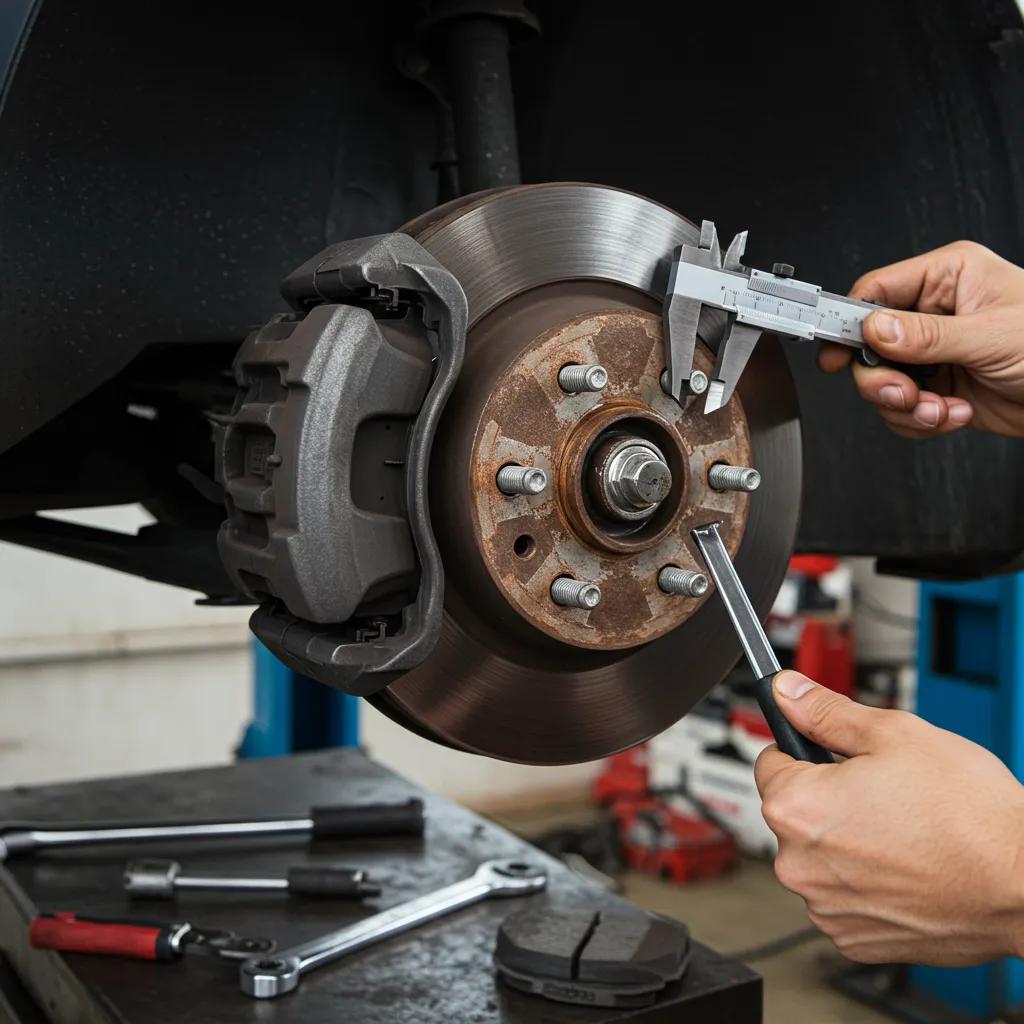
Have a professional inspection at least annually or every 10,000–15,000 miles, and check brake fluid condition on a similar cadence; more frequent checks are prudent for heavy-duty use, city driving, or towing. A proper inspection includes measuring pad thickness, checking rotor condition and runout, examining caliper operation, and verifying brake fluid level and contamination. Brake fluid should be tested for moisture content and replaced if its boiling point has been compromised, typically every 1–2 years depending on use and environmental exposure. Regular inspections catch problems early, allowing for simpler repairs and avoiding compound damage.
What Are the Best Brake Pad Materials for Longevity?
For commuting drivers prioritizing longevity and low dust, ceramic pads often provide the best balance of long service life and quiet operation. For heavier vehicles, towing, or performance applications where heat tolerance is critical, semi-metallic pads offer improved durability under stress despite higher dust and noise. Organic pads are acceptable for light-duty, low-mileage drivers who prefer lower initial cost but accept more frequent replacements. Choosing the right material requires balancing cost, expected thermal load, and priorities like noise or dust to maximize service life for a given driving profile.
How Does Proper Brake Fluid Maintenance Impact Brake System Health?
Brake fluid is hygroscopic and absorbs moisture over time, lowering boiling point and increasing the risk of vapor formation under heavy braking, which compromises pedal feel and stopping power. Regularly checking and replacing brake fluid per recommended intervals prevents moisture buildup, preserves hydraulic integrity, and reduces corrosion risk within the braking system. A fluid flush restores high boiling point performance and maintains consistent brake modulation under load, contributing to both safety and component longevity. Testing fluid condition during inspections helps time flushes appropriately rather than relying solely on fixed intervals.
At the close of these practical tips, drivers who prefer professional verification can schedule inspections and brake fluid checks through a comprehensive Brake Repair service. Blackstone Complete Auto Care LLC offers inspections, diagnostics, and replacements, and their free inspections plus 24-month/24,000-mile nationwide warranty help drivers in Columbus, OH feel confident about scheduling timely maintenance.
Frequently Asked Questions
What Are the Signs That My Brake Rotors Need Replacement?
Signs that your brake rotors may need replacement include noticeable vibrations or pulsations in the brake pedal when applying the brakes, which often indicates warping. Additionally, if you hear grinding noises, this could mean the pads have worn down completely, causing metal-on-metal contact. Other indicators include deep grooves or scoring on the rotor surface, which can be visually inspected. If you experience any of these symptoms, it’s crucial to have your rotors checked by a professional to ensure safe braking performance.
How Can Weather Conditions Affect Brake Lifespan?
Weather conditions can significantly impact brake lifespan. For instance, driving in areas with heavy rain or snow can lead to increased corrosion on brake components, particularly rotors and calipers. Additionally, road salt used in winter can accelerate rusting and wear. Conversely, extremely hot weather can cause brake components to overheat, leading to premature wear. Regular inspections and maintenance are essential to mitigate these effects and ensure that your braking system remains in optimal condition regardless of the weather.
Is It Safe to Drive with Worn Brake Pads?
Driving with worn brake pads is not safe and can lead to severe consequences. As brake pads wear down, their ability to create friction diminishes, resulting in longer stopping distances and reduced braking effectiveness. This can increase the risk of accidents. Additionally, worn pads can damage the rotors, leading to more expensive repairs. If you notice any signs of wear, such as squeaking or grinding noises, it is crucial to have them replaced immediately to maintain safe driving conditions.
What Maintenance Should I Perform to Keep My Brakes in Good Condition?
To keep your brakes in good condition, regular maintenance is essential. This includes scheduling inspections every 10,000 to 15,000 miles, checking brake fluid levels, and replacing fluid as needed to prevent moisture buildup. Additionally, visually inspecting brake pads for thickness and looking for any signs of wear or damage on rotors can help catch issues early. Adopting smooth driving habits, such as avoiding sudden stops and maintaining a safe following distance, can also prolong brake life.
How Does Towing Affect Brake Wear?
Towing significantly increases brake wear due to the added weight and stress on the braking system. Heavier loads require more braking force, which generates additional heat and accelerates wear on both pads and rotors. Drivers who frequently tow should consider upgrading to high-performance brake components designed for heavy-duty use. Regular inspections are crucial for towing vehicles to ensure that brakes are functioning properly and to prevent premature failure, which can lead to dangerous situations on the road.
Can I Replace Brake Pads Myself, or Should I Hire a Professional?
While replacing brake pads can be a DIY task for those with mechanical skills, it is often advisable to hire a professional. Proper installation requires knowledge of brake systems, tools, and safety protocols. A professional can ensure that the pads are installed correctly, check for any underlying issues, and perform necessary adjustments. Additionally, they can provide a thorough inspection of the entire braking system, which is crucial for maintaining safety and performance. If you’re unsure, it’s best to consult a professional.
How Can I Tell If My Brake Pads Are Wearing Out?
Common indicators include a consistent squealing noise from wear indicators, visible pad thickness below roughly 3–4 mm on visual inspection, metal-on-metal grinding noises, and a soft or sinking brake pedal. You can also note increased stopping distances during routine driving, which signals reduced friction capability. If any of these signs appear, schedule an inspection promptly to measure exact pad thickness and check rotor condition, preventing secondary damage and ensuring safe braking performance.
Can Different Brake Pad Types Affect How Long Brakes Last?
Yes—pad material is a major determinant of lifespan: ceramic pads generally last the longest and create the least dust, semi-metallic pads handle heat better for heavy use but may wear rotors more, and organic pads wear fastest but are quiet and inexpensive. Choose ceramic for daily commuting where longevity and low dust matter, semi-metallic for towing or performance where heat tolerance is critical, and organic for minimal-duty, low-cost replacements. Matching material to expected use optimizes lifetime and performance.
How Does City Driving Compare to Highway Driving for Brake Wear?
City driving accelerates brake wear because frequent stops generate many braking events and higher cumulative heat cycles, while highway driving involves fewer, lighter brake applications and generally longer component life. Drivers who primarily do city driving should check pads more frequently—every 10,000–15,000 miles or annually—and plan for earlier replacements than highway-only drivers. Adjusting inspection cadence based on driving context helps avoid unexpected wear-related failures.
What Maintenance Steps Can I Take to Avoid Premature Brake Replacement?
Regular inspection, timely pad replacement at thickness thresholds, brake fluid testing and replacement, and adopting smooth driving habits are the core steps to prevent premature replacement. Additionally, selecting pad material suited to your vehicle and use case and using engine braking on long descents reduce heat stress on components. If you prefer professional verification, scheduling a comprehensive Brake Repair service for inspection and fluid checks is a practical way to ensure maintenance is thorough and correctly performed.
Blackstone Complete Auto Care LLC’s comprehensive Brake Repair service offers inspections, diagnostics, and replacements, and their free inspections plus 24-month/24,000-mile nationwide warranty help drivers in Columbus, OH feel confident about scheduling timely maintenance.
Why Choose Professional Brake Service for Inspection and Replacement?
Professional brake service provides trained diagnostic capability, precise measurements, and repair procedures that reduce the risk of misdiagnosis or incomplete repairs. Technicians use calibrated tools to measure pad thickness, rotor runout, and thickness, and they test hydraulic system integrity to identify non-obvious issues that can affect longevity. Choosing professional service speeds diagnostic turnaround, improves repair quality, and minimizes the chance of repeat visits due to improper installation or overlooked faults. The list below highlights the primary professional benefits drivers should expect when looking for reliable brake service.
Key professional benefits include:
- Accurate diagnostics: Proper testing pinpoints pad, rotor, or hydraulic root causes.
- Correct parts and installation: Ensures safety and avoids premature failures.
- Safety verification: Post-service testing confirms consistent stopping performance.
These benefits translate into lower lifetime costs and safer operation, particularly for vehicles with demanding duty cycles or those showing ambiguous symptoms.
What Are the Benefits of ASE-Certified Technicians for Brake Repair?
ASE-trained technicians bring standardized training and verified competency in automotive systems, improving the likelihood of accurate diagnostics and correct repairs. Certification indicates technicians have demonstrated knowledge across brake systems, ensuring they follow manufacturer specifications for measurements, tolerances, and installation procedures. This competency lowers the risk of repeat failures from improper repairs and supports consistent, reliable braking performance after service. Using ASE-trained technicians gives drivers confidence that inspections and repairs adhere to recognized professional benchmarks.
How Does a 24-Month/24,000-Mile Warranty Provide Peace of Mind?
A 24-month/24,000-mile nationwide warranty covers repairs for a defined period and mileage, reducing financial risk if parts or labor issues arise after service. Warranty coverage encourages customers to address needed repairs promptly because it offsets concerns about near-term failures impacting cost. While specifics vary by provider, this type of warranty generally covers both parts and labor for qualifying repairs and is a strong trust signal when choosing a service provider. Confirming warranty terms when scheduling service ensures clarity about coverage scope and duration.
What Convenient Services Does Blackstone Complete Auto Care Offer in Columbus, OH?
Blackstone Complete Auto Care LLC presents several customer convenience services designed to reduce friction around scheduling and completing repairs, improving the overall ownership experience. Services available include free inspections, financing options to help customers stay productive while their vehicle is serviced, and loaner vehicles when repairs require extended time. These offerings help bridge logistical gaps that otherwise deter timely maintenance and make it simpler for Columbus, OH drivers to keep brakes in safe condition.
These conveniences reduce downtime and make prioritizing brake safety more practical for busy drivers, connecting professional diagnostics and repairs with real-world scheduling needs.
What Are Frequently Asked Questions About Brake Lifespan?
This FAQ section answers common user queries succinctly to support quick decision-making and snippet-friendly responses that guide drivers toward inspection and safe operation. Short, actionable answers below highlight observable indicators and practical next steps while encouraging professional checks when uncertainty remains.
How Can I Tell If My Brake Pads Are Wearing Out?
Common indicators include a consistent squealing noise from wear indicators, visible pad thickness below roughly 3–4 mm on visual inspection, metal-on-metal grinding noises, and a soft or sinking brake pedal. You can also note increased stopping distances during routine driving, which signals reduced friction capability. If any of these signs appear, schedule an inspection promptly to measure exact pad thickness and check rotor condition, preventing secondary damage and ensuring safe braking performance.
Can Different Brake Pad Types Affect How Long Brakes Last?
Yes—pad material is a major determinant of lifespan: ceramic pads generally last the longest and create the least dust, semi-metallic pads handle heat better for heavy use but may wear rotors more, and organic pads wear fastest but are quiet and inexpensive. Choose ceramic for daily commuting where longevity and low dust matter, semi-metallic for towing or performance where heat tolerance is critical, and organic for minimal-duty, low-cost replacements. Matching material to expected use optimizes lifetime and performance.
How Does City Driving Compare to Highway Driving for Brake Wear?
City driving accelerates brake wear because frequent stops generate many braking events and higher cumulative heat cycles, while highway driving involves fewer, lighter brake applications and generally longer component life. Drivers who primarily do city driving should check pads more frequently—every 10,000–15,000 miles or annually—and plan for earlier replacements than highway-only drivers. Adjusting inspection cadence based on driving context helps avoid unexpected wear-related failures.
What Maintenance Steps Can I Take to Avoid Premature Brake Replacement?
Regular inspection, timely pad replacement at thickness thresholds, brake fluid testing and replacement, and adopting smooth driving habits are the core steps to prevent premature replacement. Additionally, selecting pad material suited to your vehicle and use case and using engine braking on long descents reduce heat stress on components. If you prefer professional verification, scheduling a comprehensive Brake Repair service for inspection and fluid checks is a practical way to ensure maintenance is thorough and correctly performed.
Blackstone Complete Auto Care LLC’s comprehensive Brake Repair service offers inspections, diagnostics, and replacements, and their free inspections plus 24-month/24,000-mile nationwide warranty help drivers in Columbus, OH feel confident about scheduling timely maintenance.
The increasing prevalence of vehicles equipped with regenerative braking necessitates a closer look at its implications for traditional friction brakes.
Impact of Regenerative Braking on Friction Brake Performance and Wear
Regenerative braking is a key technology for enhancing energy efficiency and extending the driving range of parallel and series hybrid, and electric-only vehicles. It is employed in conjunction with friction brakes due to the substantial energy dissipation required during maximum braking effort (and the absence of a competitive alternative technology capable of handling this power level), as well as to provide braking when onboard energy storage/dissipation systems cannot absorb sufficient energy. Despite the increasing prevalence of vehicles equipped with regenerative braking, there is limited published research investigating the implications of significantly reduced friction brake usage on the performance of the friction brakes themselves. This paper examines, supported by analytical and experimental data, considerations for friction brakes in vehicles with regenerative braking, including corrosion, off-brake wear, and friction characteristics. It also proposes…
Effect of regenerative braking on foundation brake performance, 2010
Conclusion
Understanding the lifespan of brake pads and rotors is crucial for maintaining vehicle safety and performance. By recognizing the signs of wear and adhering to recommended inspection schedules, drivers can prevent costly repairs and ensure reliable braking. Choosing the right materials and adopting safe driving habits further enhances brake longevity. For expert assistance and comprehensive brake services, consider scheduling an inspection with Blackstone Complete Auto Care today.