

Professional Brake Fluid Flush Service in Columbus, OH: Ensure Your Vehicle's Safety and Performance
Maintaining your vehicle’s brake system is crucial for ensuring safety and performance on the road. One essential service that often gets overlooked is a brake fluid flush. This article will explore the importance of professional brake fluid flush services, particularly in Columbus, OH, and how they contribute to your vehicle’s overall safety and functionality. You will learn about the role of brake fluid in the hydraulic brake system, signs that indicate a need for a flush, and the process involved in a professional service. Additionally, we will discuss how often you should schedule a brake fluid flush and the costs associated with this vital maintenance service.
Why Is a Brake Fluid Flush Essential for Your Vehicle's Brake System?
A brake fluid flush is essential for maintaining the integrity and performance of your vehicle’s brake system. Brake fluid plays a critical role in the hydraulic brake system, transferring force from the brake pedal to the brake components. Over time, brake fluid can absorb moisture and contaminants, which can lead to decreased braking efficiency and potential brake failure. Regular maintenance, including brake fluid flushes, helps ensure that your braking system operates effectively and safely.
Research consistently demonstrates the significant negative impact of absorbed moisture on the physical and chemical properties of hydraulic brake fluids.
Impact of Water on Hydraulic Brake Fluid Performance
A study was made to determine the effect of absorbed moisture on the physical and chemical characteristics of polar type hydraulic brake fluids. Specific studies were carried out on the effect of moisture on equilibrium boiling point, flash point, cold temperature viscosity, oxidation stability, and effect on rubber with several polar brake fluids of varying chemical composition. Moisture produced the following effects – a. Boiling points are lowered in all brake fluids – drastically in so-called high boiling fluids. b. Flash points are increased. c. Cold temperature viscosities are usually increased. d. The stability of the brake fluid toward oxidation is decreased. e. Rubber swelling and softening is decreased.
Effect of Water on Hydraulic Brake Fluid, 1966
Research further emphasizes the detrimental effects of moisture on brake fluid performance and the overall braking system.
A detailed study further elaborates on how absorbed moisture significantly degrades the physical and chemical properties of hydraulic brake fluids.
This research further details the specific ways moisture compromises brake fluid integrity and performance.
How Moisture Degrades Hydraulic Brake Fluid Performance
A study was made to determine the effect of absorbed moisture on the physical and chemical characteristics of polar type hydraulic brake fluids. Specific studies were carried out on the effect of moisture on equilibrium boiling point, flash point, cold temperature viscosity, oxidation stability, and effect on rubber with several polar brake fluids of varying chemical composition. Moisture produced the following effects – a. Boiling points are lowered in all brake fluids – drastically in so-called high boiling fluids. b. Flash points are increased. c. Cold temperature viscosities are usually increased. d. The stability of the brake fluid toward oxidation is decreased. e. Rubber swelling and softening is decreased.
Effect of Water on Hydraulic Brake Fluid, 1966
Beyond moisture absorption, studies also highlight how prolonged braking can lead to dangerous brake fluid temperature increases and vaporization, further compromising safety.
This concern is further elaborated by research detailing the risks of brake fluid temperature rise and vaporization during demanding driving conditions.
Predicting Brake Fluid Vaporization for Enhanced Safety
Long repetitive braking, such as one which occurs during a mountain descent, will result in a brake fluid temperature rise and may cause brake fluid vaporization. This may be a concern particularly for passenger cars equipped with aluminum calipers and with a limited air flow to the wheel brake systems. This paper describes the computer modeling techniques to predict the brake fluid temperature rise as well as other brake component temperatures during braking and heat soaking. Numerical results are compared to the measured vehicle data and the effects of relevant brake system parameters on the fluid temperature are investigated. The techniques developed in this study will help brake engineers to build a safer brake system and reduce the extensive vehicle tests currently required.
Numerical prediction of brake fluid temperature rise during braking and heat soaking, K Lee, 1999
Brake Fluid Vaporization & Temperature Rise Impact on Safety
Long repetitive braking, such as one which occurs during a mountain descent, will result in a brake fluid temperature rise and may cause brake fluid vaporization. This may be a concern particularly for passenger cars equipped with aluminum calipers and with a limited air flow to the wheel brake systems. This paper describes the computer modeling techniques to predict the brake fluid temperature rise as well as other brake component temperatures during braking and heat soaking. Numerical results are compared to the measured vehicle data and the effects of relevant brake system parameters on the fluid temperature are investigated. The techniques developed in this study will help brake engineers to build a safer brake system and reduce the extensive vehicle tests currently required.
Numerical prediction of brake fluid temperature rise during braking and heat soaking, K Lee, 1999
How Does Brake Fluid Affect Hydraulic Brake System Performance?
Brake fluid is vital for hydraulic pressure in the braking system. It allows the force applied to the brake pedal to be transmitted to the brake calipers, which then clamp down on the brake rotors to slow or stop the vehicle. If the brake fluid is contaminated with moisture or debris, it can lead to spongy brakes, reduced responsiveness, and even complete brake failure. Therefore, maintaining clean and effective brake fluid is crucial for optimal braking performance.
Further research highlights the fundamental role of hydraulic fluid in transmitting force within automotive brake systems.
Role of Fluid in Automotive Hydraulic Brake Systems
The development of central hydraulic systems will greatly expand the use of hydraulic actuators in automobiles. Tests to date indicate that a properly developed central hydraulic system will offer many customer advantages which can lessen driver fatigue and improve safety and reliability at reduced cost. A central hydraulic system is analogous to the conventional automotive electrical system. With the electrical system, energy is obtained from the generator and stored in the battery. Many accessories are driven by merely hooking onto this system. Items such as headlights, radios, and window lifts are attached without any change to the basic system. However, many other accessories are not so easily added. For example, power steering has its own independent system, which includes pump, actuators, and fluid. Again, power brakes have a completely separate system, utilizing a vacuum booster to assist the operation of the master cylinder, which, in turn, employs a special fluid to actuate th
Automotive Central Hydraulic Systems and their Fluid Requirements, 1960
What Are the Safety Benefits of Regular Brake Fluid Maintenance?
Regular brake fluid maintenance significantly enhances vehicle safety. Neglecting brake fluid can lead to increased incidents of brake failure, which poses a serious risk to drivers and passengers. By ensuring that your brake fluid is clean and at the proper level, you can reduce the likelihood of brake-related accidents and increase your confidence while driving.
What Are the Signs You Need a Brake Fluid Flush in Columbus, OH?
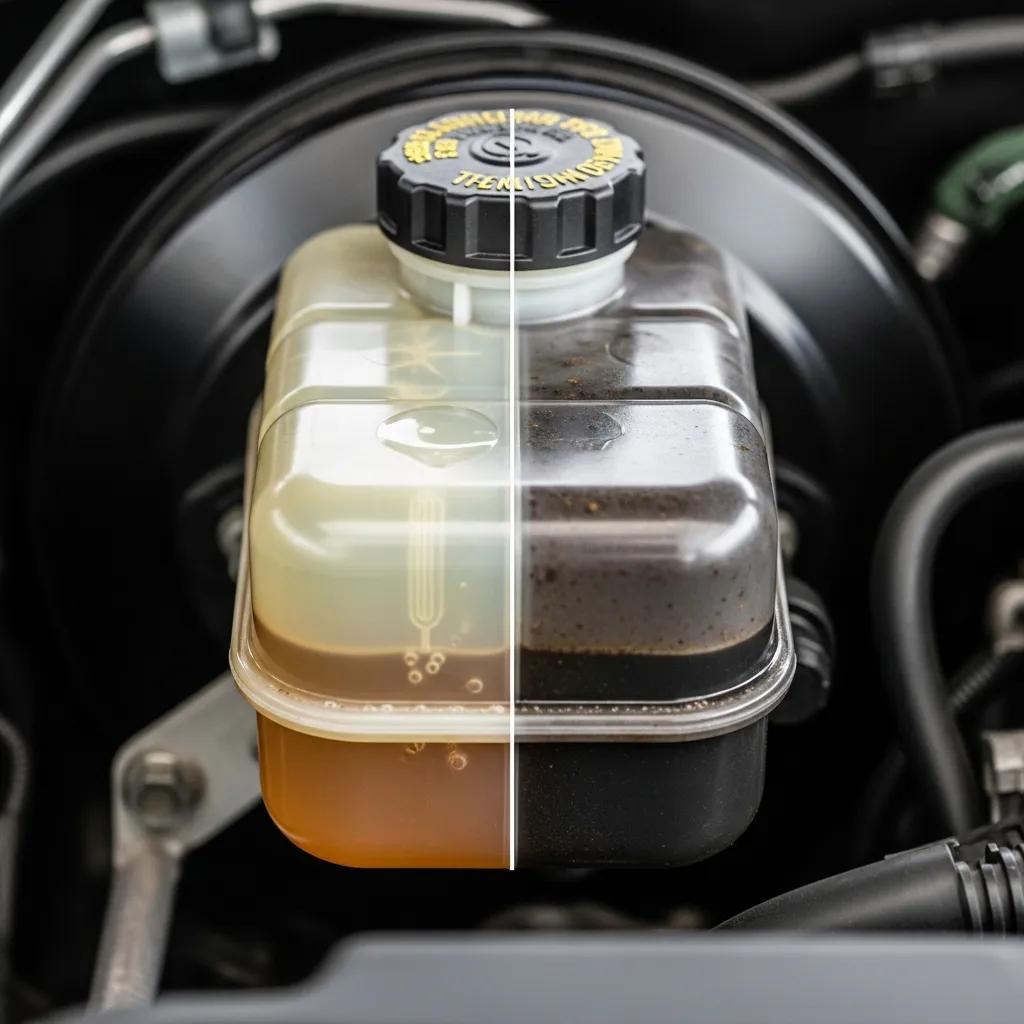
Recognizing the signs that indicate a need for a brake fluid flush is essential for maintaining your vehicle’s safety. Several symptoms can alert you to potential issues with your brake fluid.
How to Identify Spongy Brakes and Other Warning Symptoms?
Spongy brakes are a common warning sign that your brake fluid may need to be flushed. When you press the brake pedal, it should feel firm and responsive. If the pedal feels soft or sinks to the floor, it may indicate air in the brake lines or contaminated brake fluid. Other warning symptoms include unusual noises when braking, a warning light on the dashboard, or a noticeable decrease in braking power.
What Does Discolored or Contaminated Brake Fluid Indicate?
Discolored or contaminated brake fluid is another clear indicator that a flush is necessary. Fresh brake fluid is typically a clear to light amber color. If you notice that your brake fluid appears dark or murky, it may contain moisture or debris, which can compromise the effectiveness of your braking system. Regular inspections of your brake fluid can help catch these issues early.
How Is a Professional Brake Fluid Flush Performed at Blackstone Complete Auto Care?
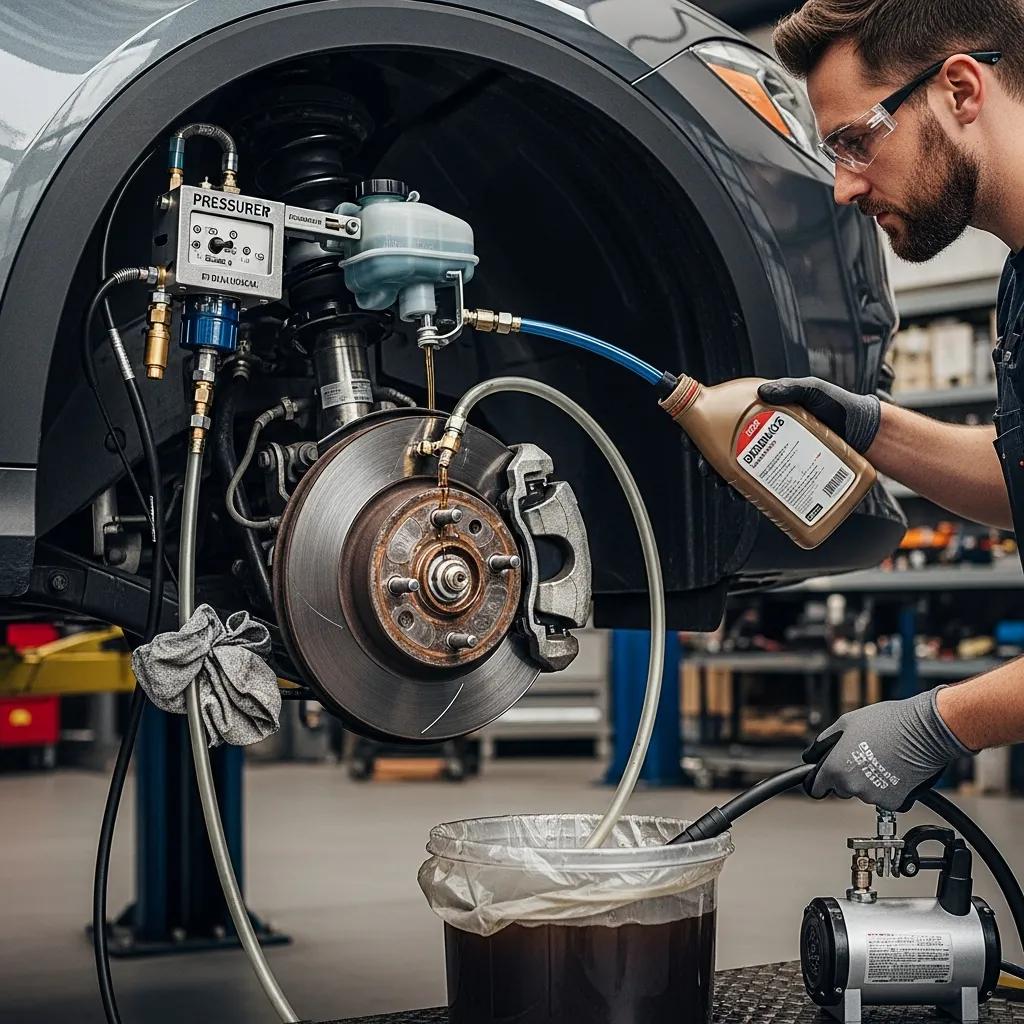
At Blackstone Complete Auto Care, we follow a comprehensive process for performing brake fluid flushes to ensure your vehicle’s safety and performance.
What Are the Steps in Our Comprehensive Brake Fluid Exchange Process?
Our brake fluid exchange process involves several key steps. First, we inspect the entire brake system to identify any potential issues. Next, we remove the old brake fluid and replace it with fresh, high-quality fluid that meets or exceeds manufacturer specifications. Finally, we bleed the brake system to remove any air and test the brake system to ensure everything is functioning correctly. This thorough approach helps maintain the integrity of your braking system.
Which Brake Fluid Types Do We Use and Why Are They Important?
We use only high-quality brake fluids that meet the necessary specifications for your vehicle. Different types of brake fluid, suchs as DOT 3, DOT 4, and DOT 5.1, have varying properties and performance levels. DOT 5 is a silicone-based fluid and is not compatible with most vehicles’ braking systems. Using the correct type of brake fluid is crucial for ensuring optimal braking performance and safety. Our ASE-certified technicians are trained to select the appropriate fluid for your vehicle’s specific needs.
Research further underscores the importance of using the correct brake fluid type, highlighting potential issues like deposits and wear when incompatible fluids are used.
Brake Fluid Compatibility, Deposits, and Wear in Hydraulic Systems
A prior study with MIL-PRF-46176 silicone brake fluid and SAE J1703 DOT 3 brake fluid in a hydraulic power brake system revealed deposits only with the silicone brake fluid after 20,000-cycles of testing. These results are published in Interim Report TFLRF no. 445. The overall conclusion is that the root cause of deposit buildup in the system reservoir, that caused testing with silicone brake fluid to halt in FY13, is due to formation of a thin Styrene-Butadiene SBR elastomer residue on the servo valves. This conclusion has been substantiated through a number of conclusions from static soak and dynamic seal tests, followed by a series of conclusions from physical and chemical characterization tests. Increased wear seen with the silicone brake fluid on brake system parts was substantiated by laboratory bench wear tests of the brake fluids.
Brake Fluid Compatibility Studies with Advanced Brake Systems, 2016
Further studies highlight the critical importance of using compatible brake fluid, particularly noting issues with silicone-based fluids in conventional systems.
Brake Fluid Compatibility, Deposits, and System Wear
A prior study with MIL-PRF-46176 silicone brake fluid and SAE J1703 DOT 3 brake fluid in a hydraulic power brake system revealed deposits only with the silicone brake fluid after 20,000-cycles of testing. These results are published in Interim Report TFLRF no. 445. The overall conclusion is that the root cause of deposit buildup in the system reservoir, that caused testing with silicone brake fluid to halt in FY13, is due to formation of a thin Styrene-Butadiene SBR elastomer residue on the servo valves. This conclusion has been substantiated through a number of conclusions from static soak and dynamic seal tests, followed by a series of conclusions from physical and chemical characterization tests. Increased wear seen with the silicone brake fluid on brake system parts was substantiated by laboratory bench wear tests of the brake fluids.
Brake Fluid Compatibility Studies with Advanced Brake Systems, 2016
How Often Should You Schedule a Brake Fluid Flush in Columbus, OH?
Scheduling regular brake fluid flushes is essential for maintaining your vehicle’s braking system.
What Are Manufacturer Recommendations for Brake Fluid Change Intervals?
Most manufacturers recommend changing brake fluid every 2 years or 20,000 to 30,000 miles, but this can vary based on your vehicle’s make and model. It’s essential to consult your owner’s manual for specific recommendations. Regular maintenance helps prevent moisture buildup and contamination, ensuring your brakes remain responsive and effective.
Emphasizing the importance of timely maintenance, research underscores the necessity of following manufacturer directives for brake fluid replacement.
Manufacturer Recommendations for Brake Fluid Replacement
Conclusion: Brake fluid which is one of the fluids used in vehicles should be changed from time to time following the directives of the manufacturer and the idea of mixing different types of brake fluids for use in a particular vehic
Biodeterioration abilities of microorganisms in brake fluids, G Okpokwasili, 2015
Which Factors Influence the Frequency of Brake Fluid Flushes?
Several factors can influence how often you should schedule a brake fluid flush. These include your driving habits, the climate in which you drive, and the type of vehicle you own. For example, if you frequently drive in stop-and-go traffic or in extreme weather conditions, you may need to flush your brake fluid more often.
What Are the Costs and Value of Brake Fluid Flush Services in Columbus, OH?
Understanding the costs associated with brake fluid flush services can help you make informed decisions about your vehicle’s maintenance.
How Does Blackstone Complete Auto Care Ensure Transparent Pricing?
At Blackstone Complete Auto Care, we pride ourselves on providing transparent pricing for our services. We offer detailed estimates before any work begins, ensuring you understand the costs involved. Our goal is to provide high-quality service without hidden fees, allowing you to make informed decisions about your vehicle’s maintenance.
What Warranty and Customer Benefits Accompany Our Brake Fluid Service?
When you choose our brake fluid flush service, you benefit from our nationwide warranty and customer satisfaction guarantee. We stand behind our work, ensuring that you receive the highest quality service and support. Additionally, our ASE-certified technicians are dedicated to providing exceptional service, giving you peace of mind while on the road.
Why Choose Blackstone Complete Auto Care for Your Brake Fluid Flush Needs?
Choosing the right service provider for your brake fluid flush is crucial for ensuring your vehicle’s safety and performance.
How Do ASE-Certified Technicians Guarantee Quality Brake Service?
Our ASE-certified technicians have the training and expertise necessary to perform brake fluid flushes and other maintenance services to the highest standards. They are equipped with advanced tools and technology to ensure that your vehicle receives the best care possible. This commitment to quality sets us apart from other service providers.
What Customer Convenience Services Enhance Your Experience?
At Blackstone Complete Auto Care, we offer several customer convenience services to enhance your experience. These include loaner vehicles and shuttle service, making it easy for you to continue with your day while your vehicle is being serviced. Our goal is to provide a hassle-free experience that prioritizes your needs and satisfaction.