
What Causes Vehicle No-Start Problems? Complete Car Won't Start Diagnosis and Troubleshooting Guide
A vehicle “no-start” means the engine refuses to begin its combustion cycle when you turn the key or press the starter button, and the problem can originate in multiple systems including the starting system, fuel delivery, ignition, or engine management sensors. This guide explains why no-start events happen, shows how to interpret symptoms such as no crank, crank-no-start, or clicking noises, and provides a practical path from safe DIY triage to professional diagnostic testing. For many owners, understanding whether the issue is a dead or weak battery, a failed starter, a fuel delivery interruption, or a sensor/ECU fault saves time and prevents unnecessary parts replacement. After a quick primer, this article walks through the most common causes, how engine-management failures affect starting, environmental and security-related blocks to starting, safe troubleshooting steps you can perform, and when professional diagnosis is the right call. Blackstone Complete Auto Care LLC is offered here as a trusted local resource; provide useful information about auto care services, build trust, and lead users to schedule appointments for maintenance and repairs. The goal is clear: educate vehicle owners so they can triage effectively and know when to book professional testing and repairs.
What Are the Most Common Causes of Vehicle No-Start Problems?
A no-start condition typically stems from failures in five major subsystems: the battery and charging system, the starter/starting circuit, the fuel delivery system, the ignition system, and engine-management sensors. These systems either supply power, initiate cranking, deliver fuel, or provide the timing signals the engine needs to run; when any link fails, the engine may not start. Accurate symptom recognition — such as whether the engine cranks, whether you hear a single click, or whether there is a fuel smell — narrows likely causes and informs immediate next steps. Below is a quick list of the top causes to help prioritize checks before deeper diagnostics.
- Battery and charging problems are the most common cause of no-start events.
- Starter motor or solenoid failures produce clicking sounds or no-crank conditions.
- Fuel delivery failures (pump, filter, injectors) cause crank-but-no-start scenarios.
- Ignition system faults (plugs, coils) result in no-spark conditions despite cranking.
- Sensor/ECU failures, especially crankshaft position sensors, can prevent fuel and spark timing.
These high-level causes guide targeted checks and transition naturally into specific component discussions below.
How Does a Dead or Weak Battery Cause No-Start Issues?
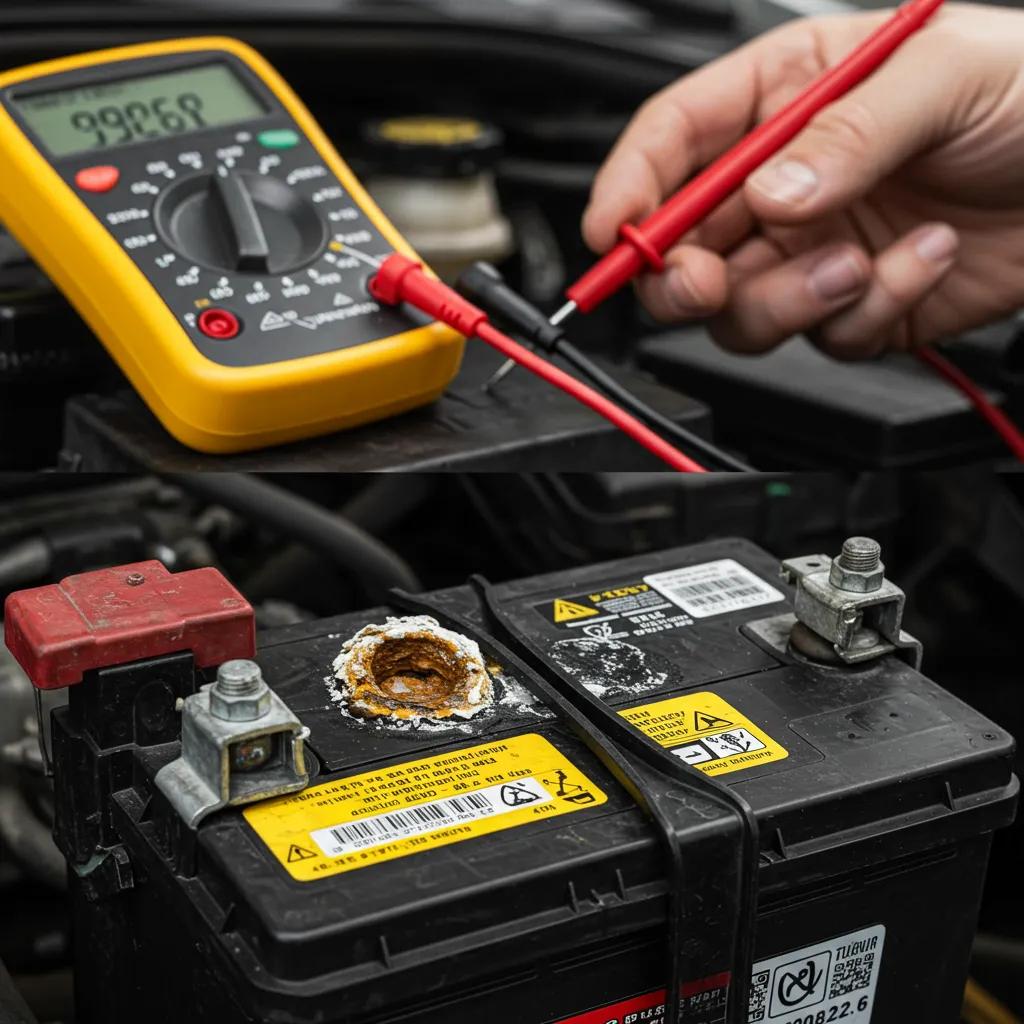
A dead or weak battery fails to provide sufficient voltage and current to spin the starter motor and power engine control modules, resulting in no crank or slow cranking. Typical mechanisms include battery age, sulfation, parasitic drains, or a failing alternator that no longer charges the battery while driving; cold temperatures also reduce battery capacity and increase internal resistance. Quick voltage checks show resting voltages under 12.4 V for weakened batteries and below 11.8 V for severely discharged cells, but load or battery-specific tests provide a more reliable assessment. If a jump-start restores normal cranking, the next step is to perform a battery charging system test and consider battery replacement when capacity is below manufacturer thresholds or when testing shows high internal resistance.
What Are the Signs of a Faulty Starter Motor?
A faulty starter motor often produces a single loud click, rapid clicking, grinding noises, or no sound at all while the dash still has power; these symptoms point to worn brushes, a failed solenoid, or poor electrical connections. Mechanically, a starter that turns slowly or intermittently indicates internal wear or a bad ground, while grinding suggests engagement issues with the flywheel teeth. Owners can preliminarily listen for starter behavior and check battery terminal tightness, but verifying voltage at the starter during cranking and performing bench or in-vehicle starter testing is typically needed to confirm the fault. Professional testing will distinguish between a starter unit failure and battery/connection issues that mimic starter symptoms.
The starting system is a critical component responsible for initiating the engine’s combustion cycle.
Automobile Starting Systems: Maintenance and Troubleshooting for Mechanics
Starting system is provided in the vehicle as a means of starting the engine. The starting system is a crucial part of the vehicle’s electrical system. It is responsible for cranking the engine to initiate combustion. A malfunctioning starting system can lead to a no-start condition, preventing the vehicle from running.
Automobile Starting and Lighting System Maintenance Training Manual for Effective Learning of Motor Vehicle Mechanics Work in Technical Colleges, AM Idris, 2015
How Can Alternator Malfunctions Lead to Starting Problems?
An alternator’s primary role is to recharge the battery while the engine runs; when alternator output drops, the vehicle may start while fresh but fail after sitting due to the battery draining. Symptoms of alternator failure include the battery warning light, dimming or flickering lights while driving, and a steadily falling battery voltage under load or at idle. Diagnosing alternator-related start problems requires measuring charging voltage (typically 13.5–14.7 V when healthy) and checking for diode or regulator faults that allow battery drain when the engine is off. If tests show poor alternator output, the repair path usually involves alternator repair or replacement and a subsequent battery capacity test to ensure reliable starts.
What Fuel Delivery Issues Prevent a Vehicle from Starting?
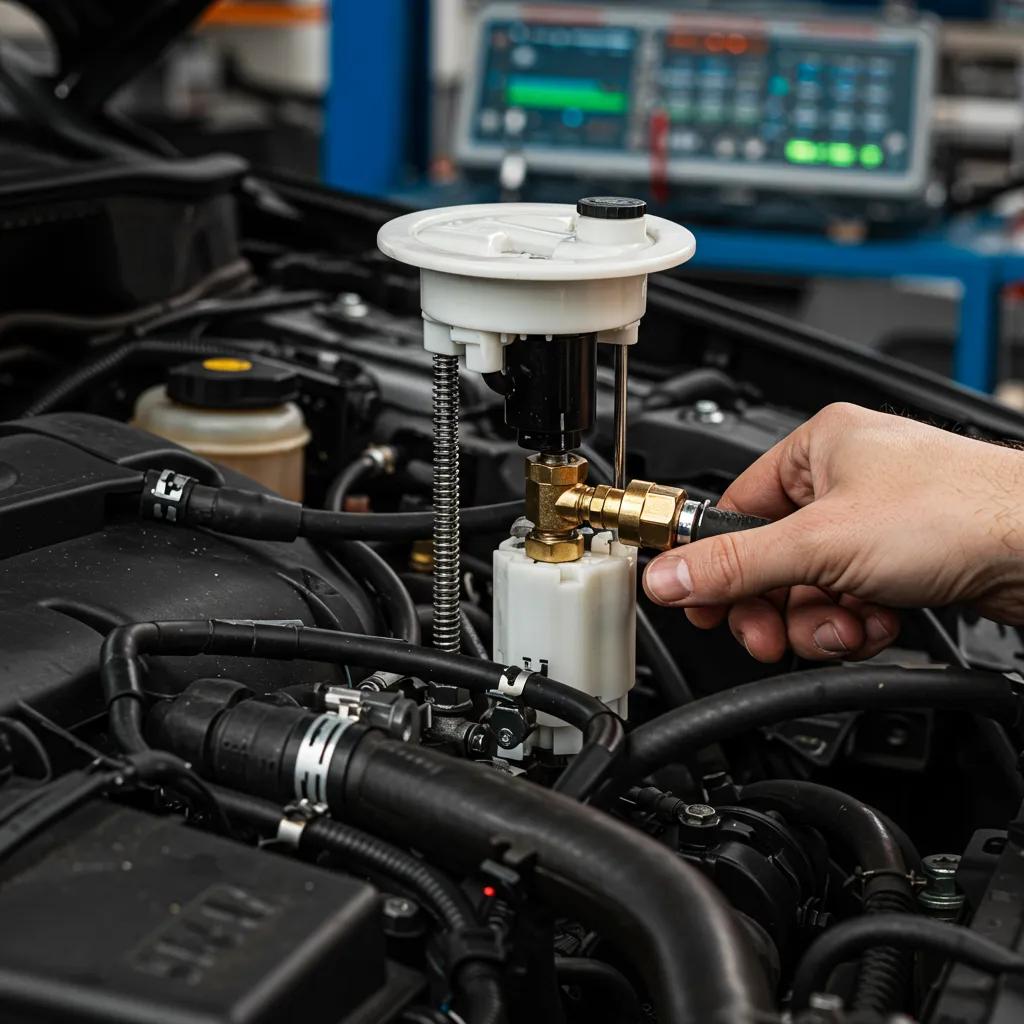
Fuel delivery problems — including a failed fuel pump, clogged fuel filter, empty tank, or bad injectors — result in insufficient fuel pressure or volume, causing crank-but-no-start conditions. Common owner observations include no audible fuel pump prime when the ignition is cycled, a strong fuel smell from a leak, or a consistent lack of combustion despite normal cranking speed. Basic checks include verifying fuel level and listening for pump operation; professional diagnostics use a fuel pressure gauge and injector tests to isolate the fault. Repairs range from replacing the fuel filter or pump to cleaning or replacing injectors and are best decided after a measured pressure test to avoid unnecessary parts replacement.
How Do Ignition System Failures Cause No-Start Conditions?
Ignition system failures occur when spark plugs, ignition coils, wires, or the ignition switch fail to provide the spark needed to ignite fuel, leading to crank-but-no-start or misfire conditions. Symptoms can include rough cranking, misfiring under cranking, or diagnostic trouble codes indicating misfire or coil circuit issues; visual inspection of plugs and coils can reveal fouling, corrosion, or damage. Simple owner checks like examining spark plug condition and ensuring ignition power reach the coils help triage issues, but verifying spark with proper equipment or using live data from a scan tool provides definitive diagnosis. When ignition faults are confirmed, repairs typically involve plug/coil replacement, wiring repair, or addressing upstream causes like oil contamination.
Before moving into sensor and ECU-related causes, the next section explains how modern engine-management components can create no-start events by cutting fuel or spark.
| Cause Category | Common Symptoms | Quick DIY Check | Likely Professional Fix |
|---|---|---|---|
| Battery / Charging | No crank, dim lights, clicking | Voltage at battery, terminal tightness | Battery replacement, charging system test |
| Starter / Starting Circuit | Single click, no crank, grinding | Listen for clicks, visual starter connections | Starter rebuild/replacement, solenoid repair |
| Fuel Delivery | Cranks but won’t start, no pump noise | Fuel level, priming sound at key-on | Fuel pump or filter replacement, pressure test |
| Ignition System | Cranks but no spark, misfires | Inspect spark plugs/boots | Coil/plugs replacement, wiring repair |
| Sensors / ECU | Crank/no-spark with no mechanical fault | Check for CEL, scan codes | Sensor replacement, ECU diagnostics |
How Can Engine Management and Sensor Failures Affect Vehicle Starting?
Engine-management sensors inform the ECU about crankshaft position, camshaft timing, airflow, and more; when these signals are missing or incorrect, the ECU may disable fuel injection or ignition timing, causing a no-start. These systems operate together so that a failed crankshaft position sensor can be indistinguishable at first glance from fuel or ignition failures, which makes code reading and live-data analysis critical. Modern vehicles rely on OBD-II diagnostic data and live sensor streams to pinpoint timing and signal integrity issues, so interpreting codes without live data risks misdiagnosis. The following subsections break down the most impactful sensors and describe how technicians confirm and correct sensor-related no-starts.
What Role Does the Crankshaft Position Sensor Play in Starting?
The crankshaft position sensor supplies the ECU with precise engine-speed and position data needed for fuel injection timing and ignition spark; without that real-time signal the engine control system cannot coordinate combustion and the vehicle often will not start. Typical failure modes include intermittent signal loss, connector corrosion, or internal sensor degradation, often producing no-crank or crank-no-start conditions paired with specific P013/P0335-style trouble codes on some vehicles. Professional diagnosis generally includes scanning for codes, checking sensor waveform or live RPM signal on a scan tool, and verifying supply/reference voltages; replacement of the sensor or connector repair usually resolves the issue. Because the crank sensor directly controls timing, technicians prioritize this check early in no-start workflows.
Understanding the intricacies of vehicle diagnosis is key to resolving complex automotive issues.
Comprehensive Guide to Vehicle Diagnosis and Troubleshooting
Vehicle diagnosis and their troubleshooting are essential for maintaining the optimal performance and longevity of automobiles. This involves identifying the root cause of various issues, from minor malfunctions to major system failures. Effective troubleshooting requires a systematic approach, utilizing diagnostic tools and techniques to pinpoint problems accurately. This manual aims to provide comprehensive guidance on diagnosing and resolving common vehicle problems, ensuring safe and reliable operation.
Vehicle diagnosis and their troubleshooting, 2013
How Do Camshaft Position and Airflow Sensors Influence No-Start Issues?
Camshaft position sensors and airflow sensors (MAF/MAP) help the ECU refine injection timing and fuel metering; if these inputs are missing or implausible, the engine may crank but fail to run due to incorrect fuel/ignition maps. Symptoms can include codes pointing to cam position or airflow anomalies, rough cranking, or a sudden lack of power during attempted starts; live data showing frozen or erratic sensor values strongly suggests component or circuit faults. Diagnosis involves scanning for codes, comparing cam vs. crank correlation on live data, and testing MAF/MAP outputs under key-on and cranking conditions; cleaning MAF sensors or replacing faulty cam sensors often restores normal start behavior. These sensors are a logical next focus when basic starting circuits check out.
Why Is Check Engine Light Diagnosis Important for No-Start Problems?
A lit Check Engine Light (CEL) often stores diagnostic trouble codes (DTCs) that point directly to sensor failures, ignition faults, or fuel system errors that cause no-start conditions, making code retrieval a high-value early step in diagnosis. However, codes alone can be misleading because they record symptoms rather than root causes; technicians use live-data streams, freeze-frame data, and targeted component tests to avoid chasing secondary faults. For example, a code indicating misfire may prompt coil and injector checks but might ultimately trace back to a weak battery or a sensor that disrupted timing. For ambiguous or intermittent codes, professional scan and live-data analysis reduces repair time and prevents unnecessary parts replacement.
The sensor-focused diagnosis leads naturally into how environmental and system-level factors — like cold weather or immobilizers — can also prevent starting.
What Environmental and Other Factors Cause Vehicle No-Start Problems?
Non-component factors such as cold weather, immobilizer/security systems, and transmission safety switches can all prevent a vehicle from starting even when mechanical and electrical components appear healthy. These factors often complicate diagnosis because they may only appear under specific conditions — for example, cold mornings or after a key fob battery dies — and can mimic component failures. Local climate considerations, especially in Columbus, OH winters, make battery capacity loss and oil viscosity changes common contributors to seasonal no-starts. The following subsections explain how these environmental and system-level issues present and what owners should check before escalating to professional testing.
How Does Cold Weather Affect Car Starting in Columbus, OH?
Cold temperatures reduce battery chemical activity and effective capacity while increasing engine oil viscosity, which together make cranking slower and starter loads heavier; this combination often turns marginal batteries into complete failures on cold mornings. Owners typically notice slower cranking, weaker lights, and a need for repeated starts when temperatures drop; diesel engines may also experience fuel gelling or wax plugging in extreme cold. Preventive measures include verifying battery capacity before winter, using appropriate oil viscosity grades, and considering battery warmers or trickle charging for seldom-driven vehicles; if a vehicle starts poorly only in the cold, prioritize battery and charging system diagnostics. Seasonal maintenance and early battery testing reduce winter no-start risk in colder months.
Can Security Systems or Immobilizers Prevent a Car from Starting?
Factory or aftermarket immobilizers can intentionally disable starter engagement or fuel injection when they detect an unauthorized key or a communication fault, producing a no-start despite normal electrical readings. Symptoms include security-warning lamps, a starter that clicks but does not engage, or immediate shutdown right after cranking; intermittent immobilizer faults may behave unpredictably, complicating diagnosis. Simple owner checks include watching for the security indicator behavior and trying a spare key or fob battery; dealer-level or specialized diagnostic tools are often required to read security module faults or reprogram immobilizer keys. When immobilizer issues are suspected, professional diagnostics prevent unnecessary replacement of unrelated components.
What Is the Impact of Transmission Range Sensor Failures on Starting?
Automatic-transmission vehicles use a neutral/park safety switch or transmission range sensor to confirm the transmission is in Park or Neutral before enabling starter power; when this sensor fails or misreports, the starter relay remains disabled and the engine will not crank. Owners may observe dash indicators showing the wrong gear, or the ability to start the car only when shifting into Neutral; sometimes moving the shifter slightly while turning the key reveals inconsistent behavior. Owner-level tests include ensuring the shifter is fully in Park and attempting a neutral-start; however, proper diagnosis requires verifying switch continuity or scanning the transmission control module. Professional repair of the range sensor or switch restores safe starter enabling and resolves no-crank events caused by misreporting.
- Environmental and system factors often mimic component failures but are condition-dependent.
- Cold weather primarily impacts battery capacity and oil flow, increasing starter load.
- Immobilizers and transmission range sensors prevent starter engagement for safety and security.
What Are the Best DIY Troubleshooting Steps for a Car That Won't Start?
A safe, prioritized DIY triage can quickly separate obvious causes from those requiring professional tools; start with visual and audible checks, then verify battery voltage and starter behavior, and finish by scanning for codes if you have access to an OBD-II reader. Follow safety rules: park on level ground, set the parking brake, avoid exposed terminals, and do not bypass safety interlocks. The checklist below lists recommended steps in order of diagnostic value so owners can identify whether they should attempt a simple fix (jump-start, tighten terminals) or call for a technician. Performing these steps methodically reduces the risk of misdiagnosis and unnecessary part replacement.
- Check dashboard lights and headlight brightness: Dim lights often indicate a weak battery.
- Listen for starter and fuel pump noises: Clicking or no pump prime narrows the fault.
- Verify battery voltage: A multimeter reading under ~12.4 V suggests a weak battery.
- Look for Check Engine Light and stored codes: Codes guide targeted testing.
- Attempt a safe jump-start: If the vehicle starts, follow up with a charging system test.
After running through this sequence, owners should summarize observations (e.g., no crank but lights bright, or cranks but no start) and use that information to choose the next step, whether that is battery replacement, starter testing, fuel pressure checks, or professional scan and live-data diagnostics.
What Simple Checks Can Identify No-Start Symptoms?
Start with non-invasive checks that reveal whether the problem is electrical, mechanical, or fuel-related: confirm whether the dash lights come on, check headlight brightness while attempting to crank, listen for clicking or the fuel pump priming at key-on, and smell for raw fuel which suggests flooding or injector leakage. These observations let you categorize the event into no-crank (likely battery/starter/safety switch), crank-no-start (likely fuel or ignition), or intermittent electrical faults (possible sensor or wiring issues). Use a multimeter to check resting battery voltage and voltage while cranking; significant voltage drop under cranking suggests battery or cable issues. Safe jump-starting and inspecting battery terminals for corrosion are reasonable next steps before professional testing.
When Should You Call a Professional for No-Start Diagnosis?
Call a professional when you detect no power to the vehicle despite a confirmed battery, when fuel system tests are required, when immobilizer or ECU-related codes appear, or when the issue is intermittent and cannot be reproduced reliably; complex sensor diagnostics and live-data analysis need specialized tools and training. Immediate professional attention is also warranted if you suspect starter solenoid failure with no audible sound, if the vehicle shows security module faults, or if multiple systems present conflicting symptoms that DIY tests cannot resolve. A shop diagnostic typically includes a systematic triage, an OBD-II scan, live-data capture, component testing, and a verification drive, producing a clear repair plan. Early professional diagnosis can save time and prevent cascading damage from misdiagnosed repairs.
Before explaining why professional diagnostics matter, the next section maps common shop services to diagnostic outcomes to clarify what owners receive when they bring a no-start vehicle in for testing.
| Symptom (Owner) | What to Check | Expected DIY Result |
|---|---|---|
| No crank, dim lights | Battery resting voltage, terminal condition | Low voltage or poor connection |
| Single click on start | Starter relay/solenoid, battery under load | Click indicates solenoid/starter circuit issue |
| Cranks but won’t start | Fuel pump prime, fuel smell, spark presence | No pump sound or no spark suggests fuel/ignition fault |
| Intermittent start failure | Scan for intermittent codes, sensor live data | May require professional live-data capture |
| Security light on | Immobilizer indicator behavior, spare key test | Faulty key or immobilizer module may be suspected |
Why Is Professional Auto Diagnostics Crucial for No-Start Repairs?
Professional auto diagnostics are crucial because modern vehicles integrate electronic engine controls, complex sensors, and security systems that require specialized tools and trained technicians to interpret accurately. Accurate diagnostics prevent unnecessary part swaps, save time and money, and ensure repairs align with root causes rather than symptom fixes. Certified technicians can perform systematic triage: initial inspection, OBD-II scanning, live-data analysis, component bench testing, and verification testing to confirm repairs, and they can also provide warranty-backed work. Below is a service mapping table showing what professional diagnostics typically diagnose and the expected outcomes.
- Professional diagnostics reduce downtime by identifying root causes quickly.
- Trained technicians prevent unnecessary parts replacement and escalating repairs.
- Warranty-backed diagnostics and repairs offer added confidence for owners.
How Do ASE-Certified Technicians Diagnose No-Start Problems?
ASE-certified technicians follow a systematic workflow: initial triage to categorize the symptom (no-crank vs. crank-no-start), OBD-II code retrieval, live-data monitoring to observe real-time sensor signals, and component-level testing using multimeters, fuel pressure gauges, and dedicated test equipment. Each step narrows possibilities and rules out secondary faults that may appear as code items, ensuring repairs address the underlying cause. Technicians also document findings and perform verification test drives after repair to confirm the issue is resolved. This methodical approach reduces repeat visits and supports accurate repair estimates.
The integration of OBD-II systems and big data is transforming how vehicles are diagnosed and maintained.
OBD-II and Big Data: Revolutionizing Automobile Diagnostics and Care
OBD (On Board Diagnostics) is a self-diagnostics system constructed inside the car or vehicle and commissioned at the time of manufacturing. OBD-II is a tool that has a defined function and responsibility to make a diagnosis and report the state and situation of car’s engine and health. CAN (Controller Area Network) bus is a system prepared for intercommunication of car or vehicle devices. This bus permits communication of plenty of microcontrollers and various types of devices with each other in real-time and moreover without a host computer. Addressing schemes are not needed by CAN bus, because the network nodes use unique identifiers. OBD-III can be termed as a program that can reduce the waiting time between recognition of an OBD-II system’s emissions malfunction and repair of the vehicle. OBD-III will be forecasted as the future of automobile diagnostic systems. An endeavor has been made to cover the interesting portions and matter on Big data, CAN bus, and OBD-II.
OBD-II and big data: A powerful combination to solve the issues of automobile care, Meenakshi, 2020
What Are the Benefits of Fast, Reliable Auto Diagnostics?
Fast, reliable diagnostics minimize the time a vehicle is out of service and reduce the risk of replacing good parts unnecessarily, which protects customer budgets and preserves vehicle value. Accurate diagnosis also prevents escalation of small faults into major failures by addressing the root cause promptly, and it enhances owner confidence through clear communication and documented test results. For owners, this means quicker turnaround, lower total repair costs, and a trustworthy repair plan supported by objective test data. These benefits make professional diagnostics a cost-effective investment when DIY checks leave uncertainty.
How Does Blackstone Complete Auto Care Support No-Start Repairs in Columbus, OH?
Blackstone Complete Auto Care LLC provides Auto Diagnostics, Battery, Starter Repair, Check Engine Light Diagnostics, and related engine repair services for domestic, European, and Asian vehicles, combining ASE-trained technicians with a fast diagnostic promise and warranty protection. Their service approach emphasizes transparent communication and economical solutions, and they back repairs with a 24-month/24,000-mile nationwide warranty to increase owner confidence. For convenience, the shop offers a free local shuttle service and loaner vehicles when available, reducing owner disruption during diagnostics and repairs. If you need a professional diagnostic pathway for a no-start condition, bring your observations and any code history to the shop so technicians can begin systematic testing and provide a clear repair estimate.
The combination of trained staff, warranty coverage, and diagnostic-focused workflows makes professional testing the most reliable path to resolving complex no-start conditions.
Please schedule diagnostic testing if DIY checks are inconclusive; the objective is to provide useful information about auto care services, build trust, and lead users to schedule appointments for maintenance and repairs. A focused diagnostic captures live data, pinpoints failures like battery, starter, or ECU faults, and yields a prioritized repair plan with transparent communication and warranty-backed work.
| Service Offered | What It Diagnoses | Typical Outcome / Next Step |
|---|---|---|
| Auto Diagnostics | All-inclusive scan, live-data capture | Clear root-cause identification and repair estimate |
| Battery / Charging Test | Battery capacity and alternator output | Replace battery or alternator; verify charging |
| Starter Repair / Replacement | Starter motor and solenoid function | Repair or replace starter; post-repair verification |
Frequently Asked Questions
What should I do if my car won't start and I suspect a fuel issue?
If you suspect a fuel issue, start by checking the fuel level in the tank. If it’s low, refuel and try starting the car again. Listen for the fuel pump’s priming sound when you turn the ignition to the “on” position; if you don’t hear it, the pump may be faulty. Additionally, inspect the fuel filter for clogs and check for any fuel leaks. If these checks don’t resolve the issue, consider having a professional perform a fuel pressure test to diagnose the problem accurately.
How can I tell if my ignition system is the problem?
To determine if the ignition system is at fault, start by checking for spark at the spark plugs. Remove a plug, reconnect it to the ignition wire, and ground it against the engine while someone else cranks the engine. If you see no spark, the ignition coils, wires, or the ignition switch may be faulty. Additionally, look for any diagnostic trouble codes (DTCs) related to ignition issues using an OBD-II scanner. If you suspect ignition failure, professional diagnostics can provide a more thorough assessment.
What are the signs of a failing alternator?
Signs of a failing alternator include dimming headlights, electrical accessories malfunctioning, and a battery warning light on the dashboard. If the alternator is not charging the battery properly, the vehicle may start initially but fail to start again after being turned off. You can test the alternator’s output with a multimeter; a healthy alternator should produce between 13.5 to 14.7 volts while the engine is running. If the voltage is lower, the alternator may need repair or replacement.
Can a bad battery cable cause starting issues?
Yes, a bad battery cable can lead to starting issues. Corroded or loose battery terminals can prevent sufficient power from reaching the starter motor. To check, inspect the battery cables for corrosion, fraying, or damage. Ensure that the connections are tight and clean. If the cables appear damaged or corroded, replacing them may resolve the no-start condition. Additionally, testing the voltage drop across the cables while cranking can help identify if they are the source of the problem.
What role does the ECU play in starting issues?
The Engine Control Unit (ECU) is crucial for starting the vehicle as it manages fuel injection and ignition timing. If the ECU fails or receives incorrect signals from sensors, it may prevent the engine from starting. Symptoms of ECU-related issues can include a no-crank condition or erratic engine behavior. To diagnose ECU problems, technicians often use OBD-II scanners to check for error codes and perform live data analysis to assess sensor inputs. If the ECU is determined to be faulty, it may require reprogramming or replacement.
How can I prevent no-start issues in the winter?
To prevent no-start issues during winter, ensure your battery is in good condition, as cold temperatures can reduce its capacity. Regularly check the battery’s voltage and replace it if it’s weak. Use the recommended oil viscosity for cold weather to ensure smooth engine cranking. Additionally, keep your fuel tank at least half full to prevent fuel line freeze-up and consider using a battery warmer for vehicles that are parked outside. Regular maintenance checks before winter can help identify potential issues early.
When is it necessary to seek professional help for a no-start condition?
Seek professional help if you have performed basic checks and the vehicle still won’t start, especially if you notice symptoms like no power to the dashboard, persistent clicking sounds, or if the Check Engine Light is illuminated. Additionally, if you suspect issues with the fuel system, ignition system, or ECU, professional diagnostics are essential. Technicians have the tools and expertise to perform comprehensive tests that can accurately identify the root cause of the no-start condition, saving you time and preventing unnecessary repairs.
Why Would a Car Suddenly Not Start?
A car may suddenly not start due to an abrupt battery failure, a starter or solenoid failure, or an unexpected fuel delivery interruption, and sudden immobilizer or security faults can also prevent starting. Immediate steps are to check battery voltage and dashboard lights, listen for starter and fuel pump noises, and try a safe jump-start; if the problem persists or is intermittent, professional diagnostic testing is the recommended next step. Identifying whether the symptom is no-crank or crank-no-start quickly narrows likely causes and accelerates repair.
What Are the 3 Main Reasons a Car Won't Start?
The three primary reasons are a dead/weak battery, a faulty starter/starting circuit, and fuel or ignition failures preventing combustion. Each of these broad causes maps to characteristic symptoms — for example, dead battery causes dim lights and no crank, starter faults cause clicking or no engagement, and fuel/ignition faults lead to cranking without starting. When the cause is not obvious from these symptoms, a diagnostic scan and live-data analysis pinpoint the root issue.
What Should I Check If My Car Won't Start but the Battery Is Good?
If the battery tests good, check starter function and wiring, listen for fuel pump operation, verify spark at the plugs, and scan for stored diagnostic codes that could indicate sensor or ECU issues. Distinguish between no-crank (starter/relay/safety switch) and crank-no-start (fuel or ignition) conditions, and document observations for the technician. If these checks are inconclusive, professional diagnostic testing with live-data capture is the efficient next step.
How Do You Diagnose a No-Start Condition?
Diagnosing a no-start condition involves triage (symptom classification), OBD-II code retrieval, live-data monitoring of key sensors (crank, cam, MAF/MAP), component tests (battery load, starter voltage, fuel pressure), and verification after repair; this sequence prevents chasing symptoms and ensures a correct repair path. Each step reduces the scope of possible causes and is performed systematically by experienced technicians using calibrated tools. Proper diagnosis saves time and money compared with trial-and-error part replacement.
What Causes a Car Not to Start When It's Cold?
Cold-related no-start causes include reduced battery capacity, thicker engine oil increasing cranking load, fuel gelling in diesel engines, and stiffer starter operation; these amplify marginal component faults. Preventive measures include battery and charging system checks before winter, using recommended oil viscosity, maintaining adequate fuel levels, and addressing weaker batteries proactively. If cold-only starts are problematic, schedule a winter readiness check and battery/charging diagnostics.
- Common cold-weather causes: Reduced battery capacity, thicker oil, fuel issues.
- Immediate action: Test battery and charging system before temperatures drop.
- When to seek help: Intermittent or worsening cold-start performance warrants professional testing.
This final list summarizes seasonal priorities and closes the guide with clear owner actions and diagnostic next steps focused on reliable starting performance.
Conclusion
Understanding the causes of vehicle no-start problems empowers car owners to diagnose issues effectively and avoid unnecessary repairs. By recognizing symptoms related to the battery, starter, fuel delivery, and ignition systems, you can take informed steps toward resolution. For those uncertain about their findings, seeking professional diagnostics ensures accurate identification and repair of the underlying issues. Schedule your diagnostic appointment today to ensure your vehicle runs smoothly and reliably.