
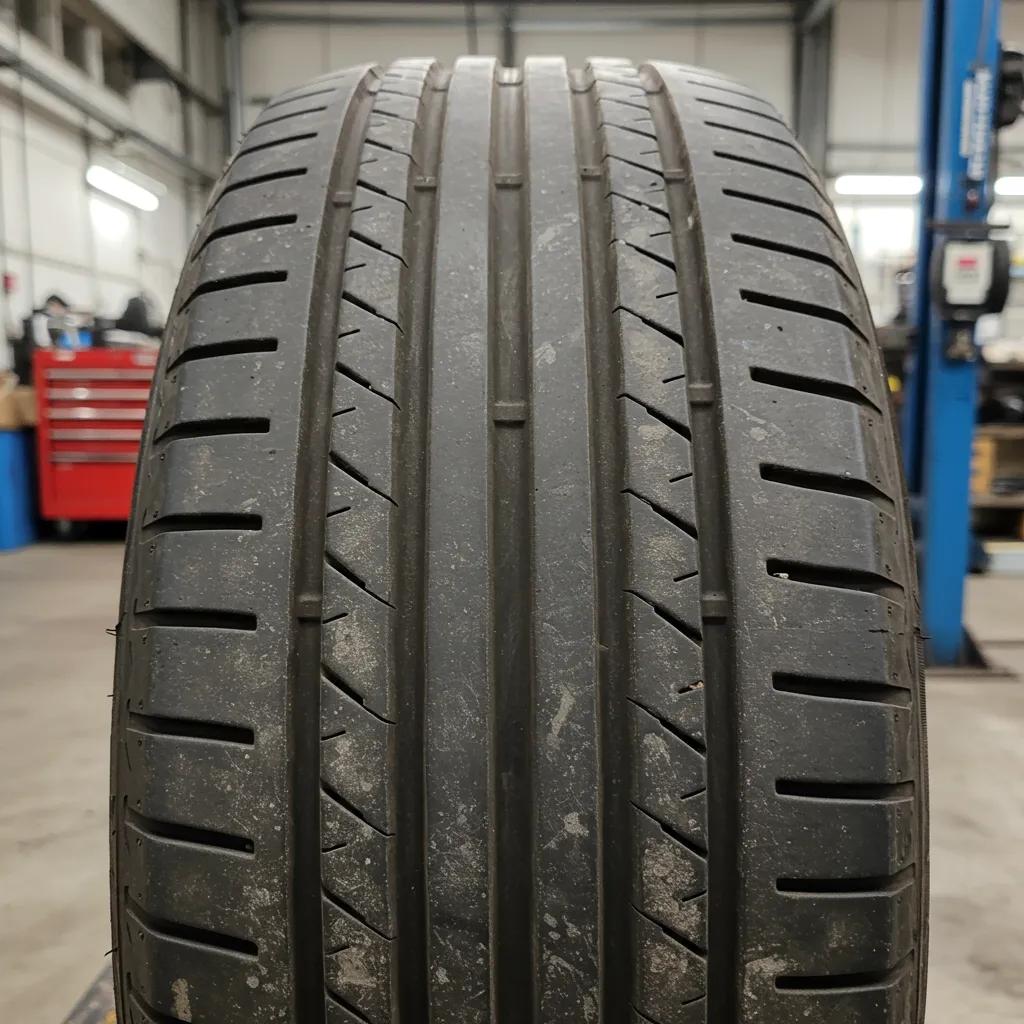
Uneven Tyre Wear: What’s Causing It and How to Stop It
Uneven tyre wear happens when your tyre treads wear down in specific spots instead of evenly across the surface. This can mess with how your car handles, shorten your tyre’s life, and even lead to punctures or blowouts. In this guide, we’ll dive into the main reasons for irregular tread wear—things like bad wheel alignment, suspension problems, incorrect tyre pressure, how you drive, and maintenance habits. We’ll also show you how expert technicians in Columbus, Ohio, can figure out and fix these issues. You’ll learn to spot the signs, understand what’s going on under the hood, and pick up tips to make your tyres last longer, keep you safer, and save you money.
First, we’ll break down the primary causes of uneven tyre wear. Then, we’ll look at alignment angles, worn suspension parts, and pressure imbalances that speed up this wear. Next, we’ll go over common tread wear patterns and what they tell us. After that, we’ll cover tyre rotation, balancing, and driving adjustments to prevent early replacement. Finally, we’ll discuss the safety and cost implications of ignoring tyre wear and when it’s time to get a professional check. By getting a handle on these factors, you can ensure your vehicle performs reliably and stays safe on the road.
What Are the Main Causes of Uneven Tyre Wear?
Uneven tyre wear is usually caused by a mix of things that throw off the tyre’s even contact with the road. When your wheel alignment is off, it changes how the load is spread across the tyre, leading to wear on the edges or in the centre. Worn suspension parts, like shock absorbers, ball joints, and bushings, let the tyre tilt or angle too much when the car is moving, causing wear patterns like cupping or feathering. Incorrect tyre pressure makes these problems worse by putting too much stress on the inner or outer edges. Plus, driving aggressively, like hard braking and sharp turns, can really speed up irregular wear, showing why balanced driving habits are so important.
To make it clearer how these factors affect how long your tyres last, here’s a breakdown:
- Wheel alignment mistakes shift the tyre’s contact point, causing wear on the edges or centre of the tread.
- Damaged suspension parts lead to temporary alignment issues, resulting in cupping patterns.
- Tyres that are underinflated wear out the outer edges faster; overinflated tyres wear out the centre.
- Aggressive driving puts extra stress on the tread, creating uneven wear spots.
- Skipping tyre rotation and balancing speeds up the process of irregular wear.
These main causes often work together, so a thorough inspection and regular maintenance at an auto service centre are key to ensuring your tyres wear evenly and your car performs at its best.
Investigating the Causes of Non-Uniform Tyre Wear
This paper examines the causes of non-uniform tyre wear and can be used to identify tyre design and service characteristics that contribute to this phenomenon. The discussion encompasses several causes of non-uniform wear under free-rolling and cornering conditions.
Uneven wear of vehicle tires, 1993
How Do Wheel Alignment Problems Cause Uneven Tyre Wear?
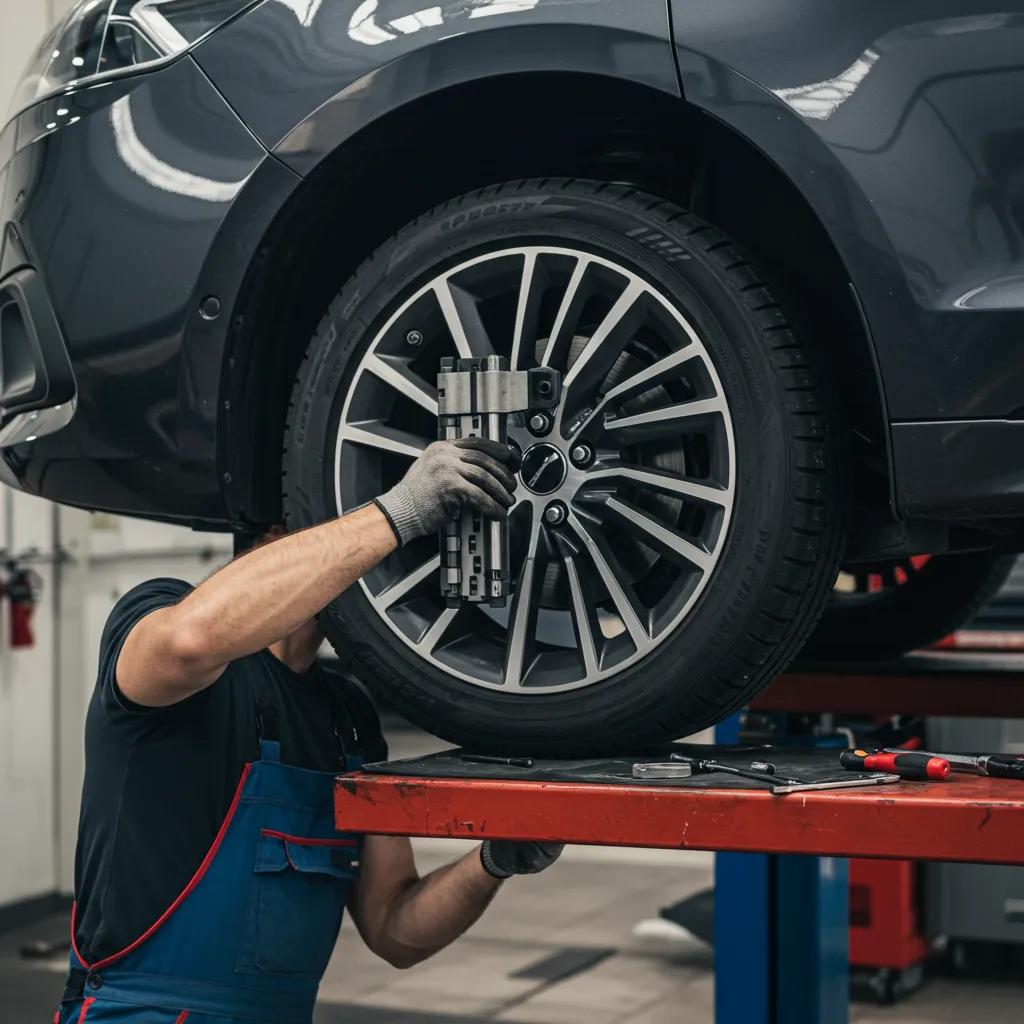
Wheel alignment is all about precisely adjusting your car’s camber, toe, and caster angles to the manufacturer’s specifications. When wheels are misaligned, they can tilt (camber), point inwards or outwards (toe), or shift their orientation along the steering axis (caster), all of which change how the tyre contacts the road. For instance, too much negative camber means the inner edge of the tyre carries more weight, leading to faster wear on that side. Proper alignment ensures the pressure is distributed evenly across the tyre, maximising its contact with the road for balanced wear and stable handling.
| Alignment Angle | Misalignment Effect | Wear Pattern |
|---|---|---|
| Camber | Excessive inward tilt | Inner shoulder wear |
| Toe | Wheels point inward | Feathering on edges |
| Caster | Steering pivot angled | Irregular patch wear |
Fixing these angles puts the load back where it belongs across the tread, preventing premature tyre replacement and keeping your steering precise.
The Impact of Wheel Alignment on Tyre Wear Patterns
Wheel alignment is the most significant factor influencing tyre wear. Wheel alignment refers to the relative positioning of linkages and hinge points; due to the deflection of rubber bushes and other components, this can have considerable consequences on tyre slip angles, and consequently on tyre wear.
Automatic and accurate vision-based measurement of camber and toe-in alignment of vehicle wheel, 2022
What Is Camber and How Does It Affect Tyre Wear?
Camber refers to the vertical tilt of a wheel compared to the road surface. When a wheel has negative camber, the top tilts inward, causing the inner edge of the tyre to wear faster. Positive camber pushes the outer shoulder inward, leading to outer edge wear. While a slight amount of camber can improve cornering grip, too much tilt puts excessive force on one side of the tread. A common example is a lowered car with too much negative camber, which can result in the inner edge wearing down significantly after just a few thousand miles. Keeping an eye on camber and getting it adjusted during regular service ensures your tread wears evenly and your vehicle stays stable. Next, we’ll look at how toe alignment plays a role.
How Does Toe Misalignment Cause Uneven Wear?
Toe angle describes how much your wheels point towards or away from each other. When wheels have toe-in, they point slightly inward, causing the outer edges of the tyres to scuff and wear down. Conversely, toe-out makes the inner edges wear faster. Incorrect toe settings often lead to feathering patterns on the tread, which you might feel as vibrations at moderate speeds. Regular toe checks and adjustments during wheel alignment service stop this edge scrubbing, help improve fuel economy, and extend tyre life. Understanding toe’s impact sets the stage for looking at caster’s role in alignment issues.
What Role Does Caster Play in Tyre Wear?
Caster angle affects the steering pivot’s forward or backward tilt and influences how stable the steering feels. While caster primarily impacts steering centring and cornering feel rather than causing direct tyre wear, a severely misaligned caster angle can lead to uneven load distribution during steering. A worn or bent control arm can throw off the caster angle, resulting in patchy tread contact and irregular wear spots. Maintaining the correct caster angle improves steering responsiveness and indirectly helps the tyre tread engage evenly under load, which leads us to recognising alignment warning signs.
What Are the Signs That Your Vehicle Needs a Wheel Alignment?
If your car needs a wheel alignment, you’ll likely notice a few key signs: the steering wheel isn’t centred when you’re driving straight, your tyre treads are wearing unevenly, the car pulls to one side, or you feel vibrations at higher speeds. You might also hear clicking noises from the suspension when turning, or see unusual bulges on your tyres. If you spot bald spots on the inner edge of your tyres or a feathered tread pattern within the first few millimetres of wear, it’s definitely time for an alignment check. Addressing these symptoms quickly at a qualified repair shop will prevent further damage to your suspension and avoid potential tyre failure.
Which Suspension System Faults Lead to Uneven Tyre Wear?
A well-functioning suspension system keeps your wheels aligned correctly, even when the car is moving. When shock absorbers wear out, they lose their ability to dampen bounces, causing the tyres to skip and develop cupping patterns. Faulty ball joints can throw off the steering geometry, leading to sideways movement that wears down the tyre surface unevenly. Similarly, worn bushings create looseness in the suspension links, causing temporary misalignments and feathering wear. Having experienced technicians regularly inspect your shocks, ball joints, and bushings ensures predictable wheel control and consistent tyre contact, reducing the progression of irregular wear.
Front Suspension Issues and Tyre Wear
Front suspension and tyre wear. Relative positioning within linkages and pivot points, owing to the deflection of rubber bushes and other components, can have significant implications for tyre slip angles, and consequently, for tyre wear.
Front suspension and tyre wear, 1955
How Do Worn Shock Absorbers Cause Tyre Cupping?
When shock absorbers are worn, they can’t effectively control wheel bounce over bumps and uneven surfaces. This causes the tyres to skip slightly, creating alternating high and low spots around the tread, known as cupping. These look like scalloped depressions. Replacing worn-out shocks restores proper damping, smooths out wheel movement, and stops further cupping, ensuring the tyre maintains even contact with the road, even over bumps.
What Is the Impact of Faulty Ball Joints on Tyre Wear?
Ball joints are crucial pivot points connecting the control arms to the steering knuckles. If they become loose or worn, the wheels can shift unexpectedly under load, causing the tread edges to abrade unevenly. This often results in wear on the inner or outer shoulders as the joint allows uncontrolled tilting. Replacing worn ball joints restores the suspension geometry and stops erratic loading on the tyres.
How Do Worn Bushings Affect Steering and Tyre Wear?
Suspension bushings are designed to cushion joints and keep suspension components properly aligned. When the rubber in these bushings cracks or shrinks, the alignment angles can change unpredictably, especially during turns. This leads to feathering or edge wear patterns on the tyres. Replacing these worn bushings stabilises the movement of suspension links, ensures precise steering inputs, and helps the tread wear evenly under various driving conditions.
When Should Suspension Components Be Inspected or Replaced?
It’s a good idea to have your suspension parts checked every 12,000 miles or during your annual safety inspection. You should consider replacing shocks and struts when you notice a decrease in ride comfort or after about 50,000 miles to prevent cupping. Ball joints and bushings need to be evaluated any time you suspect looseness or notice unusual tyre wear. Being proactive with replacement helps maintain alignment and tyre integrity, saving you from more costly repairs down the line.
How Does Tyre Pressure Influence Uneven Tyre Wear?
The pressure inside your tyres dictates the shape of the contact patch and how pressure is distributed across the tread. If your tyres are underinflated, the shoulders flatten out, putting extra stress on the outer edges and causing them to overheat, which speeds up wear. Overinflated tyres, on the other hand, have a narrower contact area concentrated in the centre of the tread, leading to rapid centre wear. Keeping your tyres inflated to the manufacturer’s recommended PSI ensures even tread contact, improves fuel efficiency, and enhances handling performance. This brings us to our next topic: checking and maintaining tyre pressure.
| Inflation Condition | Pressure Effect | Wear Location |
|---|---|---|
| Underinflated | Flattened shoulders | Outer edges |
| Overinflated | Bulged centre tread | Centre tread |
What Causes Outer Edge Wear from Underinflated Tyres?
When tyres aren’t inflated enough, the load shifts towards the shoulders, creating more friction on the outer edges. This causes the rubber on the edges to degrade faster and reduces the tyre’s stability when cornering. Checking your tyre pressure monthly with a reliable gauge ensures they are properly inflated, which leads to even wear and safer cornering.
How Does Overinflation Lead to Centre Tread Wear?
Overinflated tyres cause the vehicle’s weight to press down more heavily on the centre part of the tread, leading to accelerated wear in the middle of the tyre. This can reduce traction and shorten the tyre’s lifespan. Adjusting the pressure back to the recommended levels will redistribute the load evenly and prevent the centre tread from wearing down too quickly.
How Can You Check and Maintain Correct Tyre Pressure?
Regularly check your tyre pressure using a digital or analogue gauge when the tyres are cold. Compare the readings to the vehicle manufacturer’s recommended PSI, which you can usually find on a sticker inside the driver’s doorjamb. Adjust the pressure to the correct level and recheck it after driving a short distance. Proper maintenance not only extends tyre life but also ensures consistent handling.
What Is the Role of Tyre Pressure Monitoring Systems (TPMS)?

Tyre Pressure Monitoring Systems (TPMS) constantly keep an eye on your tyre inflation and alert you if the pressure drops too low or too high. By detecting slow leaks or sudden deflation, TPMS helps prevent the prolonged underinflation or overinflation that causes uneven wear. Making sure your TPMS sensors are working correctly ensures you get reliable warnings and helps maintain optimal tread health.
What Are Common Tyre Wear Patterns and Their Causes?
Different wear patterns can point to specific underlying problems and help guide the right repairs. Feathering, where tread blocks have smooth and sharp edges, is usually caused by incorrect toe settings and can create vibrations at higher speeds, requiring an alignment to fix. Cupping, which looks like alternating high and low spots around the tread, is often due to worn shock absorbers allowing the tyre to bounce and wear unevenly. Wear on the inner or outer shoulders can indicate camber issues or pressure problems, while centre wear typically signals overinflation. Recognizing these patterns is key to accurate diagnosis and effective solutions.
What Is Feathering Wear and What Causes It?
Feathering wear is characterised by tread blocks that are smooth on one edge and sharp on the other. This pattern is caused by incorrect toe settings and often leads to vibrations at higher speeds. An alignment adjustment is needed to correct the toe angle and stop the edges from scrubbing.
How Does Cupping or Scalloping Develop on Tyres?
Cupping, also known as scalloping, appears as a series of depressions or worn spots around the circumference of the tyre. This pattern typically develops when shock absorbers are worn out, causing the tyre to bounce and make uneven contact with the road. Replacing the worn shocks will stabilise the tyre’s contact with the road and prevent further cupping.
What Causes Inner and Outer Shoulder Wear?
Wear on the inner shoulder of the tyre usually results from excessive negative camber or underinflation. Conversely, outer shoulder wear is typically caused by positive camber or the same underinflation issue. Ensuring your camber angles are balanced and maintaining the correct tyre pressure will prevent these types of asymmetrical wear.
How Does Centre Tread Wear Indicate Overinflation?
When the centre of the tyre tread wears down significantly more than the edges, it’s a clear sign that the tyre is overinflated. This happens because the increased pressure causes the centre of the tread to bulge and carry most of the vehicle’s weight. Bringing the tyre pressure back to the manufacturer’s recommended level will distribute the load evenly and restore uniform wear.
How Can You Prevent Uneven Tyre Wear?
Preventing uneven tyre wear involves a combination of regular checks, maintaining correct inflation, getting alignments done, and following a rotation schedule. Rotating your tyres every 8,000–10,000 miles helps distribute wear evenly across all four wheels. Balancing your wheels ensures weight is distributed uniformly, reducing vibrations and preventing irregular wear. Driving smoothly, with gradual acceleration and braking, minimises sudden stress on the tyres. Implementing these practices at our Columbus, Ohio service centre will help your tyres last longer and keep your vehicle performing reliably.
- Schedule a wheel alignment and suspension inspection annually or after any suspension work.
- Rotate your tyres using a forward-cross pattern every 8,000 miles.
- Keep your tyre pressure at the manufacturer-recommended PSI.
- Balance your wheels every time you rotate your tyres.
- Drive gently, accelerating and braking smoothly to reduce stress on your tyres.
Consistently following these steps will ensure your tread wears evenly and delay the need for early tyre replacement.
What Are the Safety and Economic Impacts of Uneven Tyre Wear?
When tyre wear is uneven, it can significantly reduce braking performance and compromise vehicle stability, increasing the risk of accidents, especially in wet conditions. The increased rolling resistance from irregular tread patterns also leads to higher fuel consumption, adding to your running costs. Replacing tyres prematurely due to localised wear can be expensive, with each tyre costing hundreds of dollars. Proper maintenance ensures that advanced driver-assistance systems function correctly by maintaining accurate alignment inputs and also contributes to reducing tyre waste, supporting environmental sustainability.
How Does Uneven Tyre Wear Affect Road Safety?
Uneven tread wear can lengthen your braking distances and reduce your car’s traction on wet or icy roads. If a tyre has worn-down shoulder segments, it might skid unpredictably during sudden stops, making it harder to steer and increasing the chance of a collision.
What Are the Costs of Premature Tyre Replacement?
Replacing tyres too soon because of uneven wear can significantly increase your expenses, as you’ll end up going through more sets of tyres. Drivers might spend hundreds of extra dollars each year on replacements they could have avoided by properly maintaining their alignment, suspension, or tyre pressure.
How Do Advanced Vehicle Systems Depend on Proper Tyre Maintenance?
Modern safety features, like adaptive cruise control and lane-keeping assist, rely on precise wheel alignment to accurately interpret data from sensors. When tyres wear unevenly, the wheel position feedback becomes inaccurate, reducing the effectiveness and safety of these systems.
How Does Proper Tyre Care Support Environmental Sustainability?
Ensuring your tyres wear evenly maximises their lifespan, which means less waste going to landfills and a smaller carbon footprint from tyre manufacturing. Maintaining correct tyre pressure also lowers rolling resistance, improving fuel efficiency and reducing greenhouse gas emissions throughout the vehicle’s life.
Keeping your tyres in top condition not only enhances safety and cuts costs but also aligns with environmental goals, making regular inspections and professional servicing a smart investment.
Consistent maintenance and expert diagnostics can restore tread uniformity, leading to safer drives and more cost-effective vehicle ownership.