

Steering Wheel Shake: Your Guide to What’s Causing It and How to Fix It
A steering wheel that shakes or wobbles is a clear sign something’s not right, impacting both your safety and your ride’s comfort. This kind of vibration often points to issues with your tires, brakes, suspension, steering components, driveshaft, or even engine mounts. This guide breaks down each potential cause, explaining what it is, how it works, and how it affects your driving. We’ll also cover when it’s time to call in the pros and how to keep these problems from coming back. You’ll learn about tire imbalance, alignment quirks, and rim damage; brake system hiccups; worn suspension and steering parts; driveshaft wobbles; failing engine mounts; how to diagnose issues at different speeds; and typical repair costs alongside maintenance advice. Throughout, we’ll reference Blackstone Complete Auto Care in Columbus, Ohio, as your go-to experts for balancing, alignment, brake, suspension, and steering services to get rid of that vibration for good.
What Are the Usual Suspects for Steering Wheel Vibration?
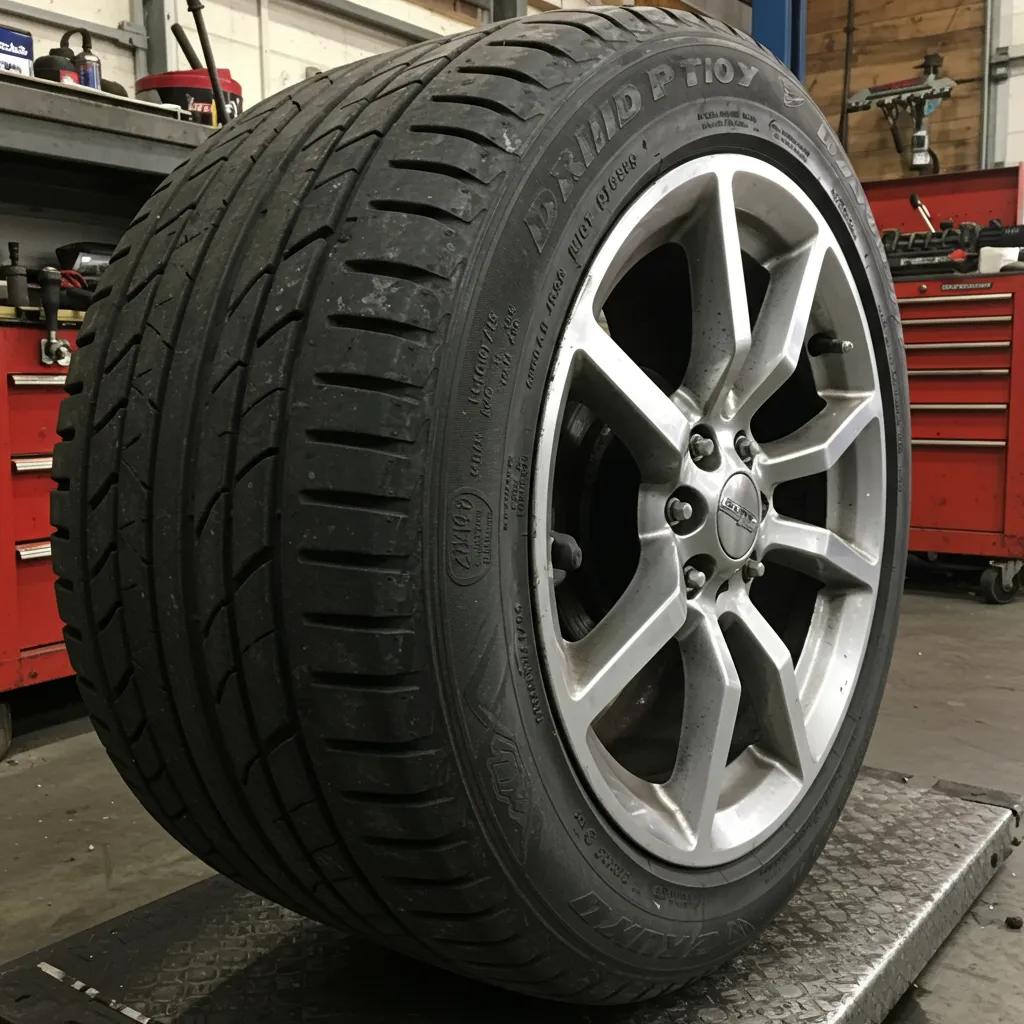
Problems with your tires and wheels are the most common culprits behind a shaking steering wheel because they’re what connect you to the road and are crucial for smooth rotation. If your tires have uneven weight distribution, your wheels are out of alignment, or your rims are damaged, it disrupts their smooth spin, sending vibrations right up to your steering column. Catching these issues early means you can fix them precisely and prevent other parts from wearing out faster.
| Issue | What It Looks Like | How It Affects Your Steering |
|---|---|---|
| Tire Imbalance | Uneven weight distribution | Vibrations at cruising speeds |
| Wheel Misalignment | Incorrect angles (camber, toe) | Car pulls to one side and steering wheel trembles |
| Damaged Rim | Bent or cracked wheel | Intermittent shaking at higher speeds |
These three wheel-related issues help narrow down your initial inspection and repair options based on the specific way your steering wheel is vibrating.
How Does Tire Imbalance Make Your Steering Wheel Shake?
Tire imbalance happens when the tire and wheel assembly doesn’t have an even weight distribution around its center. As the wheel spins, this imbalance creates forces that push and pull unevenly, making your steering wheel shake, especially noticeable between 50–70 mph. A simple imbalance causes a bouncing sensation, while a dynamic imbalance leads to a side-to-side wobble. Regular tire balancing, using precise weights, evens out the mass distribution, stopping those harmonic vibrations from traveling up the steering system to your hands.
Tire Imbalance and Non-Uniformities as Causes of Steering Wheel Vibration
This study investigates shimmy (also known as nibble) and shake of a steering wheel, excited by tire and wheel imbalance and non-uniformities. Within this context, several indoor experiments were performed and analysed from the perspectives of mass imbalance, rolling phase, non-uniformity-induced external force differences between the front wheels, and changes in inflation pressure. The results indicate a high correlation between static and couple imbalance of the tyre and shimmy, with little correlation to shake.
Tire mass imbalance, rolling phase difference, non-uniformity induced force difference, and inflation pressure change effects on steering wheel vibration, 2005
What Are the Signs of Bad Wheel Alignment Causing Vibration?
When your wheels are misaligned, their angles (camber, toe, or caster) aren’t set correctly relative to the road. This causes the tires to contact the road unevenly, leading to vibration and a constant pull to one side. You might also notice your steering feels heavier, and the car drifts toward the side with the misaligned wheels. Look for uneven tire wear, like feathered edges or cupping, which often goes hand-in-hand with vibration. Getting a precise wheel alignment brings all four wheels back to the manufacturer’s specs, restoring straight-line stability and ensuring your tires wear evenly.
How Do Damaged Wheels and Rims Mess with Your Steering?
A bent or cracked rim throws off the wheel’s roundness and balance, creating an uneven surface as it spins. Every high spot on a damaged rim interacts with the tire differently, sending jolts through your steering. Rim cracks also weaken the wheel’s structure, potentially leading to a sudden loss of tire pressure. A close visual inspection of the rim, along with a dial-indicator check for runout, can pinpoint damaged areas. Straightening or replacing the rim fixes the geometric flaw, eliminating vibration sources and ensuring your tire stays properly seated.
How Do Brake System Problems Cause Steering Wheel Vibration?
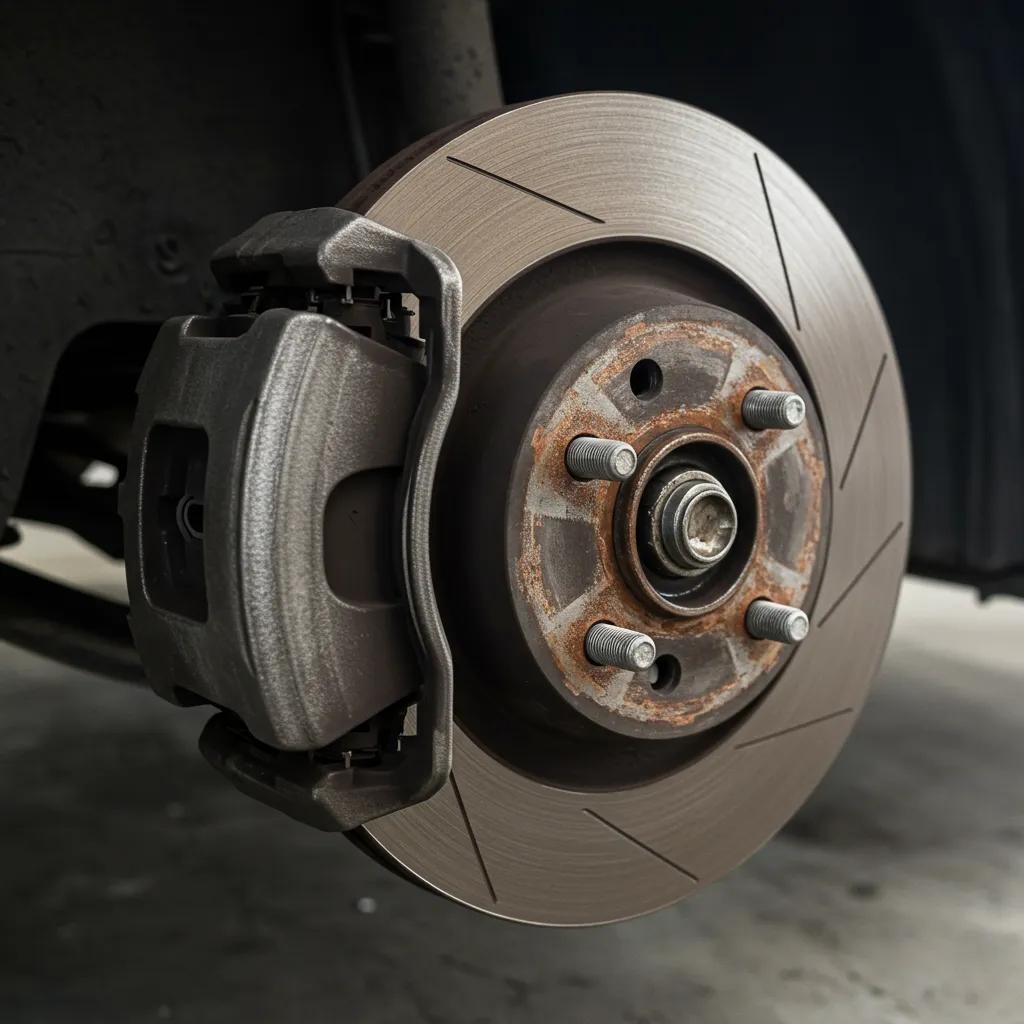
Brake system issues typically cause vibration when you’re slowing down, as the brake components engage and put stress on the steering assembly. Warped brake discs or calipers that stick can create uneven friction that travels through the wheel hub and into your steering column. Catching brake-related vibrations early is key to preventing safety risks and premature wear on your suspension parts.
Why Does a Warped Brake Disc Make the Steering Wheel Shake When You Brake?
A brake disc can warp due to repeated heat cycles or uneven pressure from the brake pads, resulting in a surface that’s no longer perfectly flat. As the rotor spins between the brake pads, the warped section causes fluctuating pressure and pulsations. You’ll feel a rhythmic vibration in the steering wheel that’s directly tied to your braking. Resurfacing or replacing the disc restores its uniform thickness and ensures smooth pad contact, eliminating vibration during braking and maintaining a solid pedal feel.
Brake Judder: Excitation and Transmission Mechanisms in Coupled Brake, Chassis, and Steering Systems
Emphasis is placed here on disc brake judder attributable to disc thickness variations. These deviations from the ideal planar surface can be caused by wear and corrosion or by thermal stresses (changes within the microstructure of the disc material). They are termed “cold judder” and “thermal judder” respectively. During braking, possible vibration excitation passes through a wide frequency band due to the coupling between the judder frequency and the wheel rotational speed, thereby exciting resonant frequencies of many vehicle components. This includes wheel suspension components and the steering column.
Brake judder-analysis of the excitation and transmission mechanism within the coupled system brake, chassis and steering system, 2005
How Can Faulty Brake Calipers Lead to Steering Vibrations?
Brake calipers that bind or have seized pistons don’t retract evenly, leading to uneven pad wear and inconsistent braking. This erratic engagement causes pulsations that you feel in the steering wheel, especially at lower speeds or when braking lightly. An inspection might reveal uneven pad deposits or sticky slider pins. Servicing the calipers—cleaning, lubricating, and replacing worn parts—ensures the pads retract uniformly and braking forces are consistent, which gets rid of caliper-induced steering shake.
Brake Judder-Induced Steering Wheel Vibration: Experiment, Simulation, and Analysis
One of the effects is steering wheel vibration during vehicle braking. An experimental and theoretical investigation into “steering wheel vibration due to brake judder” is extensively presented in this paper. The vehicle road test is carried out under controlled braking conditions. During the test, the accelerations of the brake caliper assembly, suspension lower and upper control arms, steering arm, tie rod, and steering wheel, along with the left and right wheel rotational speeds, are measured by a multi-channel data acquisition system. The data processing focuses on order tracking analysis and transfer path analysis to determine the related resonant components.
Brake judder induced steering wheel vibration: Experiment, simulation and analysis, 2007
What Suspension and Steering Component Wear Causes Front End Vibration?
Wear in your suspension and steering parts loosens the connection between your wheels and the chassis, allowing unwanted movement that translates into steering vibration. Components like ball joints, tie rods, bushings, wheel bearings, power steering pumps, and steering racks all play a vital role in keeping things aligned and absorbing road impacts. When any of these parts degrade, you can get oscillations in your steering wheel that feel like a system error.
How Do Worn Ball Joints, Tie Rods, and Bushings Cause Steering Wheel Vibration?
Ball joints and tie rods connect your wheel hub to the steering rack, while bushings cushion the connections between the chassis and control arms. Wear increases the looseness in these joints, allowing the wheel to shift slightly under load and then snap back, creating a rapid back-and-forth motion. You’ll likely experience a noticeable shimmy at low to moderate speeds and inconsistent steering response. Checking for excessive play by visually inspecting and physically testing these components under load will reveal wear. Replacing worn joints and bushings restores tight control and smooth steering without residual vibration.
What Are the Effects of Loose or Worn Wheel Bearings on Steering Vibration?
Wheel bearings allow your wheels to spin smoothly with minimal friction. When bearings wear out or lose their proper preload, play develops between the hub and the spindle. This causes the wheel to shift side-to-side or tilt under load. You might hear rumbling or chirping noises along with a subtle shake that gets worse as you speed up. A lift-and-shake test can confirm play in the wheel bearings. Replacing the bearings with the correct torque settings realigns the hub geometry and stops bearing-related vibrations from reaching you.
How Do Power Steering Pump and Steering Rack Issues Affect Steering Stability?
The power steering pump provides hydraulic pressure for easy steering, and the rack translates this into turning the wheels. Worn pump bearings or internal leaks in the rack reduce system pressure, leading to cavitation noises and uneven steering assistance. You might feel jerky resistance or vibrations when turning. A pressure test can pinpoint leaks or pump problems. Rebuilding the pump or replacing the rack restores consistent hydraulic support and eliminates steering column shudder caused by fluid pressure issues.
What Driveshaft and Engine Mount Problems Cause Vibration Through the Steering?
While less common, issues with your drivetrain and engine isolation can send deeper vibrations into the cabin. A driveshaft that’s out of balance or failing engine mounts disrupt the smooth transfer of power and the dampening of engine operation, feeding roughness into your steering column.
How Does Driveshaft Imbalance or U-Joint Failure Cause Steering Wheel Shaking?
A driveshaft with uneven weight distribution or worn universal joints (U-joints) introduces cyclical forces into the drivetrain. At certain engine speeds, centrifugal imbalance or stiff U-joints can create throbbing vibrations that travel through the transmission and differential into the chassis and steering column. You’ll notice this vibration in the steering wheel when accelerating or cruising at specific speeds. Balancing the driveshaft and lubricating or replacing the U-joints corrects these issues, restoring smooth power transfer and a calm steering feel.
Why Do Failing Engine Mounts Transfer Engine Vibration to the Steering Wheel?
Engine mounts are designed to isolate the engine’s movement from the chassis, absorbing torque reaction and vibration. When mounts age or degrade, their reduced damping allows engine vibration—especially at idle or certain RPMs—to resonate through the frame and into the steering column. This results in a noticeable tremble when idling that can worsen under load. Inspecting mounts for cracked rubber or fluid leaks confirms failure. Replacing worn mounts restores proper isolation, eliminating engine-originated steering vibration and improving overall ride comfort.
When Should You Seek Professional Help for Steering Wheel Vibration?
Steering wheel vibration can indicate anything from a minor tire imbalance to a serious suspension failure. Getting professional diagnosis quickly can prevent accidents and more expensive repairs down the line. A skilled technician will systematically inspect components, pinpoint the root cause, and perform the precise repairs needed.
What Are the Risks of Ignoring Steering Wheel Shaking?
If you ignore vibration issues, you’ll end up with faster tire wear, uneven brake pad contact, and premature suspension failure. In severe cases, compromised steering control significantly increases your risk of an accident. Drivetrain components and engine mounts also suffer extra stress, potentially increasing repair costs by up to 30 percent. Addressing vibration early preserves your vehicle’s safety and lowers your long-term maintenance expenses.
How Can Expert Diagnosis Identify the Exact Cause of Vibration?
Professional repair shops use diagnostic lifts, wheel runout gauges, alignment machines, and specific road-test procedures to isolate faults. Technicians can evaluate tire balance, alignment, brake disc runout, and suspension looseness under controlled conditions. Hydraulic pressure tests and checks for bearing preload complete the assessment. This systematic approach accurately links vibration sources to specific components, allowing for targeted repairs instead of guesswork.
What Repair Services Are Available to Fix Steering Wheel Vibration?
A full range of services is available to restore smooth steering and precise handling:
- Tire balancing and mounting
- Four-wheel alignment to manufacturer standards
- Brake disc resurfacing or replacement
- Brake caliper servicing and lubrication
- Suspension joint and bushing replacement
- Wheel bearing adjustment or replacement
- Power steering pump and steering rack service
- Driveshaft balancing and U-joint replacement
- Engine mount replacement
Blackstone Complete Auto Care in Columbus, Ohio, provides this comprehensive suite of services with certified technicians and state-of-the-art equipment, ensuring vibration-free steering and renewed driving confidence.
How Can You Diagnose Steering Wheel Vibration Symptoms at Different Speeds?
The way your steering wheel vibrates often changes with speed and driving conditions, which can help pinpoint the problem. Using a speed-based symptom map can guide your checks without a lot of trial and error.
Why Does Steering Wheel Shake at High Speeds Like 60 or 70 mph?
Steering wheel wobble at highway speeds is most commonly caused by tire imbalance or slight wheel misalignment. The faster the wheels spin, the more even minor mass or angle errors become noticeable as oscillations. Ensuring your tires are balanced both statically and dynamically, along with precise alignment, will eliminate these high-speed shakes and restore comfortable, stable cruising.
What Causes Steering Wheel Vibration at Low Speeds or When Braking?
Shaking at low speeds or specifically when you brake often points to warped brake discs or calipers that are sticking. Suspension wear, such as loose ball joints or worn wheel bearings, can also cause a slow, pronounced shimmy at city speeds. Checking your brake rotor runout and component play under low-load conditions can quickly identify faults that need specific machining or part replacement.
What Are the Typical Costs and Maintenance Tips to Prevent Steering Wheel Vibration?
Understanding repair costs and following preventive maintenance routines can help you budget and avoid unexpected disruptions. In the UK market as of 2025, balancing, alignment, and basic brake services are generally affordable, while suspension and drivetrain repairs can vary depending on the complexity of your vehicle.
How Much Does It Cost to Fix Steering Wheel Vibration in the UK?
Balancing four tires typically costs between £40–£60, while a four-wheel alignment averages £70–£100. Resurfacing or replacing brake discs usually ranges from £50–£120 per axle, depending on the quality of the discs. Replacing suspension joints or wheel bearings can cost anywhere from £80–£200 per side. These are general figures to help you budget for workshop visits.
What Regular Maintenance Can Prevent Steering Wheel Shaking?
Consistent preventive measures include:
- Annual tire balancing and rotation.
- Alignment checks every two years or after hitting a curb.
- Brake system inspection at every service appointment.
- Lubrication and visual checks of suspension components.
This routine ensures any imbalance, alignment drift, or wear is addressed before minor issues turn into steering vibration.
Where Can You Find Reliable Tire Balancing and Wheel Alignment Services Near You?
Local repair shops equipped with modern balancing machines and alignment bays offer the most accurate results. Blackstone Complete Auto Care in Columbus, Ohio, provides professional tire balancing and four-wheel alignment to precise manufacturer specifications. Their certified team uses laser-guided alignment equipment and dynamic spin-balancers, guaranteeing exact adjustments that prevent steering wheel vibration and maximize tire life.
Maintaining precise balancing, alignment, brake condition, and suspension integrity eliminates the root causes of steering wheel vibration. Regular inspections and prompt professional repairs keep your vehicle safe, comfortable to drive, and extend the life of its components. By combining preventive maintenance with targeted diagnostics, you ensure smooth, secure steering and get the most out of your tires, brakes, and suspension parts. For expert service in Columbus, Ohio, trust Blackstone Complete Auto Care to accurately diagnose vibration issues and provide lasting solutions.