
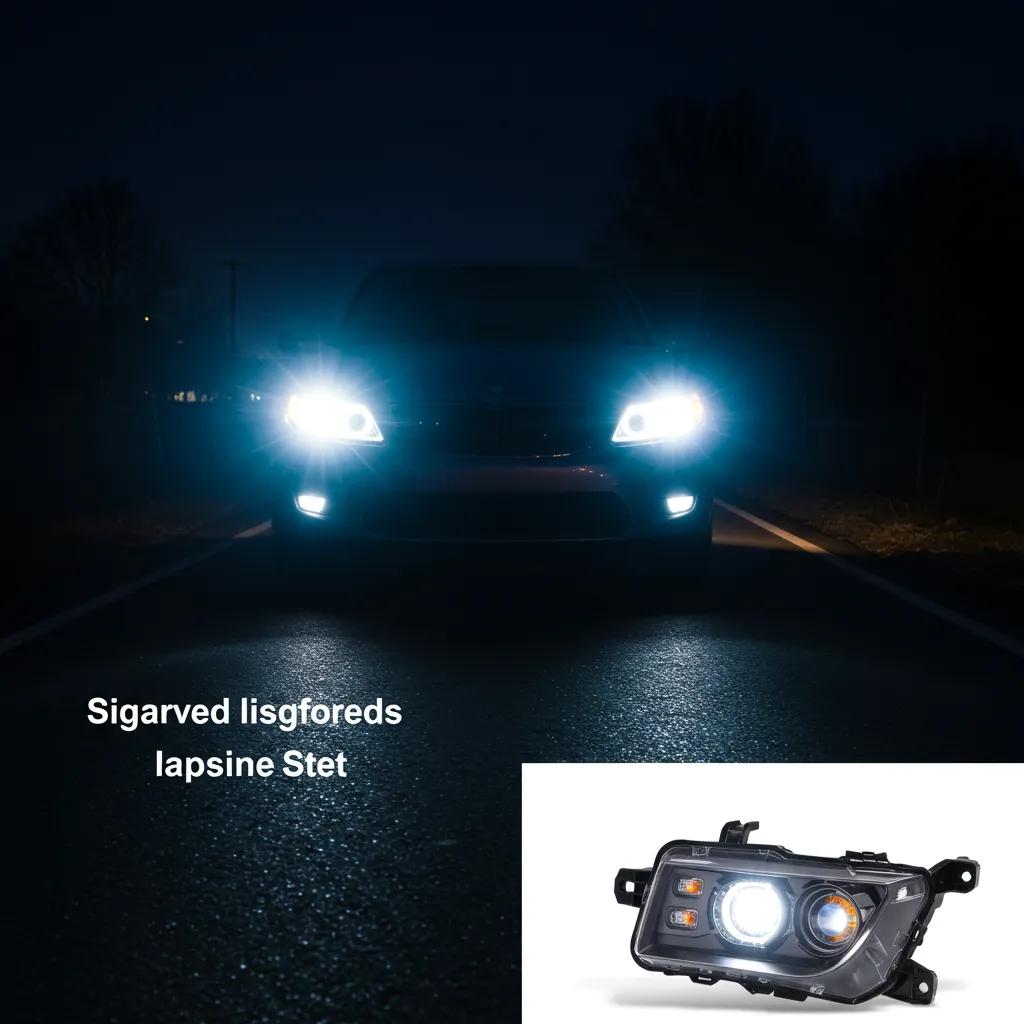
Illuminate Your Drive: A UK Guide to Upgrading Your Car’s Headlights
Boosting your car’s headlights can significantly sharpen night-time vision, elevate safety, and ensure you’re fully compliant with UK regulations. This guide will walk you through the various headlight technologies, clarify the legal requirements under MOT and the Road Vehicles Lighting Regulations 1989, and provide clear DIY steps alongside professional solutions. We’ll start by exploring halogen, LED, xenon, and adaptive lighting systems, highlighting their advantages. Then, we’ll delve into the crucial UK headlight laws and how to steer clear of MOT failures. Following that, we’ll present practical upgrade procedures—from fitting high-performance bulbs and reviving cloudy lenses to carrying out compliant LED or xenon conversions. Finally, we’ll review auxiliary lighting enhancements, common troubleshooting tips, and cost-benefit analyses to help you select the ideal upgrade for peak performance, lasting durability, and enhanced safety.
Discover the Spectrum of Car Headlight Technologies and Their Advantages
Car headlights are broadly classified into four main types: halogen, LED, xenon (HID), and adaptive systems, each distinguished by its unique light-generation method. Understanding these differences is key to making informed decisions when upgrading for superior brightness, efficiency, or legal adherence. For instance, halogen units produce light by heating a tungsten filament, making them a reliable choice for everyday driving. In contrast, LED modules employ semiconductor diodes to deliver more lumens per watt and boast a longer operational life. Xenon headlights generate intense light by igniting gas, while adaptive systems intelligently adjust their beam direction in sync with your steering, significantly improving visibility around corners.
The Evolution of Automotive Lighting: From Halogen to LED and Future Developments
AbstractLight has been fundamental to humanity since time immemorial. Light is ubiquitous, emanating from the sun, fire, and subsequently, electricity. Artificial light is incorporated into various appliances, applications, and sectors, including the automotive industry. This sector enhanced automotive vehicles with sealed lamp units which were electrified in the 1920s. This progression continued through the 1960s, with the advent of halogen headlights, to the 1990s, which saw the introduction of HID headlights, followed by LED-type headlights in the first decade of the 21st century, and most recently, laser-type headlights in the 2010s.
Headlights have evolved into highly sophisticated units. Today, their function extends beyond mere illumination to encompass visual safety, guidance, and indication. They have also contributed to fuel efficiency initiatives, as automotive manufacturers have prioritised this in their CO2 emission reduction strategies, in line with European Commission mandates for the industry to reduce emissions to 1990 levels.
| Headlight Type | How It Works | Main Advantage |
|---|---|---|
| Halogen | Heated filament within halogen gas | Cost-effective replacement and simple swap |
| LED | Semiconductor diodes | Brilliant, energy-saving light with exceptional longevity |
| Xenon (HID) | Electric arc through xenon gas | Intense light output and a crisp, clear beam |
| Adaptive Systems | Motorised beam-shaping optics | Enhanced illumination when navigating turns |
Each headlight type presents its own set of performance characteristics and cost implications, naturally leading to questions about the best ways and times to upgrade individual technologies for both legal compliance and practical benefits.
Understanding Halogen Headlights: How They Function and When to Consider an Upgrade
Halogen headlights operate by passing an electric current through a tungsten filament housed within a halogen gas-filled bulb. This process boosts both brightness and bulb lifespan compared to older incandescent designs. Typically, they produce around 1,000–1,500 lumens with a colour temperature of approximately 3,200 K. It’s time to consider upgrading your halogen bulbs when you notice a decline in light output, a yellowing of the lenses, or frequent bulb failures, as older filaments naturally lose their efficiency. Opting for high-performance halogen replacements can increase brightness by up to 50 percent without requiring any changes to your existing wiring or beam pattern, offering a sensible improvement before you consider moving to LED or xenon technologies.
The Appeal of LED Headlights: Benefits and UK Legal Standing
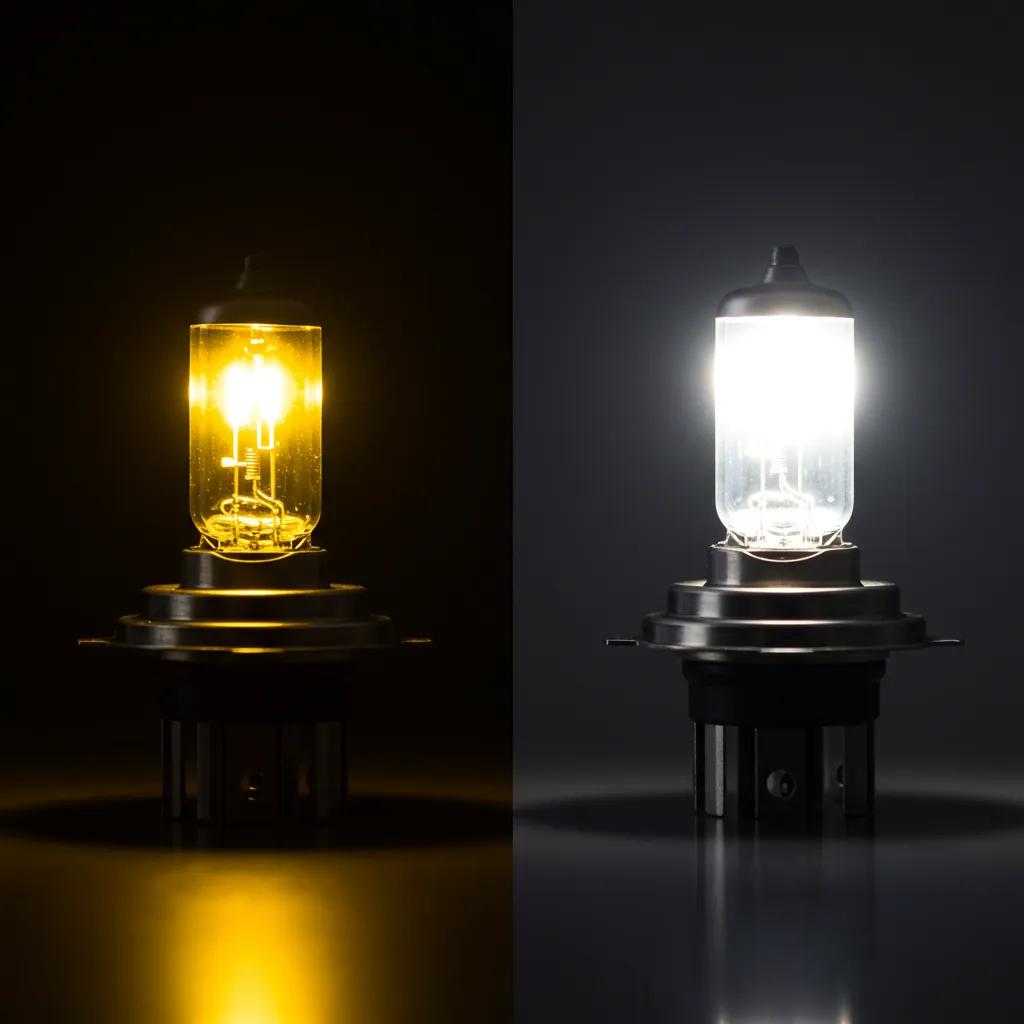
LED headlights harness arrays of semiconductor diodes to emit light with remarkable energy efficiency, an extended service life exceeding 20,000 hours, and cooler operating temperatures. They can achieve lumen outputs above 3,000 with colour temperatures ranging from 5,000 K to 6,500 K, which significantly enhances contrast and driver comfort. In the UK, factory-installed LED headlamp units are fully road-legal. However, aftermarket LED conversion bulbs fitted into halogen reflectors are generally not permitted for vehicles first registered after 1 April 1986 and will result in an MOT failure. Classic cars registered before this date might qualify for specific exemptions that permit compliant LED conversion kits designed for heritage vehicles.
An Evaluation of Aftermarket LED Headlight Bulbs for Automotive Applications
Capitalising on the burgeoning consumer interest in light-emitting diode (LED) headlights, a growing number of aftermarket LED replacement bulbs are now available. These are designed with socket shapes and sizes analogous to halogen bulbs to ensure compatibility with existing headlight housings. While none of these LED replacement bulbs currently comply with federal headlighting regulations, and some are designated for ‘off-road use’ only, others purport to meet current standards. Nevertheless, a variety of LED bulbs can be readily purchased and installed by vehicle owners, who may or may not be cognisant of their regulatory standing. Several distinct LED replacement bulb kits, each intended to substitute a conventional 55-W H11 halogen bulb, were procured and subjected to testing within three different low-beam headlight units. Photometric measurements at several critical test points for headlight performance indicated that none of the resultant illuminations satisfied all the photometric requirements for the tested points.
Xenon (HID) Headlights: A Comparison with Halogen and LED Options
Xenon headlights generate light by igniting an electric arc within a gas-filled capsule, producing between 2,800–3,500 lumens at a colour temperature of 4,300 K to 6,000 K. This offers superior brightness compared to halogen and marginally higher output than standard LED units. These systems require ballasts for voltage regulation. Compared to halogen, xenon units provide nearly double the luminous intensity, while LED arrays excel in energy efficiency and responsiveness. On the flip side, LEDs enable more compact lamp designs and faster startup times. Xenon upgrades must adhere to vehicle type approval standards, and aftermarket HID kits installed in halogen reflectors can lead to beam scatter and MOT failures if not converted correctly.
Exploring Adaptive Lighting Systems and the Future of Car Headlights
Adaptive lighting systems feature motorised reflectors or lens arrays that pivot based on steering angle and vehicle speed, directing light into curves to enhance visibility. These sophisticated units often combine LED or xenon light sources with automatic high-beam functions and glare reduction capabilities. Looking beyond 2025, manufacturers are actively developing laser-based modules and matrix-LED arrays capable of dynamically shading specific beam sections to prevent dazzling oncoming traffic. While such technologies promise even greater safety benefits, they are currently exclusive to new, premium vehicle models. Widespread adoption in the aftermarket will hinge on future regulatory updates and cost reductions.
LED Technology and Adaptive Lighting Systems for Safer Driving
This thesis focuses on automotive headlamps, detailing adaptive lighting systems, particularly matrix systems and high-definition headlamps. It is my firm belief that this technology will lead to improvements in safety under night-time driving conditions. To facilitate an understanding of matrix technology, some foundational knowledge of automotive headlamps is necessary, progressing from the simplest applications to the most complex. When I state that matrix technology will enhance road safety, it is not due to its non-implementation in series production vehicles, but rather because the proportion of vehicles equipped with matrix headlamps remains very low. As is often the case, the most advanced technologies are initially reserved for specific versions of premium vehicles due to cost considerations. However, what is our role as engineers? Clearly, the engineering community cannot provide financial assistance to car manufacturers for the implementation of matrix technology in headlamps, but it can certainly increase user awareness of this technology. Discussing, explaining, and demonstrating the advantages of such a significant safety improvement will foster a desire among end-users to utilise matrix technology for their own benefit and that of others in their vehicles. Time is a crucial factor in technological advancement, enabling costs to be reduced as much as possible over the years. I recall the example of ABS systems, which initially appeared in premium vehicles, subsequently expanded to all vehicle types, and eventually became mandatory.
Navigating UK Headlight Regulations for Your Upgrade Project
Any headlight upgrades in the UK must align with MOT lighting tests and the Road Vehicles Lighting Regulations 1989, ensuring that beam colour, pattern, and mounting heights meet all legal standards. The MOT inspection scrutinises the correct lamp colour (white or selective yellow for dipped beam), the absence of damage or excessive wear, and secure operation. Under the Road Vehicles Lighting Regulations, fitting non-approved aftermarket parts can render a vehicle unroadworthy. Understanding these rules is crucial to avoid MOT failures, ensure safe beam patterns, and maintain the validity of your insurance.
- Ensure secure mounting heights and lateral alignment within specified millimetres.
- Confirm correct beam colour and intensity (avoid blue-tinted lamps).
- Use only approved lamps bearing E-mark or UK certification.
- Refrain from using non-compliant LED or HID bulbs in halogen reflectors.
Adhering to these requirements establishes a solid foundation for any upgrade project and naturally leads into specific MOT rules and legal considerations.
Understanding MOT Headlight Requirements and Common Pitfalls
MOT headlight assessments confirm that both dipped and main beams function correctly, that lens coverings are intact and clear, and that beam alignment does not cause dazzling for other road users. Frequent reasons for failure include yellowed or cracked lenses, incorrect bulb types, misaligned aim, and excessive glare. Inspectors measure beam height at 7.6 metres from the headlamp centreline; dipped beams must strike a designated horizontal line without causing intrusive glare. Keeping your lenses clean and clear, and using approved bulbs, significantly reduces the risk of failure and supports safe lighting upgrades.
Are Aftermarket LED and HID Headlight Upgrades Permitted in the UK?
Aftermarket LED or HID conversion bulbs installed into existing halogen reflectors are generally not road-legal for contemporary vehicles due to potential misalignment of optics and an increased risk of dazzling other drivers. Factory-fitted LED or HID systems that have undergone whole-vehicle type approval remain legal. For classic cars first used before 1 April 1986, specific LED conversion kits designed to replicate original optics and comply with heritage vehicle exemptions may be permissible. Always confirm that any conversion kit carries the correct E-mark certification and that the resulting beam pattern will pass MOT testing.
What Do the Road Vehicles Lighting Regulations 1989 Stipulate for Headlight Modifications?
The Road Vehicles Lighting Regulations 1989 mandate that all headlamps must meet precise requirements for colour, intensity, beam spread, and mounting position. Key provisions include requiring lamps to bear an E-mark, ensuring the dipped beam appropriately illuminates the kerb side, and preventing dazzle for oncoming drivers. Any replacement headlamp assembly or bulb must match the approvals of the original equipment. Modifications that do not comply can invalidate your insurance and may result in penalty notices if detected during roadside checks.
Ensuring Your Headlight Beam Pattern is Safe and MOT-Ready
Achieving the correct beam pattern relies on precise vertical and horizontal aim, lens clarity, and the use of an approved bulb type. Following installation, position your vehicle on level ground 7.6 metres from a wall, switch on the dipped beam, and adjust each lamp so that the sharp cut-off line aligns with the marked reference point. Employing a DIY beam-aligner tool or engaging a professional headlamp alignment service from an auto electrician guarantees the necessary precision.
Your Guide to Upgrading Car Headlights: DIY Steps and Professional Solutions
Upgrading your car’s headlights can be as straightforward as swapping a bulb or as involved as replacing the entire unit. For many drivers, opting for high-performance halogen bulbs or restoring worn lenses presents a cost-effective initial step. More ambitious enthusiasts or owners of classic cars might consider compliant LED or xenon conversions using approved kits. Professional services are equipped to handle complex wiring modifications, CANbus integration, and thorough legal compliance checks, ensuring reliable performance and a guaranteed MOT pass.
Selecting and Fitting High-Performance Halogen Bulbs: A Simple Guide
High-performance halogen replacements enhance brightness by up to 50 percent through a refined filament and gas mixture. To install them:
- Choose a bulb type that matches your vehicle’s specifications (e.g., H4, H7) and carries the correct halogen rating.
- Disconnect the vehicle battery and remove the headlamp assembly or its access cover.
- Carefully release the bulb retaining clip and remove the old bulb, ensuring you avoid touching the glass.
- Insert the new bulb, secure the retaining clip, reconnect the wiring, and test the beam operation.
Replacing bulbs in pairs ensures consistent colour and intensity across both beams, improving overall safety without the need for any electrical modifications.
Reviving Cloudy or Yellowed Headlights: DIY Kits and Professional Services
Cloudy, yellowed lenses can reduce light transmission by as much as 70 percent and are a common cause of MOT failures. A typical DIY restoration kit includes abrasive pads, polishing compound, and a UV sealant:
- Begin by cleaning the headlamp surface with soapy water and masking off any surrounding trim.
- Sand the lens progressively using the supplied pads, moving from coarse to fine grit.
- Apply the polishing compound until the lens achieves restored clarity.
- Finish by applying the UV-resistant sealant to protect against future oxidation.
Professional restoration services complement DIY kits by utilising precision polishing machines and industrial-grade coatings, often available at competitive fixed prices.
Executing Legal LED or Xenon Headlight Conversions: The Right Way
Legal conversions involve replacing the entire headlamp unit with a certified LED or xenon assembly, rather than simply installing conversion bulbs into existing halogen reflectors. The process includes:
- Selecting an E-marked LED or HID full-unit replacement that is compatible with your vehicle’s make and model.
- Installing the new units in place of the originals, connecting any necessary ballasts or drivers.
- Integrating CANbus adapters or anti-flicker harnesses for vehicles equipped with load-sensing systems.
- Precisely aiming the beam and verifying compliance with both MOT and Road Vehicles Lighting Regulations.
For classic cars, specific kits designed for heritage models are available, replicating original optics while offering modern LED performance under legal exemptions.
Fine-Tuning Your Headlight Beam Pattern for Optimal Road Illumination
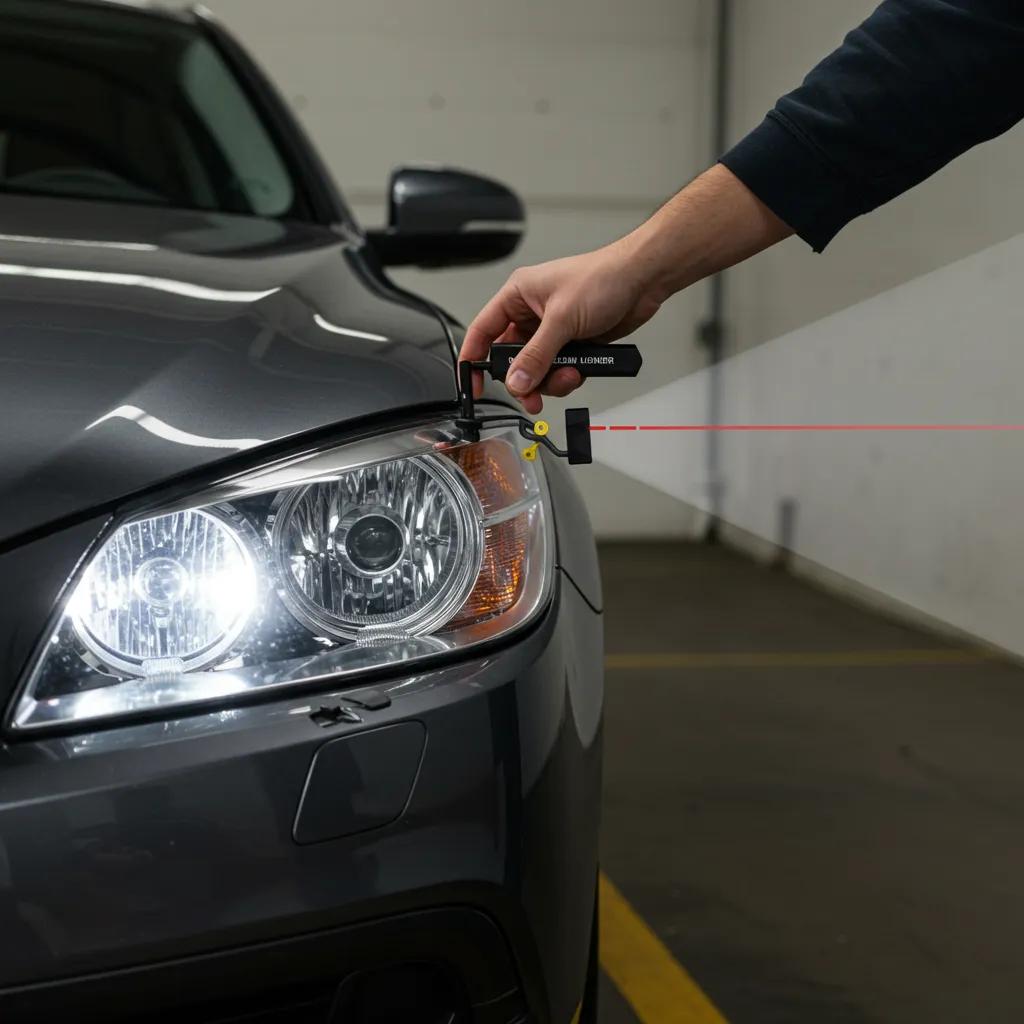
Correct beam alignment is essential for maximising road illumination without dazzling other drivers. For DIY adjustment:
- Park your vehicle on level ground, facing a wall, at a distance of 7.6 metres.
- Turn on the dipped beam and mark the horizontal cut-off lines for each headlight.
- Utilise the adjustment screws on the headlamp unit to centre the beam pattern both horizontally and vertically, following the manufacturer’s specifications.
Professional alignment services employ laser-guided equipment to achieve exact beam placement, ensuring both optimal visibility and full legal compliance.
Beyond Headlights: Enhancing Your Car’s Overall Visibility and Safety
In addition to primary headlights, upgrading fog lights and daytime running lights (DRLs) can further improve visibility in challenging weather conditions and enhance your vehicle’s conspicuity during daylight hours. Interior lighting enhancements, such as LED cabin lights, footwell illumination, and illuminated switches, can complement exterior upgrades, creating a cohesive and modern lighting scheme throughout the vehicle.
Legally Upgrading Fog Lights and Daytime Running Lights (DRLs)
Fog lights and DRLs must adhere to specific regulations regarding light colour (white or selective yellow for fog lamps) and beam pattern. The steps for legal upgrades include:
- Fitting E-marked LED or halogen fog lamp bulbs specifically designed for your housing.
- Ensuring DRLs activate automatically with the ignition and switch off when the dipped beams are engaged.
- Adjusting the fog beam height using the provided adjusters and confirming that DRLs do not cause dazzling for other road users.
Upgrading these auxiliary lights not only improves contrast in misty or rainy conditions but also ensures compliance with UK lighting standards.
Complementary Interior Lighting Upgrades for Your Headlight Enhancements
Interior lighting upgrades, such as replacing dome lamps with white LEDs, installing illuminated door sills, and adding footwell ambient lighting, contribute to a more contemporary cabin atmosphere and reduce glare when operating controls at night. Upgrading to higher-efficiency LEDs also lessens the electrical load on your battery. While primarily aesthetic, these upgrades enhance overall visibility and driver comfort after dark, completing a comprehensive vehicle lighting strategy.
Troubleshooting Common Headlight Issues and Their Solutions
Headlight problems often arise from electrical faults, moisture ingress, or aging components. Diagnosing and rectifying these issues will extend the lifespan of your lighting system and maintain crucial safety standards. Addressing flickering, error messages, and condensation proactively prevents unexpected failures and potential MOT rejections.
Resolving Headlight Flicker and Error Messages: Causes and Fixes
Headlight flickering and dashboard error messages are common occurrences in vehicles equipped with CANbus systems, which monitor bulb load. Aftermarket LED or HID bulbs, due to their lower current draw, can often trigger these warnings. To resolve these issues:
- Install CANbus-compatible LED bulbs that feature built-in resistors.
- Alternatively, add inline load resistors to simulate the expected load of a halogen bulb.
- Thoroughly check and secure all ground connections and verify fuse integrity.
For more complex wiring issues, professional auto electricians can provide expert diagnosis, ensuring stable power delivery and error-free operation.
Managing Condensation and Moisture Within Headlight Units
Condensation inside headlight assemblies typically forms when seals degrade or vent ports become blocked, allowing water ingress. To rectify this:
- Carefully remove the headlamp unit and drain any accumulated water.
- Clean and thoroughly dry all internal surfaces.
- Replace or reseal any damaged rubber gaskets and vent membranes.
- Reinstall the unit with proper alignment and monitor for moisture after rainfall.
Maintaining the seals and ensuring clear vent ports will prevent lens fogging and protect internal components from corrosion.
When to Call in the Professionals for Headlight Upgrades and Repairs
While many upgrades and restoration tasks can be managed at home, certain procedures require specialist expertise to guarantee safety, legal compliance, and the preservation of your vehicle’s warranty. Complex electrical conversions, precise beam-pattern calibration, and full-unit replacements often necessitate professional tools and advanced skills.
Identifying When an Auto Electrician or Specialist is Needed
Professional intervention is recommended in the following situations:
- Aftermarket conversions result in persistent error messages.
- CANbus wiring requires modification or load balancing.
- Beam pattern adjustment cannot be achieved using DIY tools.
- MOT failures occur due to non-compliance with lighting regulations.
Auto electricians are equipped with specialised diagnostic equipment and calibration rigs to reliably resolve these more complex issues.
Finding Reputable Headlight Restoration and Installation Services in the UK
When searching for services, look for providers with accredited training in automotive lighting and a strong track record of positive customer feedback, particularly regarding consistent MOT pass rates. Ensure that any service centre uses E-marked components and provides written confirmation of regulatory compliance, which can be invaluable for both MOT inspectors and insurance providers.
Weighing the Costs and Benefits of UK Headlight Upgrade Options
Selecting the optimal upgrade involves a careful balance of initial costs, long-term advantages, and potential legal risks. Halogen bulb replacements and restoration kits represent lower-cost entry points, while full LED or xenon unit replacements require a greater initial investment but offer significant long-term gains in efficiency and brightness.
| Upgrade Option | Estimated Cost | Primary Benefit | Return on Investment |
|---|---|---|---|
| High-Performance Halogen Bulbs | £20–£40 per pair | 30–50% brightness boost | Immediate, low-cost improvement |
| Headlight Restoration Kit | £15–£30 (DIY), £70–£120 (Service) | Restores up to 95% of original clarity | Delays need for costly full replacement |
| Full LED Unit Replacement | £200–£400 per pair | Exceptional energy efficiency and lifespan | 5–7 year ROI through bulb savings |
| Xenon (HID) Conversion Kit | £100–£250 per pair | Intense lumen output and sharp beam clarity | 3–5 year ROI through enhanced performance |
Headlight Restoration Costs vs. Full Replacement Expenses
Professional restoration services typically range from £70 to £120 per headlamp, effectively restoring light output and lens clarity without the need to replace the entire assembly. In contrast, purchasing new headlamp units can cost anywhere from £150 to over £400 each, depending on the technology and vehicle model. Restoration offers a highly cost-effective initial solution that extends the service life of your existing units and postpones more expensive replacements.
Price Guide: Halogen, LED, and Xenon Bulbs and Conversion Kits
- High-performance halogen bulbs: £20–£40 per pair
- Aftermarket LED retrofit bulbs (not compliant for modern vehicles): £30–£60 per pair
- E-marked LED full-unit conversions: £200–£400 per pair
- HID xenon conversion kits with ballasts: £100–£250 per pair
Choosing certified, vehicle-specific kits from reputable manufacturers is essential for ensuring reliable performance and legal compliance.
The Long-Term Advantages of Upgrading to LED or Xenon Headlights
- Superior Visibility – Higher lumen output allows for earlier detection of road hazards.
- Energy Efficiency – Reduced electrical load helps extend the life of your alternator and battery.
- Maintenance Savings – Extended bulb lifespan means fewer replacements and lower ongoing costs.
- Modern Aesthetics – Improved beam colour and updated styling enhance vehicle appeal and safety.
Over the entire lifespan of the upgrade, these benefits contribute to safer driving conditions, fewer MOT complications, and a reduced overall cost of ownership.
Upgrading your car’s headlights in the UK requires a solid understanding of different technologies, careful navigation of legal requirements, and a strategic choice between DIY and professional approaches. Whether you begin with simple halogen replacements or invest in advanced LED or xenon units, adhering to proper installation, beam alignment, and MOT-compliant procedures is paramount. For complex conversions, intricate electrical diagnostics, or certified restoration services, automotive specialists offer the expertise needed to guarantee performance, safety, and regulatory adherence. Take the next step towards brighter, safer night-time driving by evaluating your options and planning an upgrade that perfectly balances your budget with the law.